

How to Choose the Right Chandelier Size (Formula + Chart)
To choose the right chandelier size, add the length and width of the room in feet; that number, in inches, is a good starting diameter. A 12 x 14 ft room suits a chandelier about 26 inches wide. Over a dining table, size to the table instead: one-half to two-thirds of its width, hung 30 to 36 inches above the top.
Those two rules solve most sizing questions, but ceiling height, the shape of the fixture and the furniture below all change the answer. Here is how designers work through it, with a chart you can use room by room.
What is the formula for chandelier size?
The industry rule of thumb is simple:
- Diameter (inches) ≈ room length (feet) + room width (feet).
- Height (inches) ≈ 2.5 to 3 inches per foot of ceiling height. An 8 ft ceiling suits a fixture roughly 20 to 24 inches tall; a 10 ft ceiling can take 25 to 30 inches.
Treat the result as the middle of a range, not a hard number. Airy, open-frame fixtures and clear or seeded glass read smaller than their dimensions, so you can size up by a few inches. Solid drum shades, heavy crystal and dark finishes read larger, so size down or stay at the formula.
For open-plan rooms, measure only the zone the chandelier is meant to anchor (the dining area, the seating group), not the whole great room. Otherwise the formula will push you toward a fixture that overwhelms the table beneath it.
Chandelier size chart by room
| Room size (ft) | Length + width | Suggested diameter | Typical use |
|---|---|---|---|
| 8 x 10 | 18 | 17–20 in | Breakfast nook, powder room, small bedroom |
| 10 x 12 | 22 | 20–24 in | Compact dining room, primary closet |
| 12 x 14 | 26 | 24–28 in | Standard dining room, bedroom |
| 14 x 16 | 30 | 28–32 in | Larger dining room, living room |
| 16 x 18 | 34 | 32–36 in | Formal dining, foyer |
| 18 x 20+ | 38+ | 36–42 in or larger | Great room, two-story entry |
If your number falls between sizes, let ceiling height decide. With 9 ft or higher ceilings, go up; at 8 ft, go down or choose a lower-profile shape.
Shop the look
Tap the dots to shop this room

Shop the look

How big should a chandelier be over a dining table?
Over a table, the table matters more than the room. Aim for a diameter one-half to two-thirds the table's width, and keep the fixture at least 6 inches narrower than the table on each side so no one bumps their head standing up.
| Table | Chandelier guidance |
|---|---|
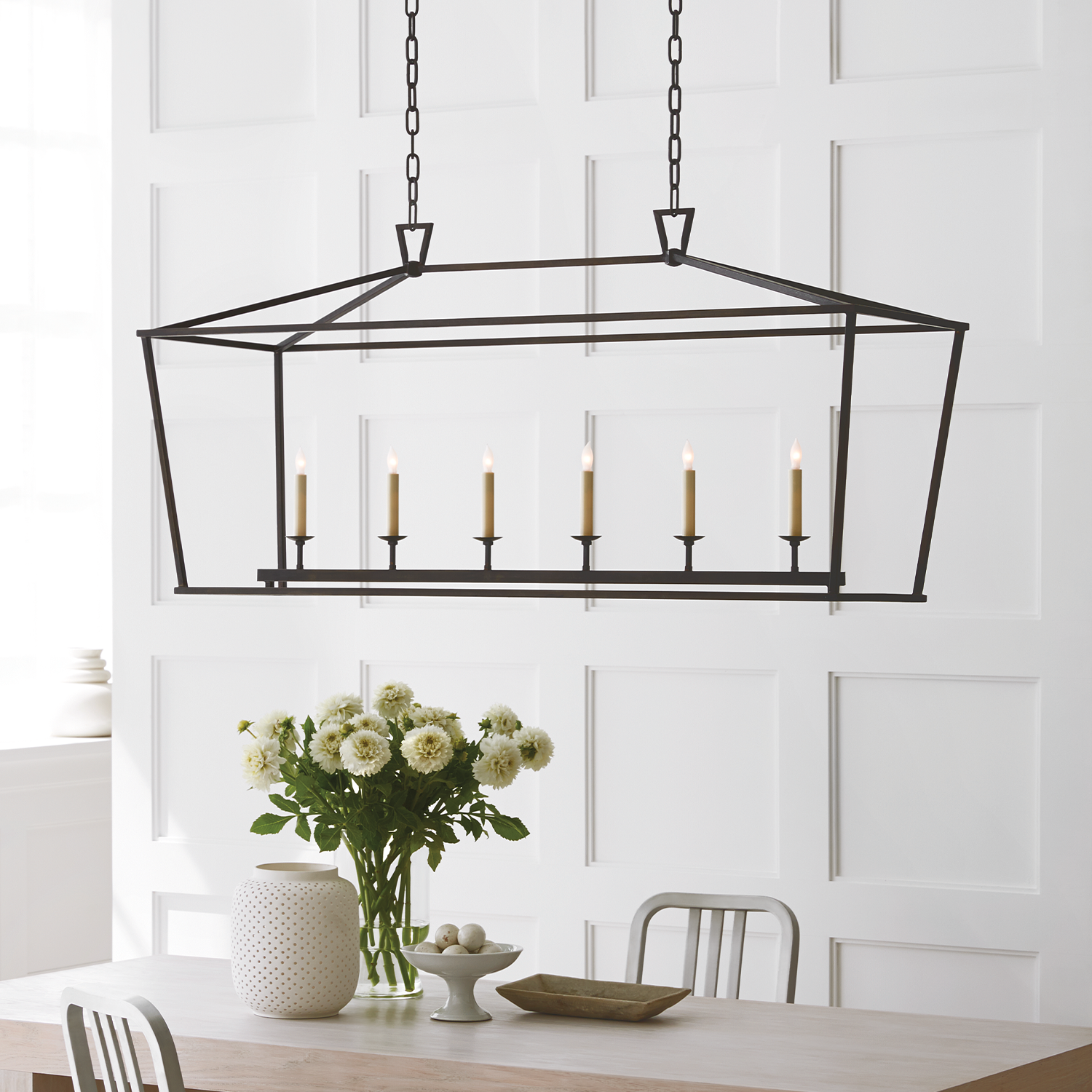
| 36–42 in wide rectangle | Round 20–28 in, or a linear fixture about two-thirds the table length |
| 48 in round | 24–32 in round |
| 60 in round | 30–40 in round |
| 84–96 in rectangle | One oval or linear fixture, or two matching rounds spaced evenly |
Hang the bottom of the chandelier 30 to 36 inches above the tabletop with an 8 ft ceiling, and add about 3 inches for each additional foot of ceiling height. That keeps sightlines open across the table while the light still feels connected to it.
How high should a chandelier hang in a foyer or living room?
Anywhere people walk underneath, keep at least 7 ft of clearance from the floor to the bottom of the fixture. In a two-story entry, center the chandelier on the upper window if there is one, so it reads from the street at night, and let the height grow with the space: a fixture 3 to 4 ft tall is normal in a 16 to 18 ft foyer. We cover this in detail in our foyer chandelier guide.
In living rooms, chandeliers are usually centered over the seating group or coffee table rather than the room. The same 7 ft clearance applies if the fixture is in a walkway; over a coffee table you can drop a little lower, as long as it clears standing guests.
Bedroom and bathroom chandeliers
Bedrooms follow the room formula, but many designers size down one step so the fixture feels restful rather than formal. Center it over the foot of the bed rather than the headboard so it isn't in your eyeline when lying down. In bathrooms, a small chandelier over a freestanding tub is lovely, but check local code: most require the fixture to be damp-rated and a set distance above the tub rim.
Common chandelier sizing mistakes
- Going too small. The most frequent mistake. A fixture that looks right in the showroom often looks timid over a table at home. When in doubt, size up.
- Ignoring visual weight. Two chandeliers can share a diameter and read completely differently. Open metalwork feels lighter than a dense shade.
- Hanging too high. A dining chandelier floating near the ceiling disconnects from the table. Bring it down into the 30–36 in zone.
- Forgetting the dimmer. A correctly sized fixture can still overpower a room at full brightness. Put every chandelier on a dimmer.
- Measuring the wrong zone. In open plans, size to the table or seating area, not the entire footprint.
Round, oval or linear: which shape fits?
Round chandeliers suit square rooms, round tables and entries. Oval and linear fixtures follow a rectangular table and spread light more evenly along its length; a good rule is to keep a linear fixture about 12 inches shorter than the table on each end. For very long tables, two matching rounds can look more relaxed than a single linear piece. Browse by shape in our chandelier collection or the ready-to-ship dining room lighting edit.
Get the look
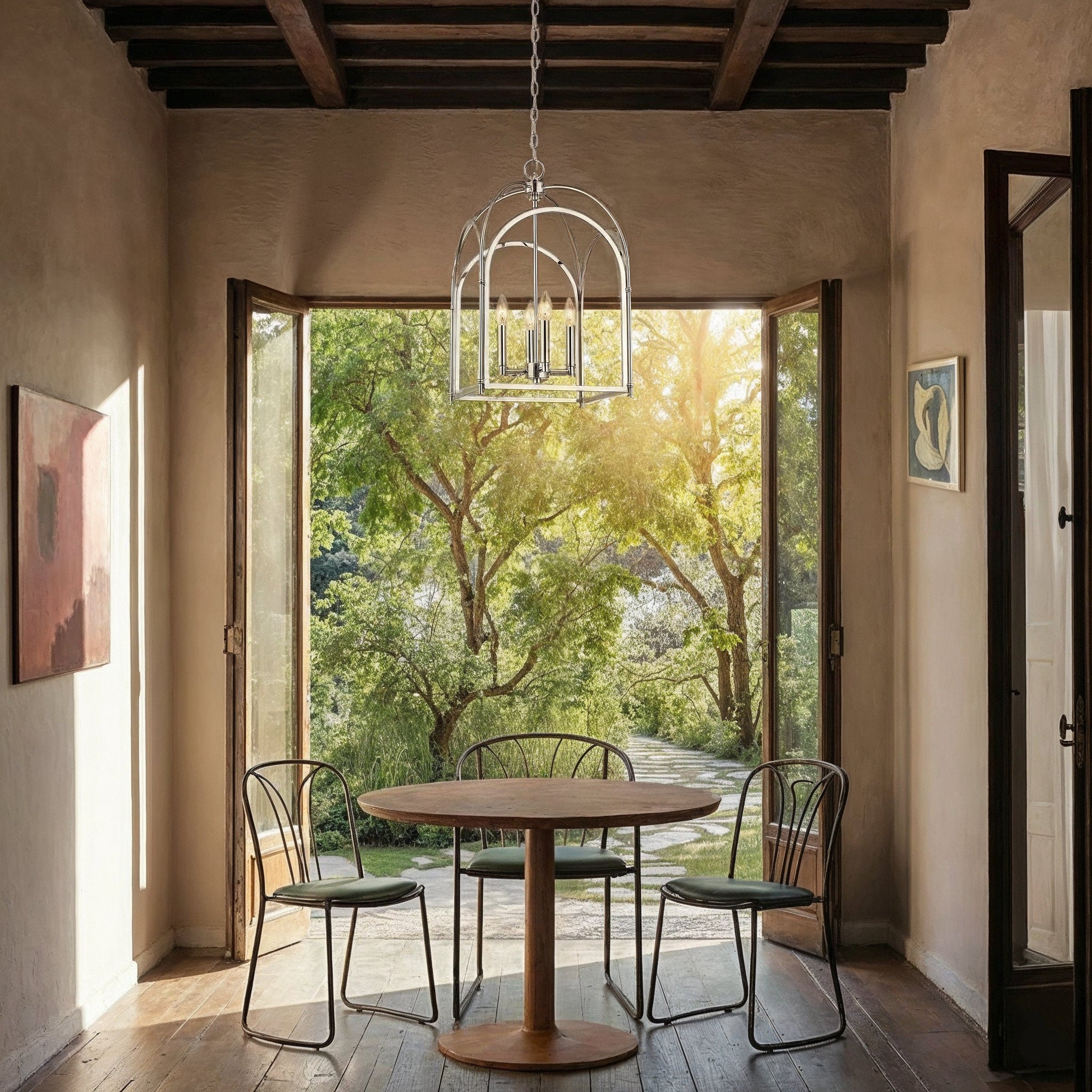
The dining room pictured above pairs a generously scaled brass chandelier with sconces and buffet lamps, a classic example of sizing to both the room and the table.
Chapman & Myers Paris Flea Market Large Chandelier in Antique-Burnished Brass — At W32.5" x H34", this is the right scale for a roughly 14 x 18 ft dining room or a 60 in round table. The open frame and seeded glass keep it from feeling heavy, so it can hold its own over the table without crowding the room.
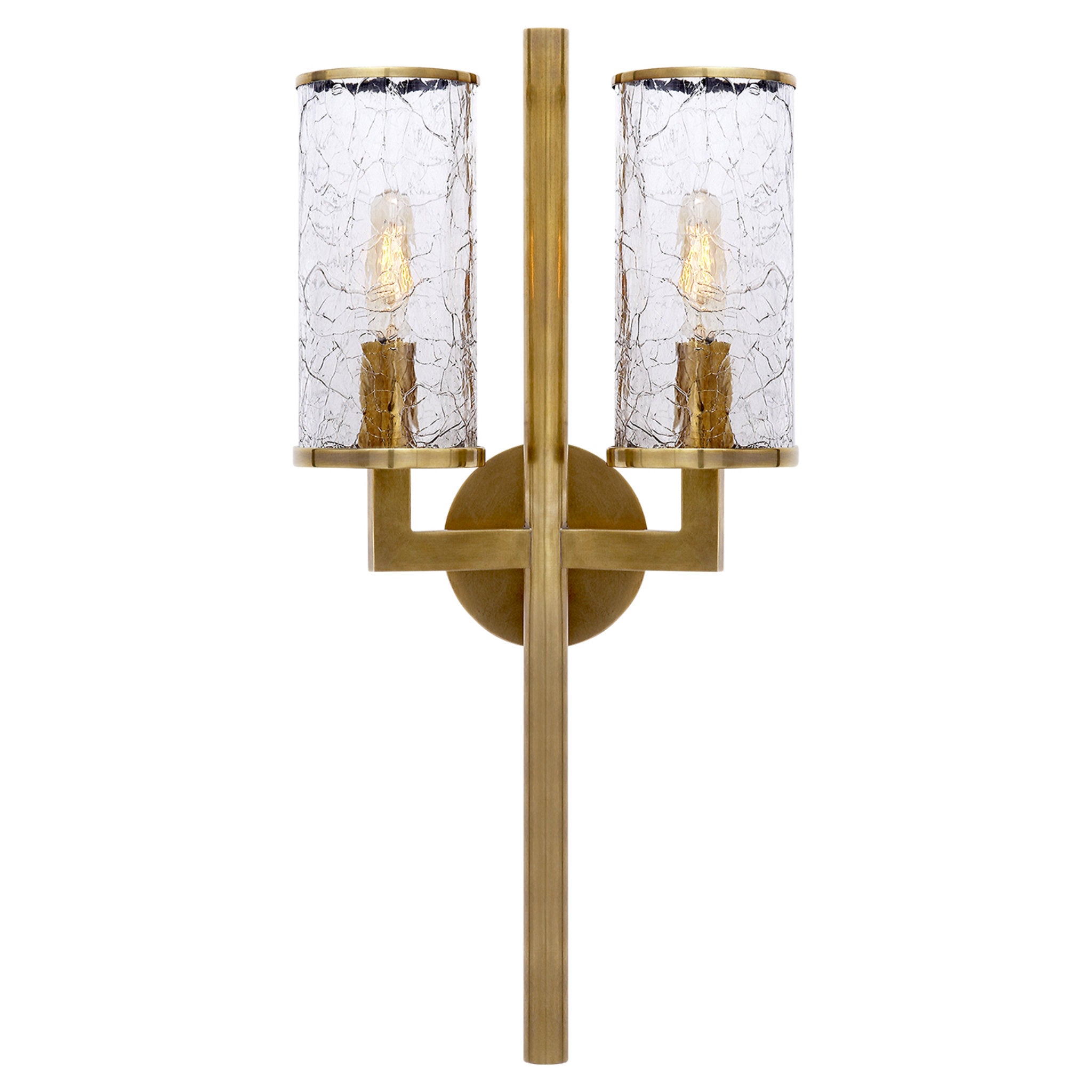
Kelly Wearstler Liaison Double Sconce in Antique-Burnished Brass — Flanking a mirror or artwork on the sideboard wall, these add a second layer of light so the chandelier doesn't have to do all the work. See more from the designer in our Kelly Wearstler collection.
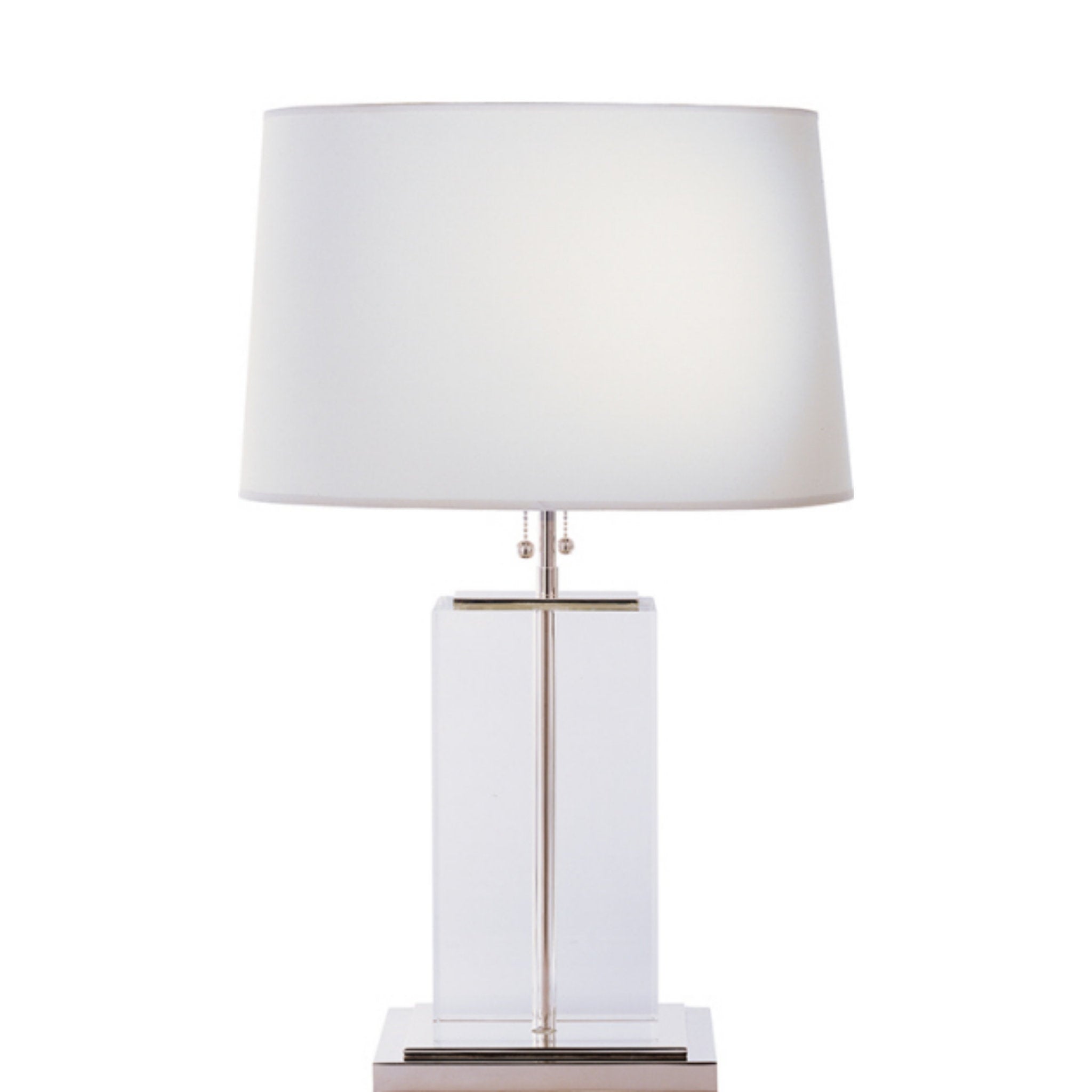
Thomas O'Brien Block Large Table Lamp in Crystal and Polished Silver — A pair on the buffet gives warm, low light for serving and makes the room feel finished even when the chandelier is dimmed. At H26", they hold their own under a large mirror, and the crystal catches the chandelier's glow.
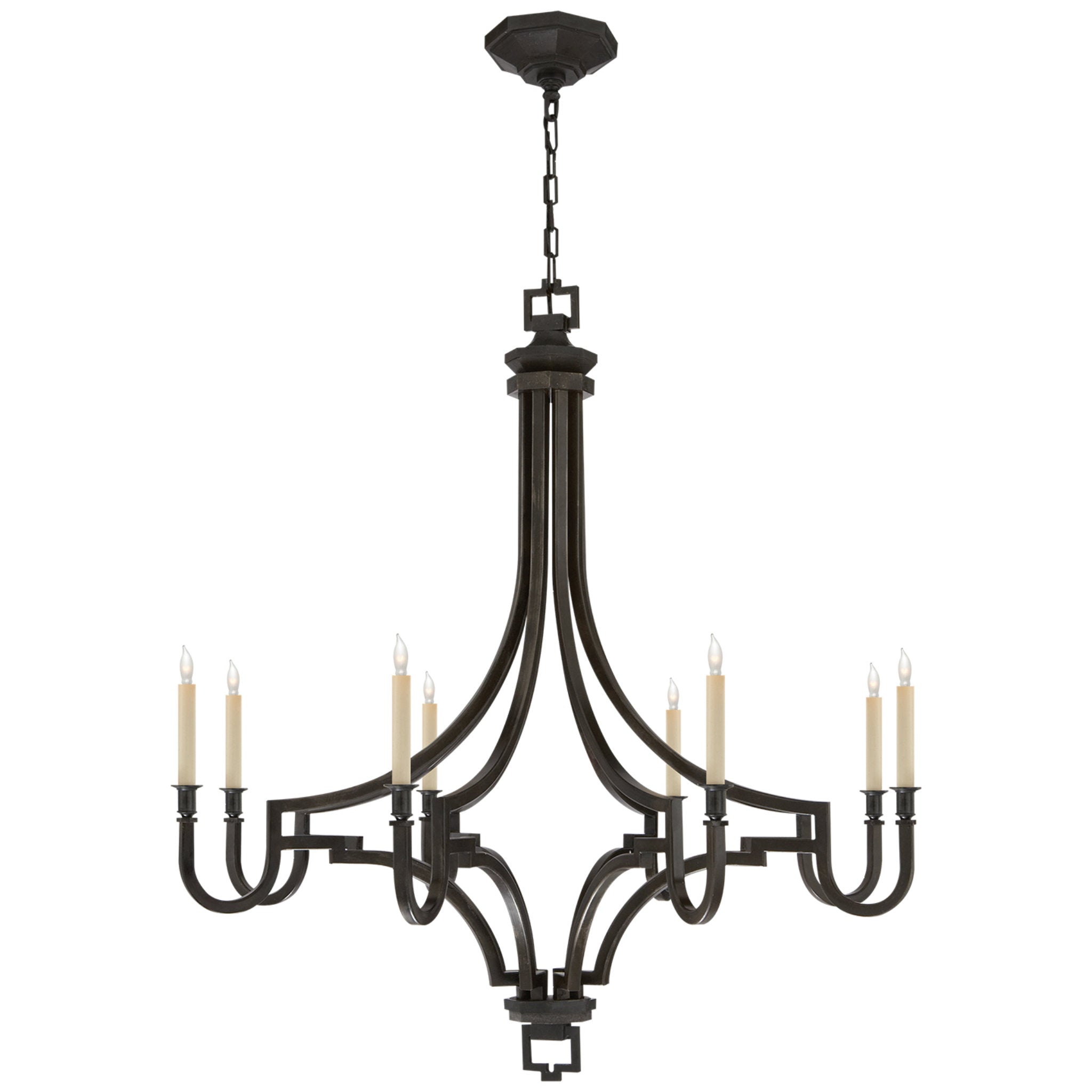
Chapman & Myers Mykonos Large Chandelier in Aged Iron — For larger rooms, W37" x H38.75" gives real presence over a long table or in a double-height space, and the aged iron finish suits farmhouse and modern rooms alike.
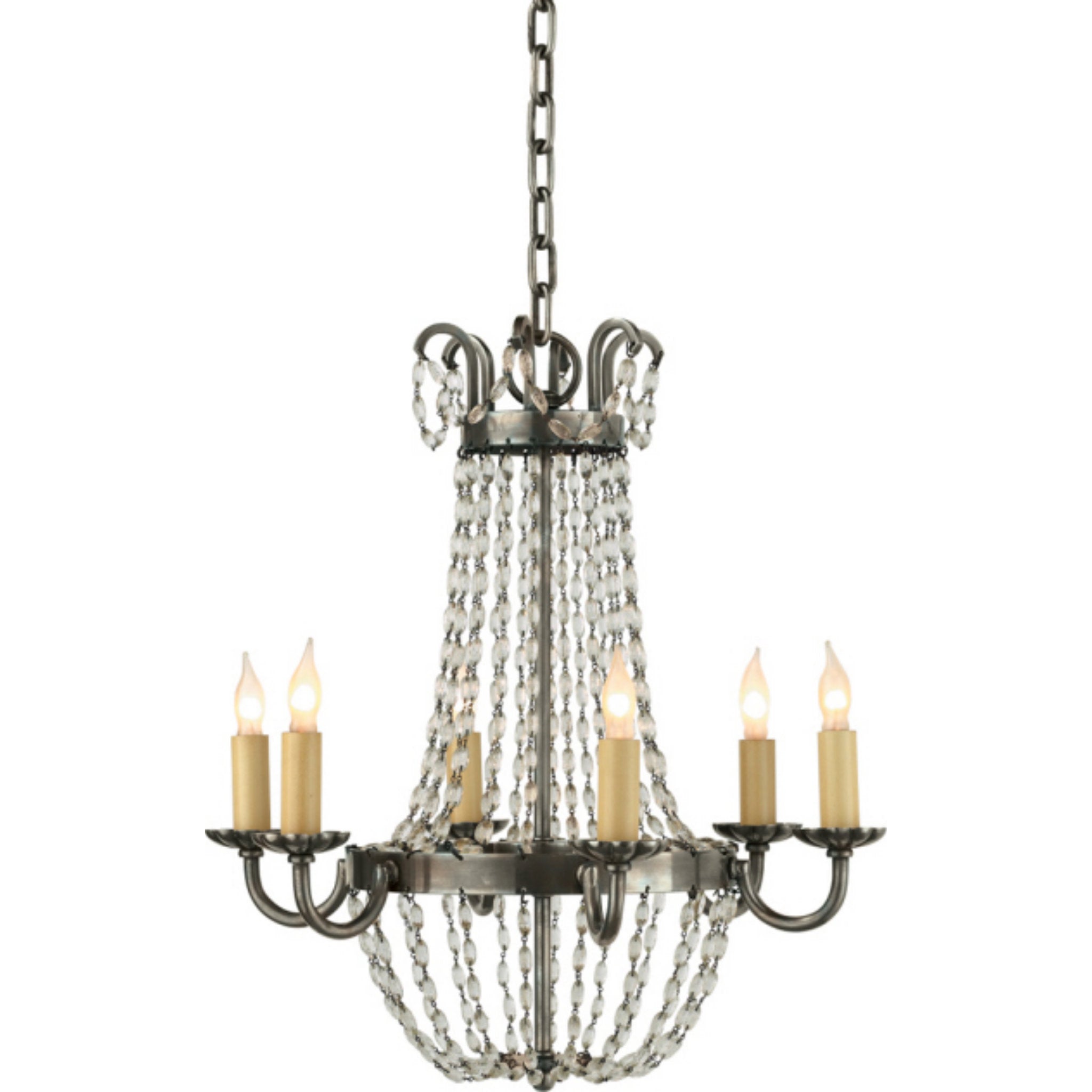
Chapman & Myers Petite Paris Flea Market Chandelier in Sheffield Silver — At W16.75", it follows the formula for an 8 x 8 ft powder room, walk-in closet or small breakfast nook.
A quick sizing checklist
- Measure the room (or the zone) and add length plus width in feet.
- Use that number as the diameter in inches; adjust for visual weight.
- Over a table, cap the diameter at two-thirds of the table width.
- Check height: about 2.5 to 3 inches of fixture per foot of ceiling.
- Confirm clearance: 30–36 in above a table, 7 ft minimum in walkways.
- Add a dimmer and plan supporting light from sconces and lamps.
Once the chandelier is sized, the next step is the rest of the room. Our guide to layering lighting like a designer shows how sconces, lamps and accent lights work around it. Designers and architects can also work with us through the Foundry Lighting Design Trade Program, or visit our showrooms in New York and Los Angeles to see scale in person.
Shop this post
Frequently asked questions
What size chandelier do I need for a 12 x 12 room?
Add the length and width: 12 + 12 = 24, so a chandelier about 24 inches in diameter is a good starting point. If the fixture has an open frame or clear glass, you can go up to about 26 to 28 inches. For a solid shade or dense crystal, stay near 22 to 24 inches so it doesn't overwhelm the room.
How far should a chandelier hang above a dining table?
Hang the bottom of the chandelier 30 to 36 inches above the tabletop with an 8 foot ceiling. For each additional foot of ceiling height, raise it about 3 inches. That range keeps the light connected to the table while leaving clear sightlines for people seated across from each other.
Is it better for a chandelier to be too big or too small?
Slightly too big is almost always better than too small. Undersized chandeliers are the most common mistake and tend to look like an afterthought, especially over a dining table. As long as the fixture is narrower than the table by at least 6 inches per side and meets clearance rules, a generous scale reads as intentional.
How tall should a chandelier be for an 8 foot ceiling?
Allow about 2.5 to 3 inches of fixture height per foot of ceiling, so roughly 20 to 24 inches for an 8 foot ceiling. If the chandelier hangs over a table, the overall drop just needs to leave 30 to 36 inches above the tabletop. In walkways, keep at least 7 feet from the floor to the bottom of the fixture.
How do I size a chandelier for a rectangular table?
Choose an oval or linear chandelier about two-thirds the length of the table, or keep it roughly 12 inches short of each end. For very long tables, two matching round chandeliers spaced evenly along the table also work well. Keep the width within one-half to two-thirds of the table's width.
Designing a whole room?
Our lighting specialists help size and pair fixtures every day, and interior designers and architects can join the Design Trade Program. Browse more ideas in Inspiration.