


Warm White vs Cool White Lighting: Which Kelvin for Each Room
For most homes, warm white light between 2700K and 3000K is the better choice. It makes living rooms, bedrooms and dining rooms feel relaxed and flatters skin, wood and fabric. Cool or neutral white (3500K to 4000K) is best reserved for task-heavy spaces such as laundry rooms, garages, closets and workshops.
The right answer depends on the room, the time of day it is used and the finishes in it. This guide explains what those numbers mean and how designers choose a color temperature room by room.
What is the difference between warm white and cool white?
Color temperature is measured in Kelvin (K). Lower numbers look warmer and more amber, like candlelight or a sunset; higher numbers look whiter and bluer, like midday sun or an overcast sky.
| Kelvin | Common name | How it looks | Best for |
|---|---|---|---|
| 2200–2400K | Candlelight / amber | Very warm, golden | Dining by candle, accent lamps, exposed-filament bulbs |
| 2700K | Warm white | Soft, cozy, like classic incandescent | Living rooms, bedrooms, dining rooms |
| 3000K | Soft white | Warm but slightly crisper | Kitchens, bathrooms, hallways, open plans |
| 3500K | Neutral white | Balanced, clean | Home offices, task lighting, laundry |
| 4000K | Cool white | Bright, crisp, slightly blue | Garages, workshops, utility and closet task lighting |
| 5000K+ | Daylight | Very white to blue | Commercial and inspection lighting; rarely right at home |
Kelvin describes the color of the light, not its brightness. A 4000K bulb is not brighter than a 2700K bulb of the same lumens; it simply looks whiter, which people often read as brighter.
Which color temperature is best for each room?
| Room | Recommended Kelvin | Why |
|---|---|---|
| Living room | 2700K | Relaxed, flattering, pairs with lamps and fabric shades |
| Bedroom | 2700K (2200–2400K for bedside) | Winds the room down in the evening |
| Dining room | 2700K, dimmable | Flatters food and faces; dim for dinner |
| Kitchen | 3000K (up to 3500K task) | Crisp enough for prep while blending with adjacent rooms |
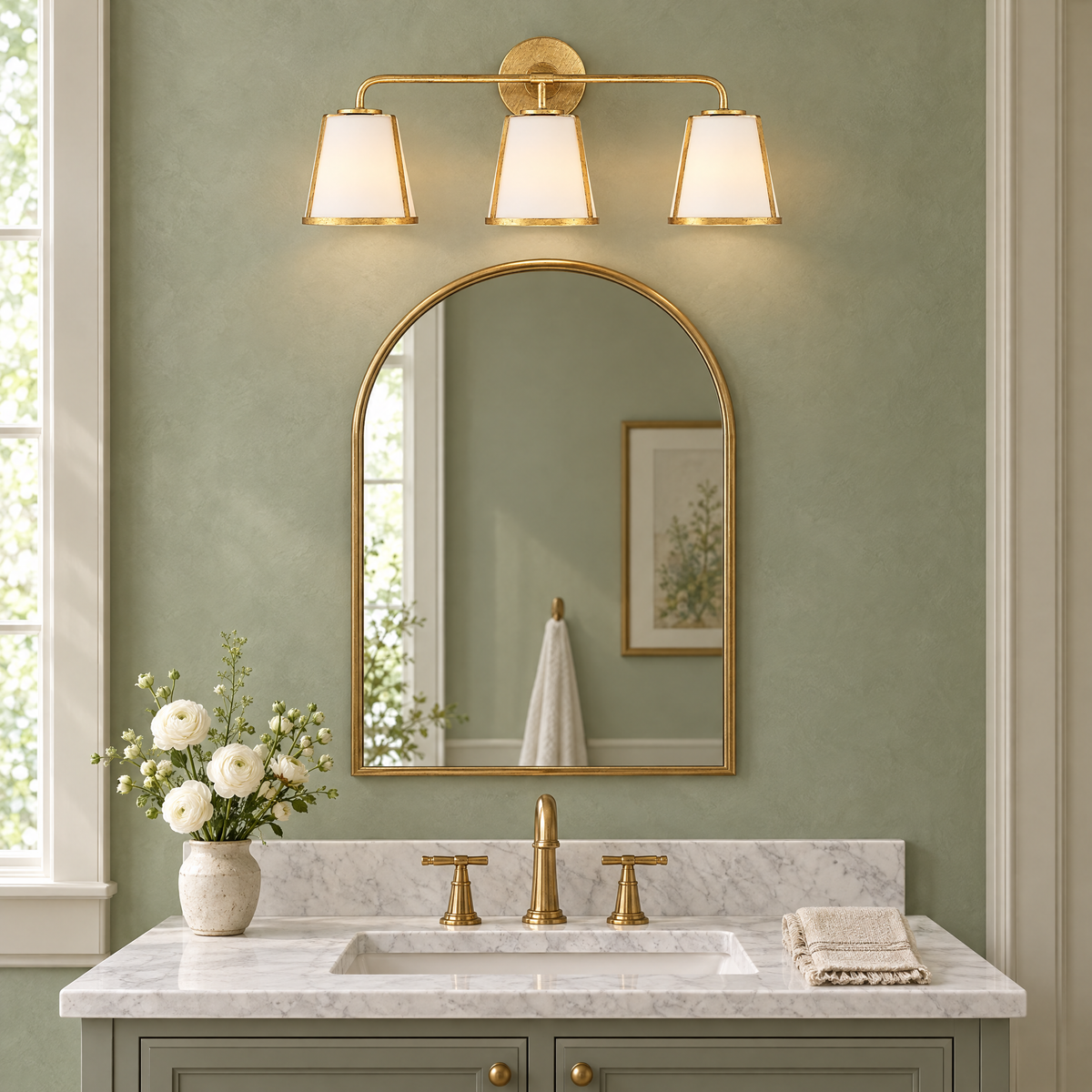
| Bathroom vanity | 3000K, CRI 90+ | Clean, accurate skin tones for grooming |
| Home office | 3000–3500K | Alert without feeling clinical, good on video calls |
| Hallways and entries | 2700–3000K | Match the rooms they connect |
| Laundry, garage, closets | 3500–4000K | Color checking and practical work |
| Outdoor | 2700–3000K | Warm and welcoming; softer on neighbors and wildlife |
Shop the look
Tap the dots to shop this room

Shop the look

Should you mix warm and cool white in one home?
Keep color temperature consistent within a room and between rooms you can see from each other. Mixing a 2700K table lamp with 4000K recessed lights in the same space makes one look orange and the other look blue, and neither looks intentional. The simplest approach designers use: pick 2700K or 3000K as the house standard, then allow 3500K only in closed-off utility spaces.
In open-plan homes where the kitchen shares space with the living room, 3000K across both is a good compromise. If you want the living area warmer, use 2700K lamps and sconces there and keep ceiling fixtures at 3000K; the difference is subtle enough to read as layered rather than mismatched.
Why CRI matters as much as Kelvin
Color Rendering Index (CRI) measures how accurately a light shows colors compared with natural light, on a scale up to 100. A warm 2700K bulb with low CRI can still make a room look dull and skin look sallow. For interiors, look for CRI 90 or higher, especially in kitchens, bathrooms, closets and anywhere there is art. It is the single biggest difference between LED that looks cheap and LED that looks like good incandescent.
How to read a bulb or LED spec sheet
Packaging and spec sheets list more than Kelvin. When comparing bulbs or integrated LED fixtures, check these numbers:
- Lumens: brightness. Roughly 450 lumens replaces a 40W incandescent, 800 lumens a 60W and 1,100 lumens a 75W.
- Kelvin (CCT): the color of the light, as above.
- CRI (and R9): color accuracy. R9 measures how well saturated reds render; a higher R9 makes skin and wood look warmer and more natural.
- Dimming compatibility: confirm the bulb is dimmable and matched to your dimmer to avoid flicker or buzzing.
Buy the same brand and product line for every bulb in a room. Two "2700K" bulbs from different makers can look noticeably different side by side.
Warm dimming and tunable white
- Warm dim (dim-to-warm) LEDs shift from about 3000K at full brightness toward 1800–2200K as they dim, mimicking incandescent. They are ideal for dining rooms and bedrooms.
- Tunable white fixtures let you adjust color temperature through the day, cooler in the morning and warmer at night. Useful in home offices and kitchens.
- Standard dimmers still help: a 2700K light at 40 percent reads warmer and more intimate than at full output.
How finishes and shades change color temperature
Your fixture changes the light as much as the bulb does. Brass and gold-leaf finishes reflect warmth and can make 3000K look closer to 2700K. Polished nickel and chrome read cooler. Linen and silk shades soften and warm the light; white or opal glass keeps it clean and neutral; alabaster adds a warm, honeyed glow. When a room feels too cool, changing a shade can fix it without changing a single bulb.
Common color temperature mistakes to avoid
- Buying bulbs by wattage alone. With LEDs, lumens tell you brightness and Kelvin tells you color. Check both numbers on the box before you buy.
- Mixing Kelvin within one fixture. A chandelier or a pair of sconces with one 2700K lamp and one 3000K lamp looks mismatched even to an untrained eye. Buy replacement bulbs in sets.
- Going cool to feel brighter. If a room feels dim, add lumens or another layer of light rather than jumping to 4000K. More warm light almost always looks better than cooler light at the same level.
- Ignoring daylight. A north-facing room already reads cool, so 2700K keeps it from feeling flat. A sunny south-facing room can take 3000K without looking stark.
Get the look
The living room pictured runs at a warm 2700K throughout, using brass finishes and fabric shades to reinforce the glow.
Suzanne Kasler Soleil Large Semi-Flush in Hand-Rubbed Antique Brass — Frosted glass diffuses the light and the brass finish warms it, making this W28" semi-flush a soft ambient source that doesn't glare.
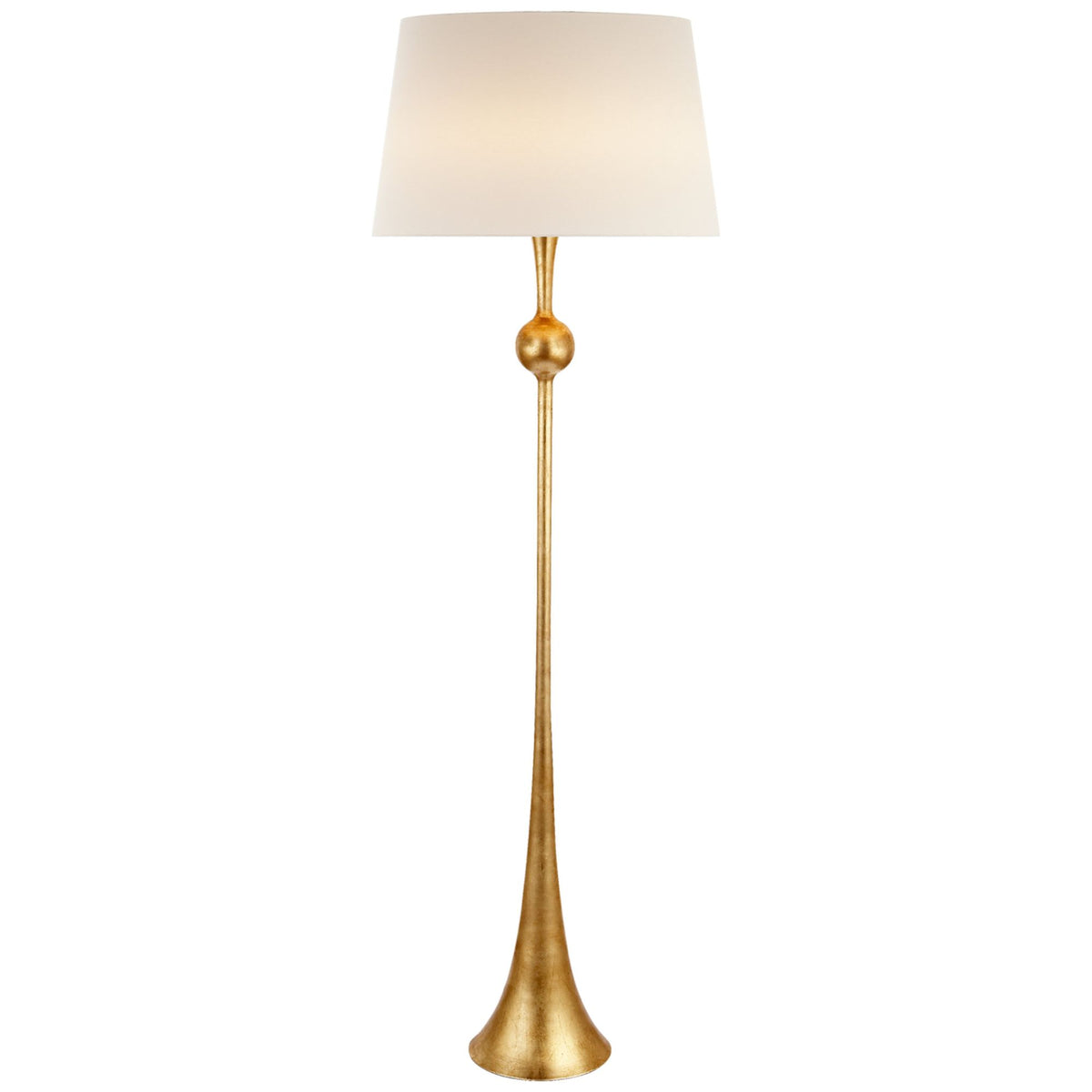
AERIN Dover Floor Lamp in Gild with Linen Shade — A linen shade over a warm bulb is the most reliable way to add evening glow beside a sofa or reading chair.
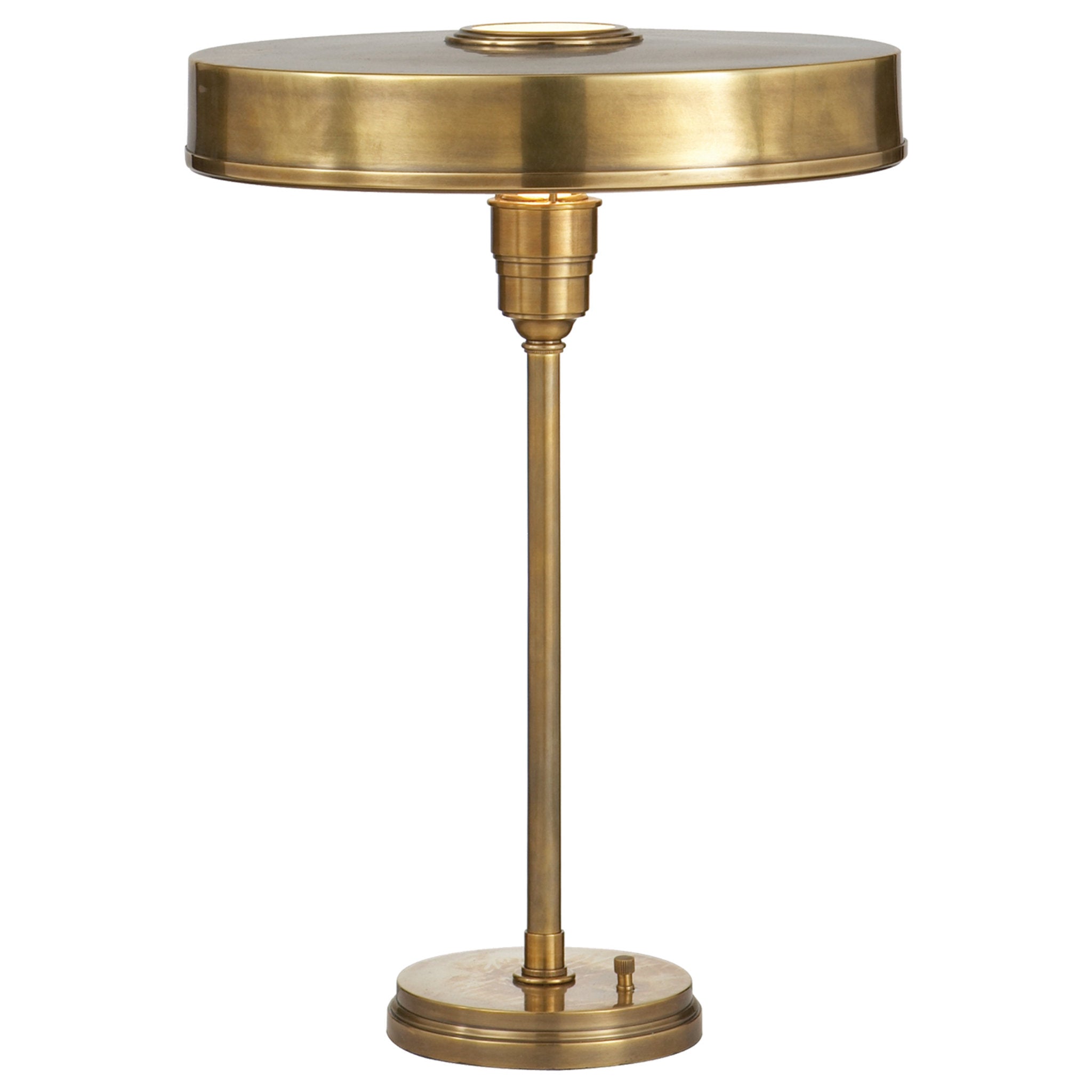
Thomas O'Brien Carlo Table Lamp in Hand-Rubbed Antique Brass — Placed on a side table at seated eye level, it provides warm pools of light that make a room feel layered. Explore more in our table lamps collection.
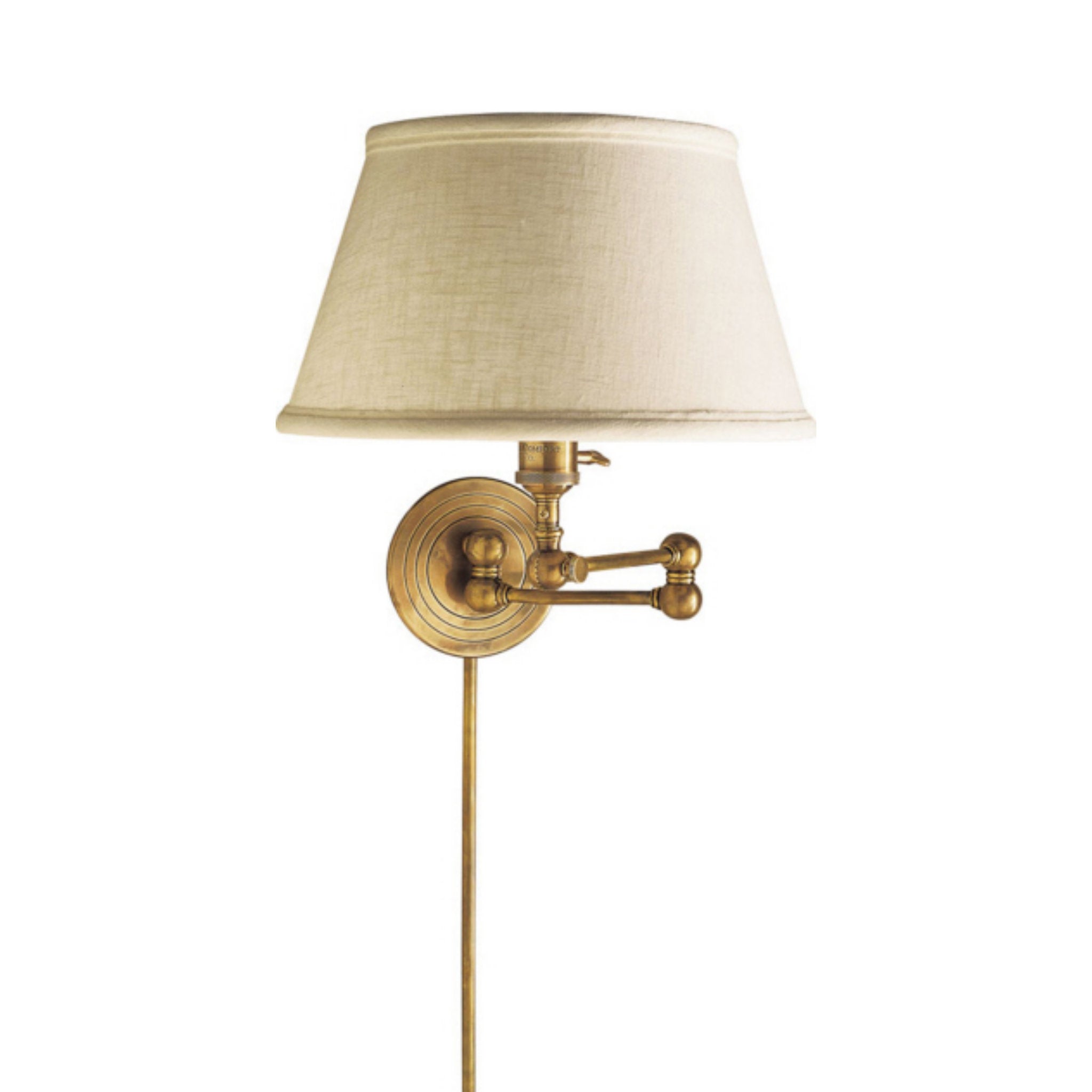
Chapman & Myers Boston Swing Arm in Hand-Rubbed Antique Brass with Linen Shade — Beside a bed or reading chair, a swing arm puts task light exactly where you need it; use 2700K for reading at night.
Kelly Wearstler Covet Wide Clip Bath Sconce in Antique-Burnished Brass — In a bathroom, pair a 3000K, high-CRI source with a warm brass finish for accurate grooming light that still feels inviting.
Browse the full range of lamps and wall lights to build warm, layered light in any room.
Quick rules to remember
- Default to 2700K for living spaces and 3000K for kitchens and baths.
- Stay consistent within a room and across open sightlines.
- Buy CRI 90+ for anything near skin, food or art.
- Put everything you can on dimmers, ideally warm-dim.
- Use finishes and shades to fine-tune the warmth.
Color temperature is one piece of a well-lit room. Once you have it set, see how to combine ceiling, wall and lamp light in How to Layer Lighting Like a Designer, or put it into practice with our bedroom lighting ideas. Designers can source through the Foundry Lighting Design Trade Program, and our New York and Los Angeles showrooms are a good place to compare finishes under real light.
Shop this post

Frequently asked questions
Is warm white or cool white better for a living room?
Warm white is better for living rooms. Around 2700K creates a relaxed, flattering light that works with lamps, fabric and wood tones. Cool white above 3500K tends to feel clinical in living spaces. If your living room opens to the kitchen, 3000K throughout is a good compromise that still feels warm.
What Kelvin is best for a bathroom vanity?
Most designers use 3000K for bathroom vanity lighting, with a CRI of 90 or higher. That combination gives clean, accurate skin tones for grooming and makeup without looking cold. Some people prefer 2700K for a spa-like mood, which works well if the fixtures are on a dimmer.
Is 3000K warm or cool light?
3000K is considered warm, often called soft white. It is slightly crisper than 2700K, which makes it a popular choice for kitchens, bathrooms and open-plan spaces. It still reads as warm in a home, unlike 4000K and above, which look noticeably whiter and cooler.
Does color temperature affect sleep?
Warmer, dimmer light in the evening is widely recommended because it feels more restful than bright, cool light. In bedrooms, many designers use 2700K for general light and 2200K to 2400K or warm-dim bulbs at the bedside, and keep brighter cool light for morning spaces such as closets.
Can I mix 2700K and 3000K in the same house?
Yes, as long as each room is consistent and adjacent open spaces don't clash. A common approach is 2700K in living rooms and bedrooms and 3000K in kitchens and bathrooms. Avoid mixing 2700K with 4000K in the same space, where the difference becomes obvious.
What does CRI mean for light bulbs?
CRI, or Color Rendering Index, measures how accurately a light source shows colors compared with natural light, on a scale up to 100. For homes, look for CRI 90 or higher so skin, food, fabrics and artwork look true. Low-CRI bulbs can make a room look flat even at the right color temperature.
Designing a whole room?
Our lighting specialists help size and pair fixtures every day, and interior designers and architects can join the Design Trade Program. Browse more ideas in Inspiration.