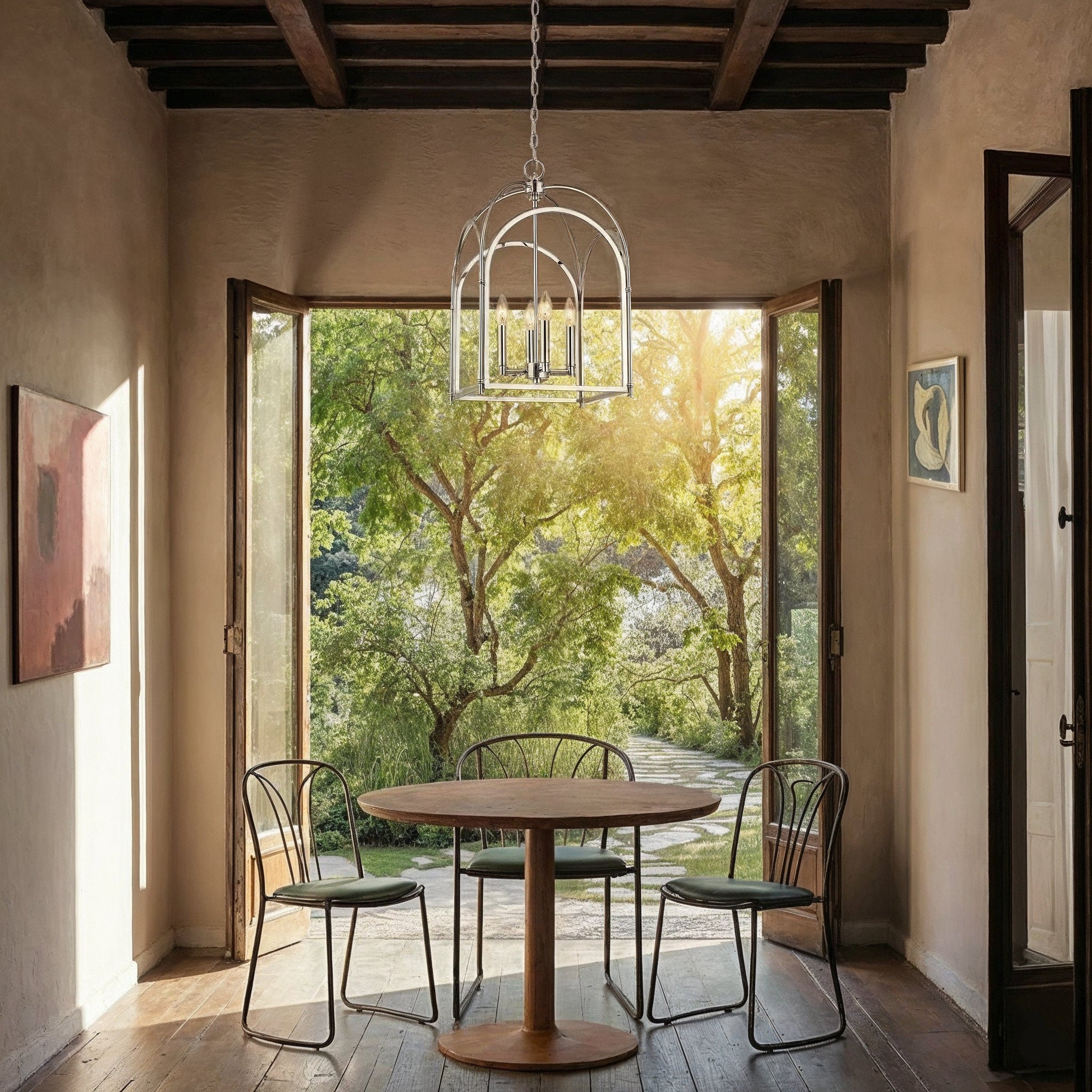


How to Layer Lighting Like a Designer
Layered lighting means combining several types of light in one room instead of relying on a single overhead fixture. Designers use four layers: ambient light for overall illumination, task light for specific activities, accent light to highlight art and architecture, and decorative light that adds character. Each layer goes on its own switch or dimmer so the room can change with the time of day.
A room lit from one ceiling fixture feels flat, with bright spots and dark corners. A layered room feels deeper, more comfortable and more flexible. Here is how to plan each layer.
What are the layers of lighting?
| Layer | Purpose | Typical fixtures | Share of the room's light |
|---|---|---|---|
| Ambient | Even, overall light so you can move around safely | Chandeliers, flush and semi-flush mounts, recessed lights, cove lighting | The base layer |
| Task | Focused light for reading, cooking, grooming, working | Table and floor lamps, swing-arm sconces, pendants, vanity lights, under-cabinet | Where activity happens |
| Accent | Draws the eye to art, texture and architecture | Picture lights, adjustable recessed, uplights, shelf lighting | Highlights; aim for about three times brighter than surroundings |
| Decorative | Adds sparkle and personality; often doubles as another layer | Statement chandeliers, sculptural sconces, candles | The jewelry |
The layers overlap. A chandelier provides ambient light and is decorative; a table lamp gives task light and adds glow. The goal is not a fixture for every category, but light coming from several heights and directions.
Layer 1: How do you plan ambient light?
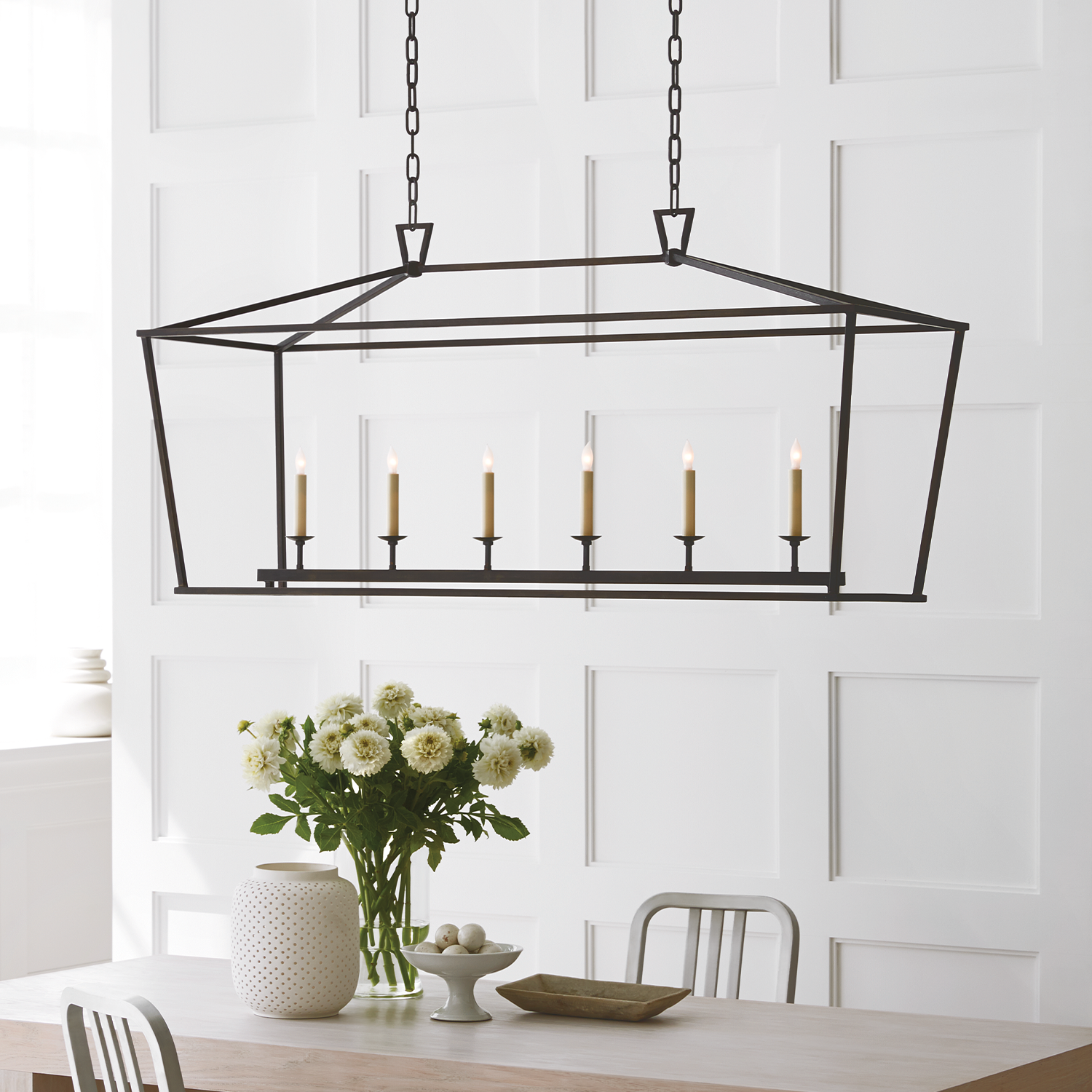
Start with the ceiling. In most living and dining rooms, a chandelier or semi-flush fixture centered on the main zone does the job, sometimes supported by a few recessed lights near the perimeter. Size the centerpiece with the classic formula: room length plus width in feet equals a rough diameter in inches. Our chandelier size guide walks through it.
Ambient light should be soft rather than intense. Diffusing shades, frosted glass or indirect light bounced off the ceiling feel better than bright downlights. And always put it on a dimmer: at night, ambient light is often the layer you turn down most.
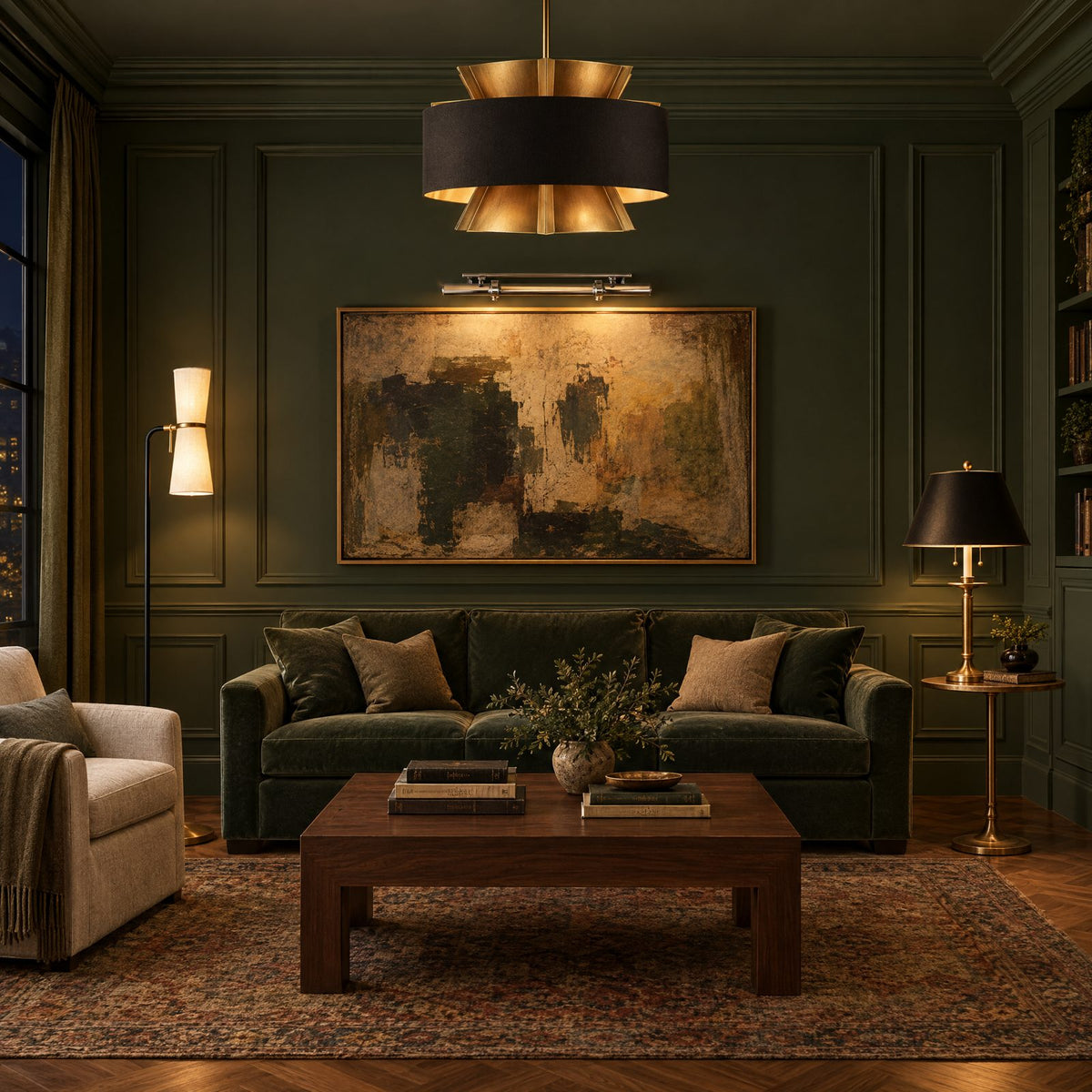
Shop the look
Tap the dots to shop this room
Shop the look
Layer 2: Where does task lighting go?
Task light goes where you do things. Think through each activity in the room:
- Reading: a floor or table lamp beside every chair and sofa end. The bottom of the shade should sit near eye level when seated, roughly 38 to 42 inches from the floor.
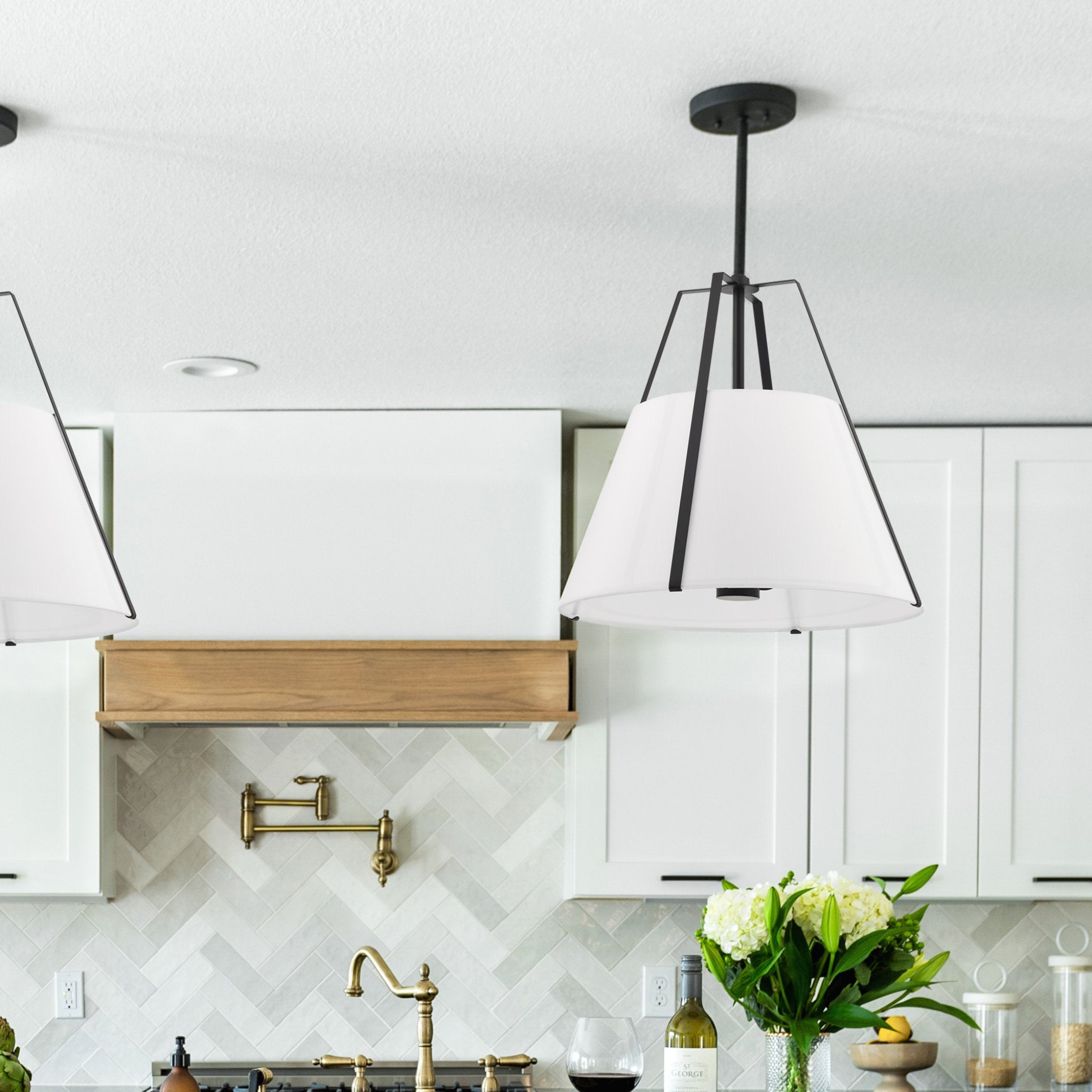
- Kitchen prep: under-cabinet lighting and island pendants hung 30 to 36 inches above the counter (see our island pendant guide).
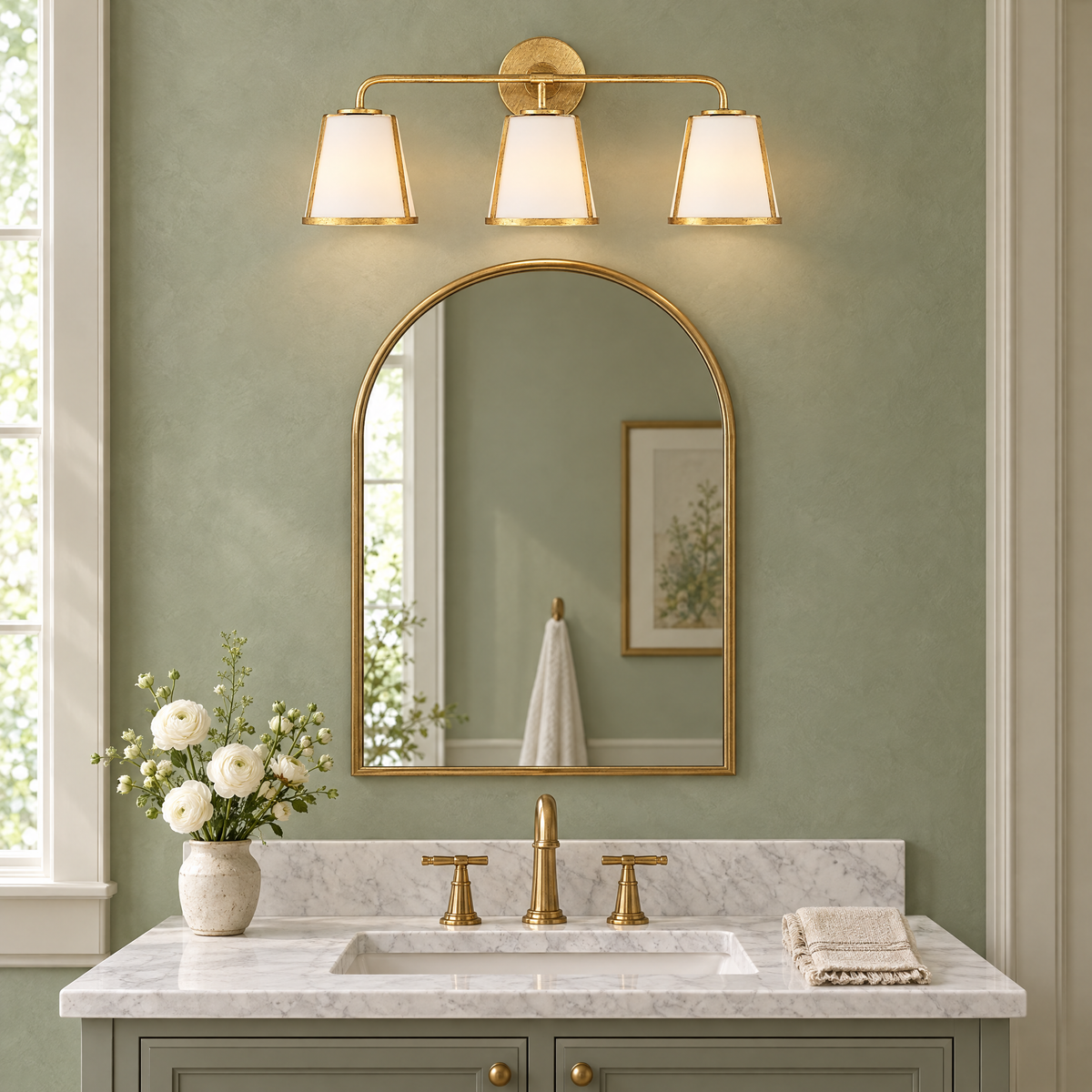
- Grooming: vanity lights or sconces on either side of the mirror, about 60 to 66 inches to center, so the face is lit evenly without shadows.
- Working: a desk lamp positioned opposite your writing hand, plus soft ambient light to reduce contrast.
- Bedside: swing-arm wall lamps or bedside lamps, so each person can read without lighting the whole room.
Task light is often a slightly cooler or brighter color temperature than ambient light, but keep it within the same family (2700K to 3000K at home) so the room stays cohesive.
Layer 3: How do designers use accent lighting?
Accent light is what makes a room look professionally designed. It creates contrast, which gives the eye somewhere to rest. The rule of thumb is that accent light should be about three times brighter than the ambient light around it to register.
- Artwork: a picture light mounted above the frame, roughly half to two-thirds the width of the artwork, or adjustable recessed lights aimed at about 30 degrees.
- Bookcases and shelves: small LED strips or puck lights, or a picture light over the top shelf.
- Texture: grazing light on stone, brick or plaster from a fixture set close to the wall.
- Plants and architecture: uplights at the base of a large plant or a column throw dramatic shadows on the ceiling.
Layer 4: Decorative light and glow
This is the layer people notice first: a sculptural chandelier, a pair of beautiful sconces, a lamp with a colored shade. Decorative fixtures don't need to put out much light; their job is to glow and set the style. Low-output sources such as sconces with alabaster or crackle glass, or small lamps on a bookshelf, give a room a warm evening atmosphere.
How to layer lighting in a living room, step by step
- Map the zones: seating group, reading corner, desk, bar, entry.
- Choose the ambient source: one centered chandelier or semi-flush over the main seating area.
- Add task lamps: at least one lamp per seating zone, aiming for light in three or more corners of the room.
- Pick one or two accent moments: the best artwork, the fireplace, a bookcase.
- Add decorative glow: sconces flanking a focal point, or a small lamp on a shelf.
- Control it: put each layer on separate dimmers or smart switches, and create scenes for "everyday," "entertaining" and "evening."
Layering in other rooms
| Room | Ambient | Task | Accent / decorative |
|---|---|---|---|
| Dining room | Chandelier 30–36 in above the table | Buffet lamps for serving | Sconces or a picture light on the main wall |
| Kitchen | Flush mounts or recessed | Island pendants, under-cabinet strips | Glass-front cabinet or shelf lighting |
| Bedroom | Flush or semi-flush mount | Swing-arm wall lamps or bedside lamps | A small lamp on a dresser, art lighting |
| Bathroom | Flush mount or small chandelier | Vanity sconces at 60–66 in to center | Night light or toe-kick lighting |
| Entry | Chandelier or lantern with 7 ft clearance | Lamp on a console for keys and mail | Sconces flanking a mirror |
Common layering mistakes
- All the light at one height. Mix ceiling, eye-level and low light.
- Mismatched color temperatures. Keep a room within 2700K to 3000K; see warm white vs cool white.
- Too many recessed lights. A grid of cans is ambient light only; it can't replace lamps and sconces.
- No dimmers. Layering is about control; without dimmers, you lose most of the benefit.
- Forgetting corners. Dark corners make a room feel smaller.
Get the look
The living room pictured uses all four layers: a brass-and-black chandelier for ambient and decorative light, lamps for reading, and a picture light over the art.
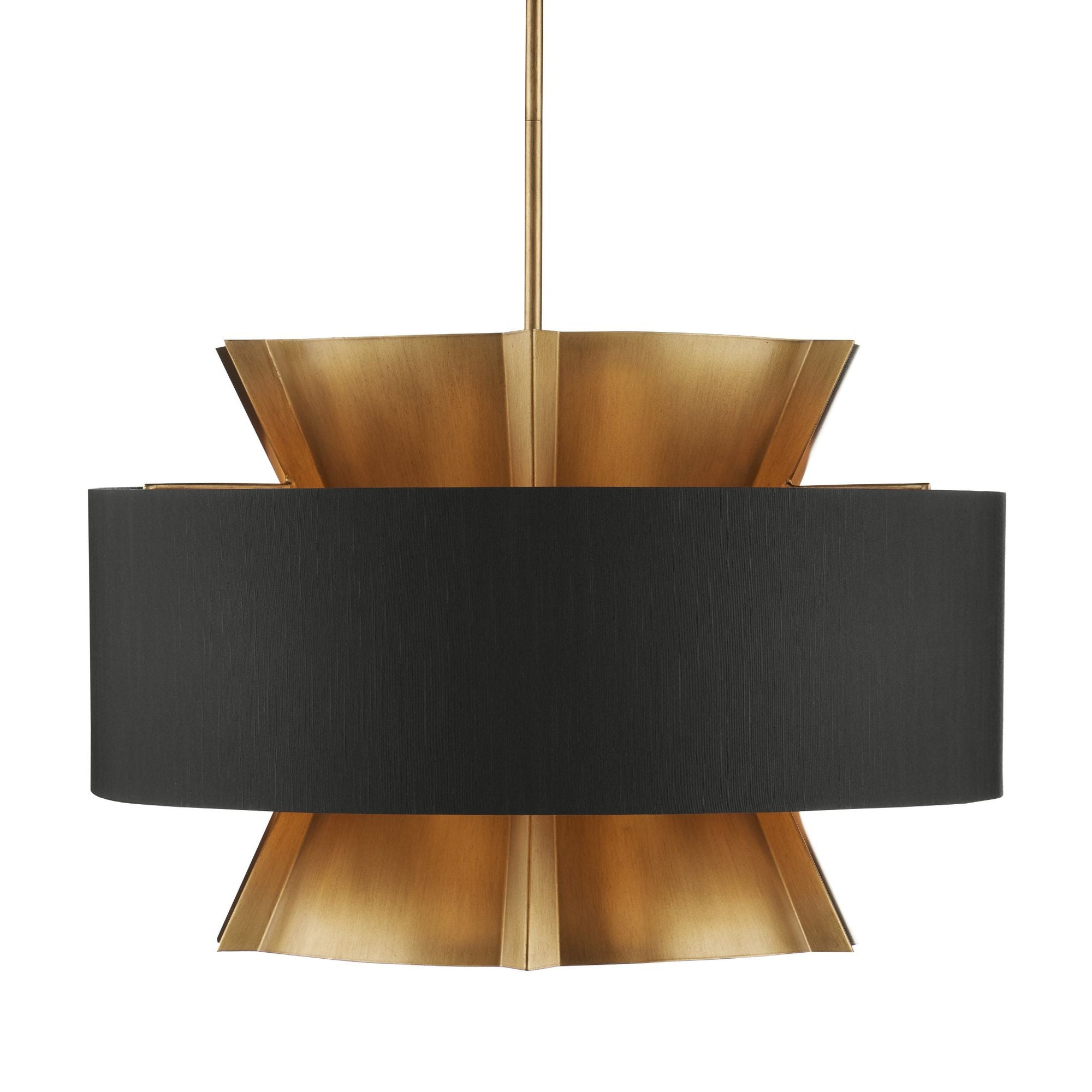
Currey & Company Oxenwood Brass & Black Chandelier — Centered over the seating group, it provides the ambient base and a graphic, decorative silhouette that works in traditional and modern rooms. Browse more in our chandeliers collection.
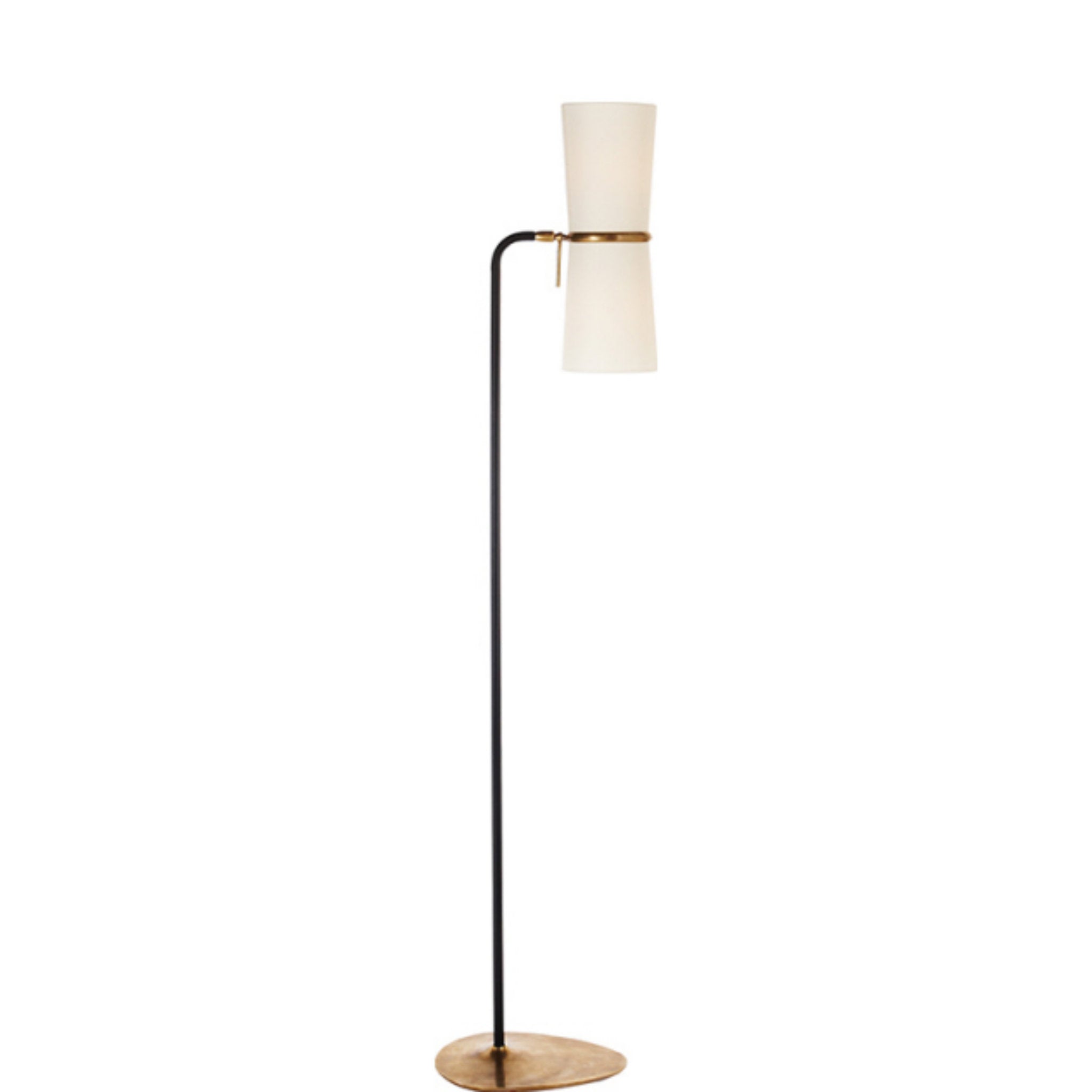
AERIN Clarkson Floor Lamp in Black and Hand-Rubbed Antique Brass — Twin linen shades cast generous reading light beside a sofa or behind a chair, covering a whole seating zone from one fixture.
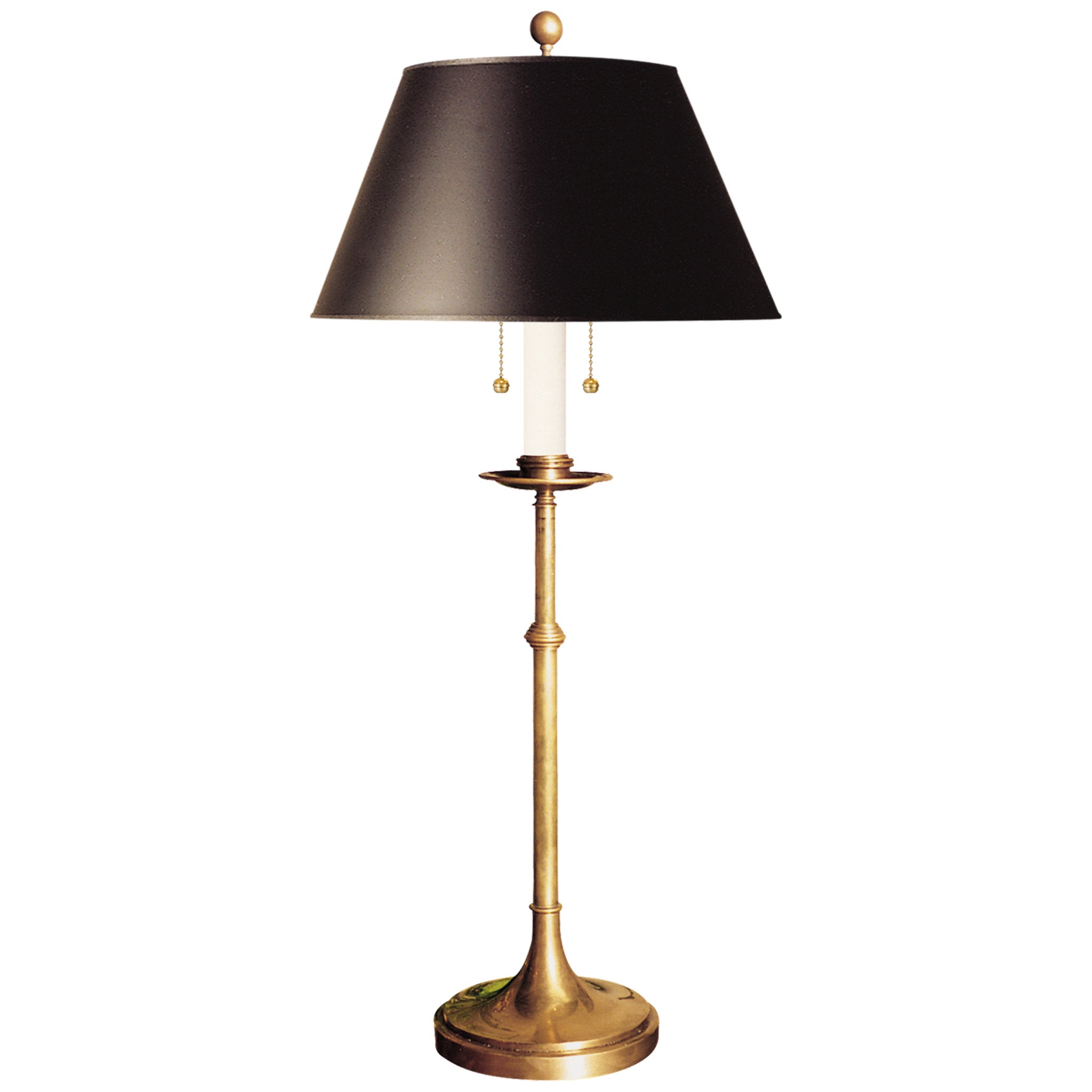
Chapman & Myers Dorchester Club Table Lamp in Antique-Burnished Brass — Adjustable from H25.25" to 31.25", so you can set the shade exactly at seated eye level. The black shade directs light down onto the page.
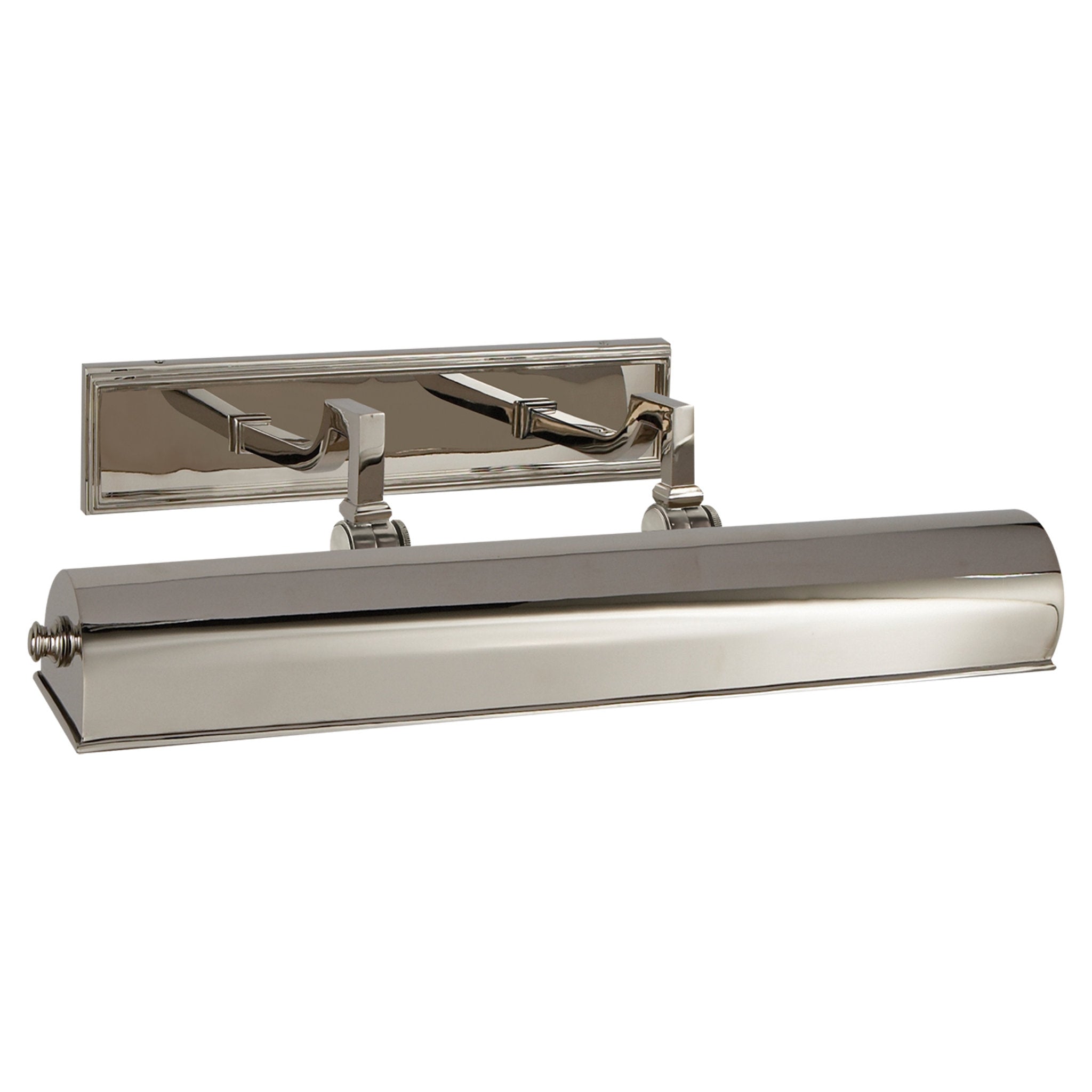
Alexa Hampton Dean 18" Picture Light in Polished Nickel — The accent layer. Mounted above a painting about 27 to 36 inches wide, it turns the art into the focal point of the room after dark.
Kelly Wearstler Strada Small Sconce in Gild — A decorative pair flanking a fireplace or bar adds sparkle at a low output. See more from the designer in our Kelly Wearstler collection.
For more ways to put this into practice, see our living room lighting ideas. Designers and architects can source every layer through the Foundry Lighting Design Trade Program, and our New York and Los Angeles showrooms are set up to show how fixtures work together.
Shop this post

Frequently asked questions
What are the 3 layers of lighting?
The three core layers are ambient, task and accent lighting. Ambient light provides overall illumination, task light focuses on activities such as reading or cooking, and accent light highlights art or architecture. Many designers add a fourth, decorative layer for statement fixtures like chandeliers and sculptural sconces that set the room's style.
How many light sources should a living room have?
Most designers aim for light from at least three or four different sources in a living room, at different heights: a ceiling fixture, two or more lamps and one accent or sconce. A good check is to make sure at least three corners or zones of the room have their own light, so no area is left dark.
What is the difference between ambient and accent lighting?
Ambient lighting is the general, even light that fills a room so you can see and move around, usually from ceiling fixtures. Accent lighting is focused and brighter, used to draw attention to specific features like artwork, bookshelves or a textured wall. Accent light is typically about three times brighter than the surrounding ambient light.
Do I need recessed lighting if I have lamps?
Not necessarily. Many beautifully lit rooms rely on a central fixture, sconces and lamps with no recessed lights. Recessed lighting is helpful for even ambient light in kitchens, hallways and low-ceilinged rooms, but it should support decorative fixtures and lamps rather than replace them.
Should every light in a room be on a dimmer?
Ideally, yes. Dimmers are what make layered lighting work, because they let you balance each layer and change the mood from bright and practical to soft and relaxed. At a minimum, put ceiling fixtures and chandeliers on dimmers, and choose lamps with dimmable bulbs or smart plugs.
Designing a whole room?
Our lighting specialists help size and pair fixtures every day, and interior designers and architects can join the Design Trade Program. Browse more ideas in Inspiration.