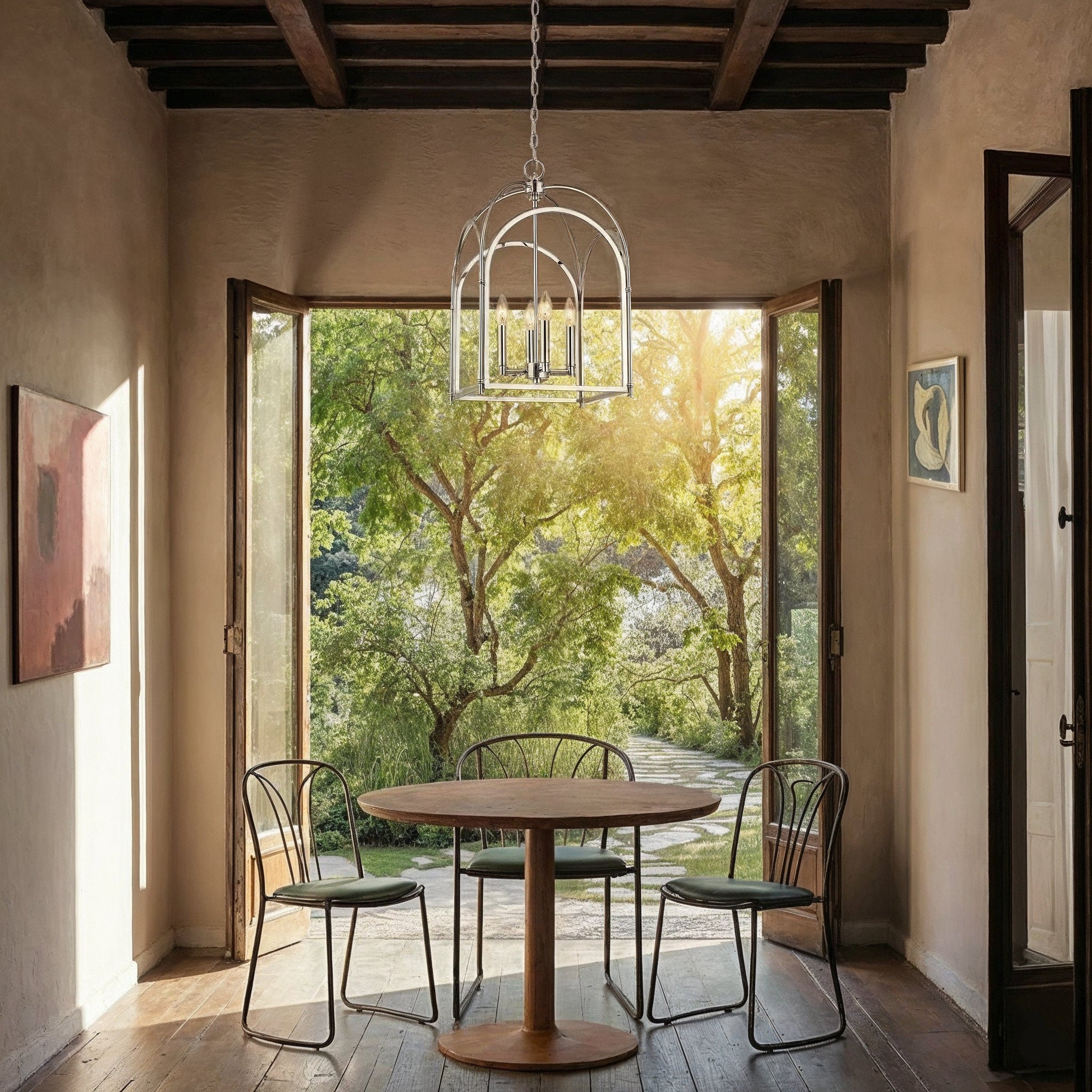


Article: Shop the Look: Luxury Outdoor Patio Lighting
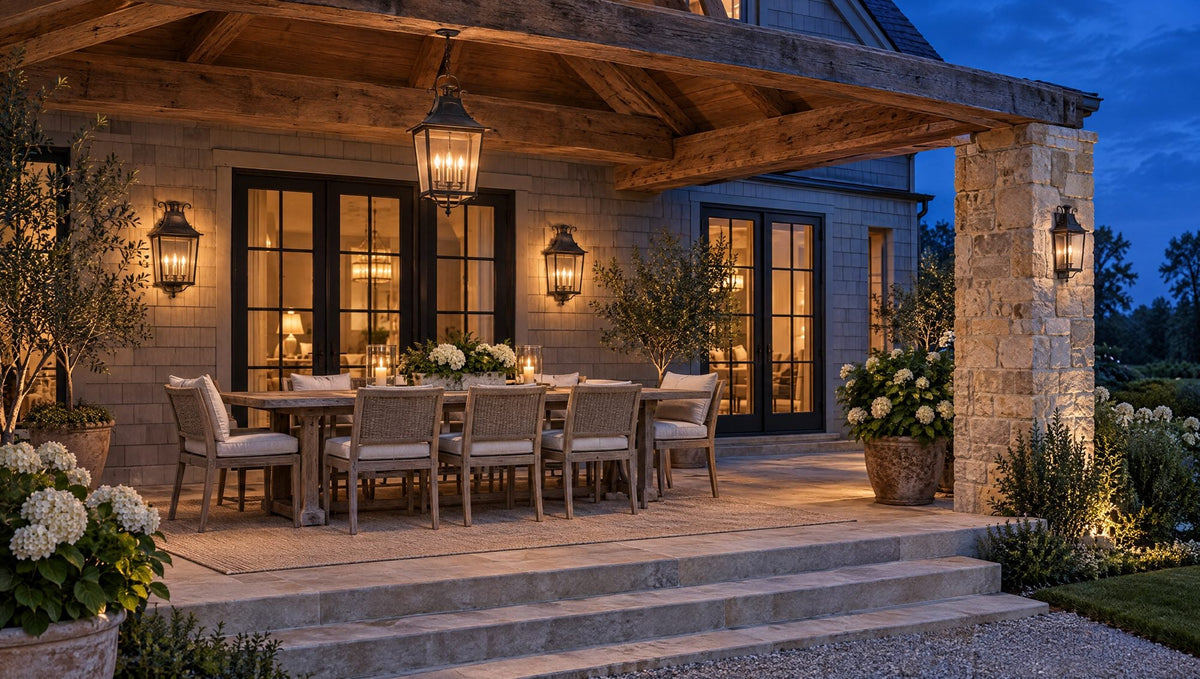
Shop the Look: Luxury Outdoor Patio Lighting
Great outdoor patio lighting works in three layers: a hanging lantern that anchors the seating or dining area from above, wall lanterns or sconces that frame the doors and outline the architecture, and a low layer of post or path light that guides people in from the garden. Keep every fixture warm (2700K–3000K), dimmable, and in one finish family, and the patio reads as a true outdoor room after dark.
This Shop the Look walks through one covered stone patio we would happily spend every summer evening on: a limestone terrace under a timber-beamed loggia, a long teak dining table, deep lounge seating, and a lawn that runs down to a gravel path. Every fixture comes from the same rust-iron and clear-glass family, so the lighting feels collected rather than assembled. Below is the plan, the numbers behind it, and the exact pieces we used.
How do you light a covered patio?
Start from above. A covered patio or loggia has a ceiling, which means you can treat it like an indoor room and hang a statement lantern over the main furniture group. That one fixture sets the mood and gives the space a center of gravity. Then add wall light at the doors and piers so the back of the space never falls into shadow, and finish with a post or path light where the terrace meets the garden.
- Overhead: one generous hanging lantern centered over the dining table or seating group.
- Walls: a pair of sconces or wall lanterns flanking the French doors, plus smaller lanterns on side walls or piers.
- Ground: a post light at the top of the steps or path, and low path lights beyond.
Layering this way lets you dim the overhead lantern for dinner, keep the wall lights low for conversation, and leave the post light on as a landmark from inside the house. It is the same principle we cover in our guide to layered lighting, applied outdoors.
What size hanging lantern for a patio?
Outdoor fixtures always read smaller than they are, because there are no walls close by to give them scale and the sky swallows everything. Size up. For a lantern over a dining table, aim for roughly one-half to two-thirds of the table's width. Over a seating group, use the indoor chandelier formula (room length plus width in feet equals diameter in inches) and then round up a size. You can read more about that formula in our chandelier size guide.
| Patio area (covered) | Suggested lantern width | Clearance / hang height |
|---|---|---|
| 10' x 12' seating nook | 14–18" | At least 7' above floor in walkways |
| 12' x 16' loggia | 16–22" | At least 7' above floor in walkways |
| Dining table, 40" wide | 20–26" | Bottom 30–36" above tabletop |
| 16' x 20' or larger | 22"+ or two lanterns | Space two lanterns evenly along the long axis |
On a patio with a ceiling under 9 feet, check the overall height of a tall lantern plus its chain before you commit. A lantern that hangs too low in a walkway will be bumped, and one that is pushed too high looks like an afterthought.
Shop the look
Tap the dots to shop this room

Shop the look
How high should outdoor wall lights be on a patio?
For sconces flanking a door, place the center of the fixture roughly 66 inches above the patio floor, or align the top of the fixture with the upper third of the door. On a long wall or between piers, keep all sconces at exactly the same height so the line reads cleanly from the lawn. Space wall lanterns about 8 to 10 feet apart along a long elevation, adjusting to land them on the center of piers or between windows.
| Wall location | Mounting guideline | Sizing rule of thumb |
|---|---|---|
| Flanking French doors | Center ~66" above floor | About 1/4–1/3 of door height each |
| Stone piers or columns | Match door sconce height | Narrower than the pier face |
| Side walls and service doors | Center ~60–66" above floor | One size down from the main pair |
What color temperature should patio lights be?
Stay between 2700K and 3000K. Warm light flatters stone, wood, skin tones, and plantings, and it keeps a patio feeling like part of the house. Cooler 4000K light looks harsh against the night sky and tends to attract more insects. Use the same Kelvin on every fixture so the hanging lantern, wall lights, and post light glow as one. With clear-glass lanterns, where the bulb is visible, choose decorative filament-style LEDs with a CRI of 90 or higher so colors look true.
Do patio lights need to be wet rated?
It depends on where they live. Fixtures under a solid roof that are protected from direct rain are generally fine with a damp rating. Anything exposed to rain, sprinklers, or snow, like a post light on the lawn or a sconce on an open wall, needs a wet rating. Always confirm the rating on each product listing and have a licensed electrician handle outdoor wiring, GFCI protection, and weatherproof boxes.
Featured in this patio
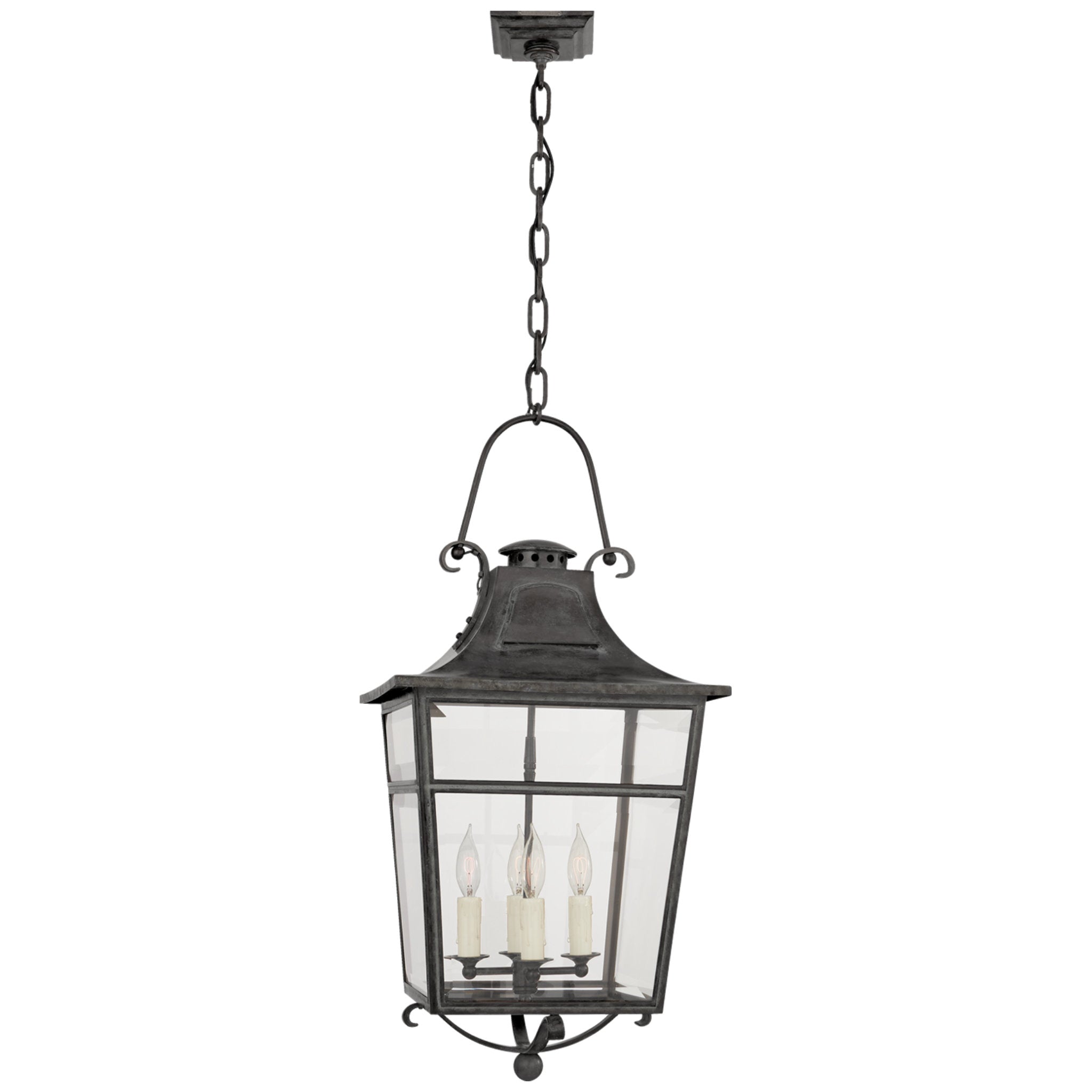
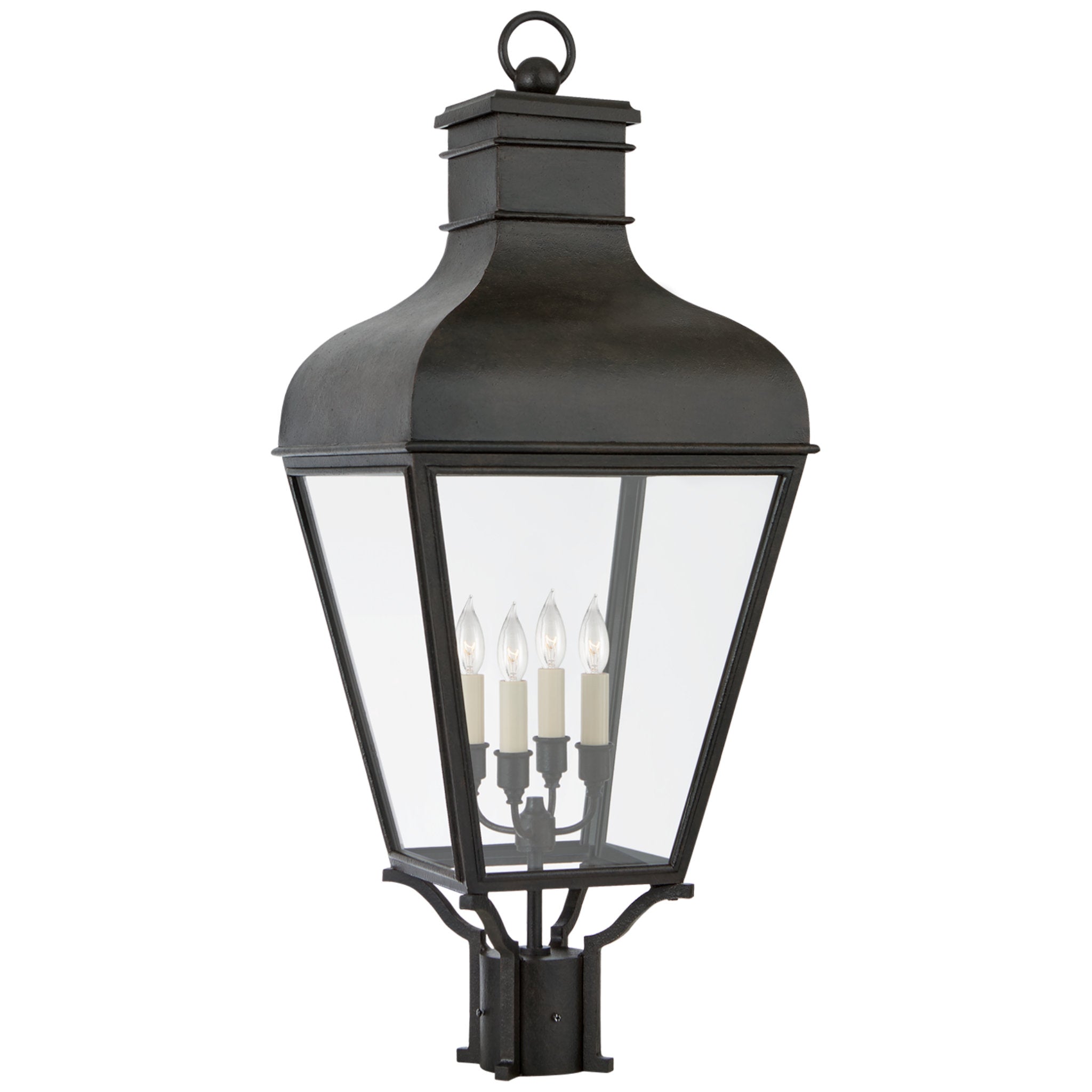
We built the room around the Ralph Lauren Carrington family in French Rust with clear glass: an old-world iron profile that suits limestone, brick, and shingle, and that pairs naturally with teak and linen. A Chapman & Myers post light in the same finish carries the look down into the garden.
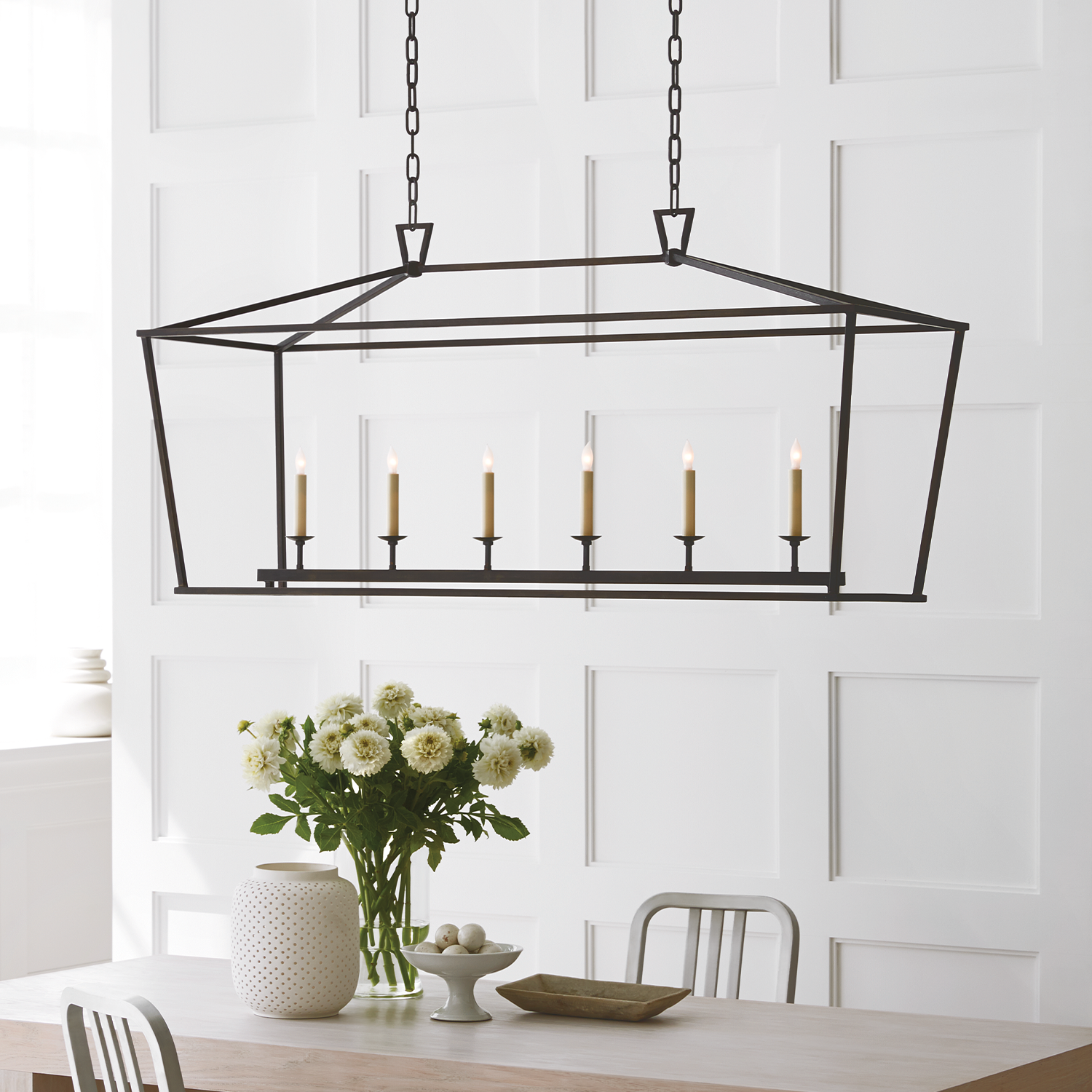
Ralph Lauren Carrington Small Lantern in French Rust with Clear Glass — W16" x H34.5". Hung centered over the teak dining table under the loggia, this is the anchor of the whole scene. Its tall proportions suit a beamed ceiling, and the clear glass lets the candle-like glow read from across the lawn.
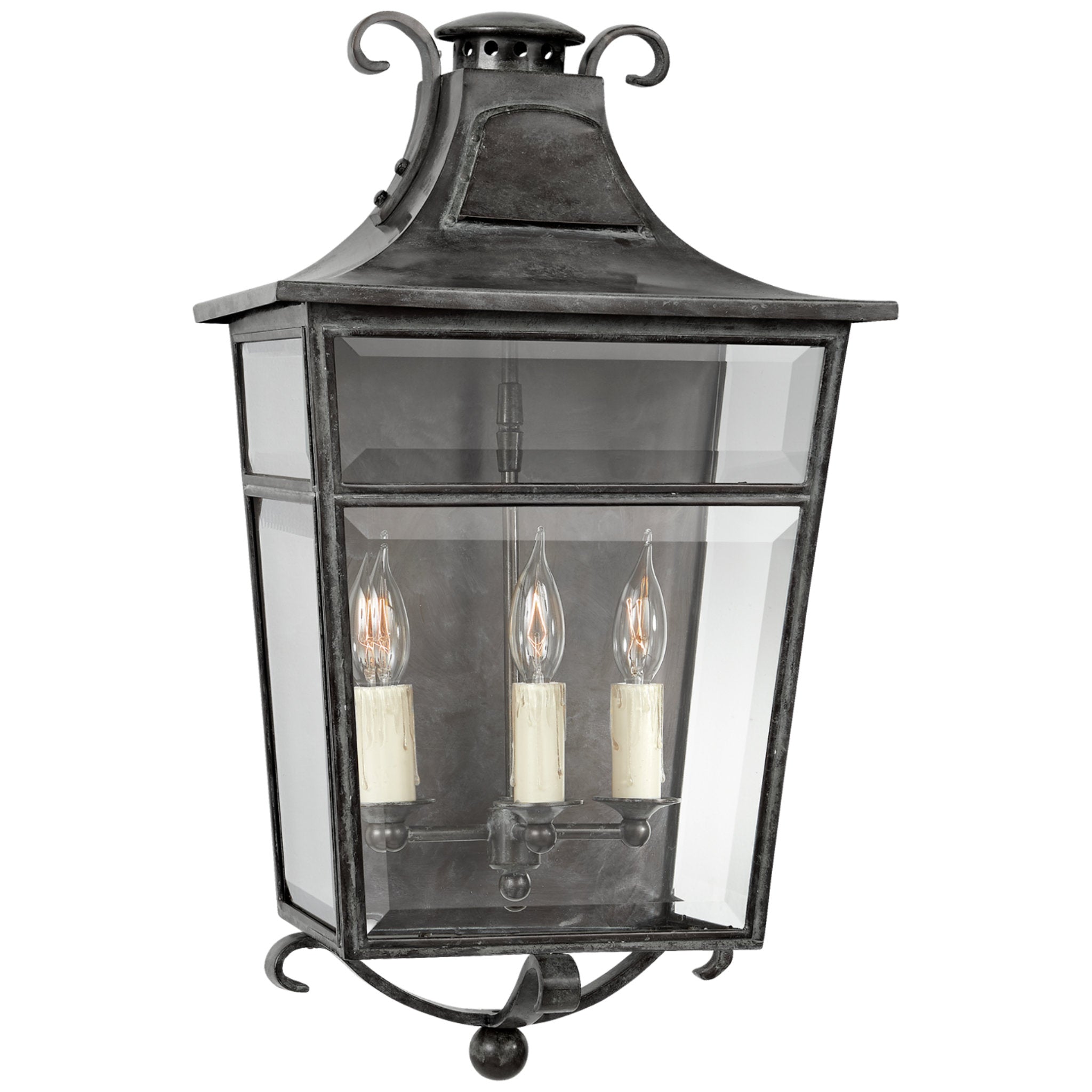
Ralph Lauren Carrington Medium Sconce in French Rust with Clear Glass — W13.5" x H24" x E9.25". A pair flanks the French doors that open from the kitchen. At 24 inches tall, they are well scaled for standard to slightly oversized patio doors.
Ralph Lauren Carrington Small Wall Lantern in French Rust with Clear Glass — W10.25" x H18.5" x E7". The smaller sibling goes on the stone piers at the open end of the loggia and on the side wall by the outdoor bar, repeating the form at a quieter scale.
Chapman & Myers Fremont Post Light in French Rust with Clear Glass — W13" x H32.5". Set at the top of the steps where the terrace meets the gravel path, it marks the way down to the garden and ties the landscape back to the house.
Styling notes for the finished patio
- One finish, several scales. Repeating French Rust in three sizes makes the patio feel designed, not matched out of a catalog.
- Dim everything. Put the hanging lantern and wall lights on separate dimmers so dinner and late-night conversation can have different moods.
- Let the garden glow. A few low, shielded uplights on a specimen tree or hedge give the eye something to rest on beyond the terrace. Our guide to landscape lighting covers placement.
- Plan the whole backyard. If your patio leads to a pool or a larger garden, see our resort-inspired backyard lighting ideas for how to connect the zones.
Browse the full outdoor lighting collection for more lanterns and post lights, or start with what is ready now in new arrivals in stock. Designers and architects specifying whole-house exterior packages can work with Foundry Lighting's Design Trade Program, and our New York and Los Angeles showrooms are a good place to see iron, bronze, and brass finishes side by side before you choose.
Shop this post

Frequently asked questions
What is the best lighting for an outdoor patio?
The best patio lighting combines a hanging lantern or pendant over the main seating or dining area, wall sconces at doors and piers, and low post or path lights at the edges. Use warm 2700K to 3000K bulbs, put each layer on its own dimmer, and keep fixtures in one finish so the patio reads as a single outdoor room.
How big should a lantern be over an outdoor dining table?
Aim for a lantern roughly one-half to two-thirds the width of the table, and hang it so the bottom sits 30 to 36 inches above the tabletop. Outdoor fixtures look smaller than they do indoors because there are no nearby walls for scale, so if you are between two sizes, choose the larger one.
How far apart should outdoor wall lights be?
On a long wall, space outdoor sconces or wall lanterns about 8 to 10 feet apart, adjusting so each lands centered on a pier or between windows. Flanking a door, set them a few inches outside the trim on each side. Keep every fixture at the same mounting height so the row reads cleanly.
Can I use indoor lights on a covered patio?
Not safely. Even under a roof, patios see humidity, wind-driven rain, and temperature swings, so fixtures should carry at least a damp rating. Anything exposed to direct rain or sprinklers needs a wet rating. Check the rating on each listing and have an electrician install GFCI-protected, weatherproof connections.
What color outdoor light is most inviting?
Warm white between 2700K and 3000K is the most inviting for patios. It flatters stone, wood, plantings, and skin tones and makes the space feel like part of the home. Cooler 4000K and above can look harsh at night and may attract more insects. Match the Kelvin across every exterior fixture.
Designing a whole room?
Our lighting specialists help size and pair fixtures every day, and interior designers and architects can join the Design Trade Program. Browse more ideas in Inspiration.