


Article: Bathroom Vanity Lighting Guide: Size, Height and Placement

Bathroom Vanity Lighting Guide: Size, Height and Placement
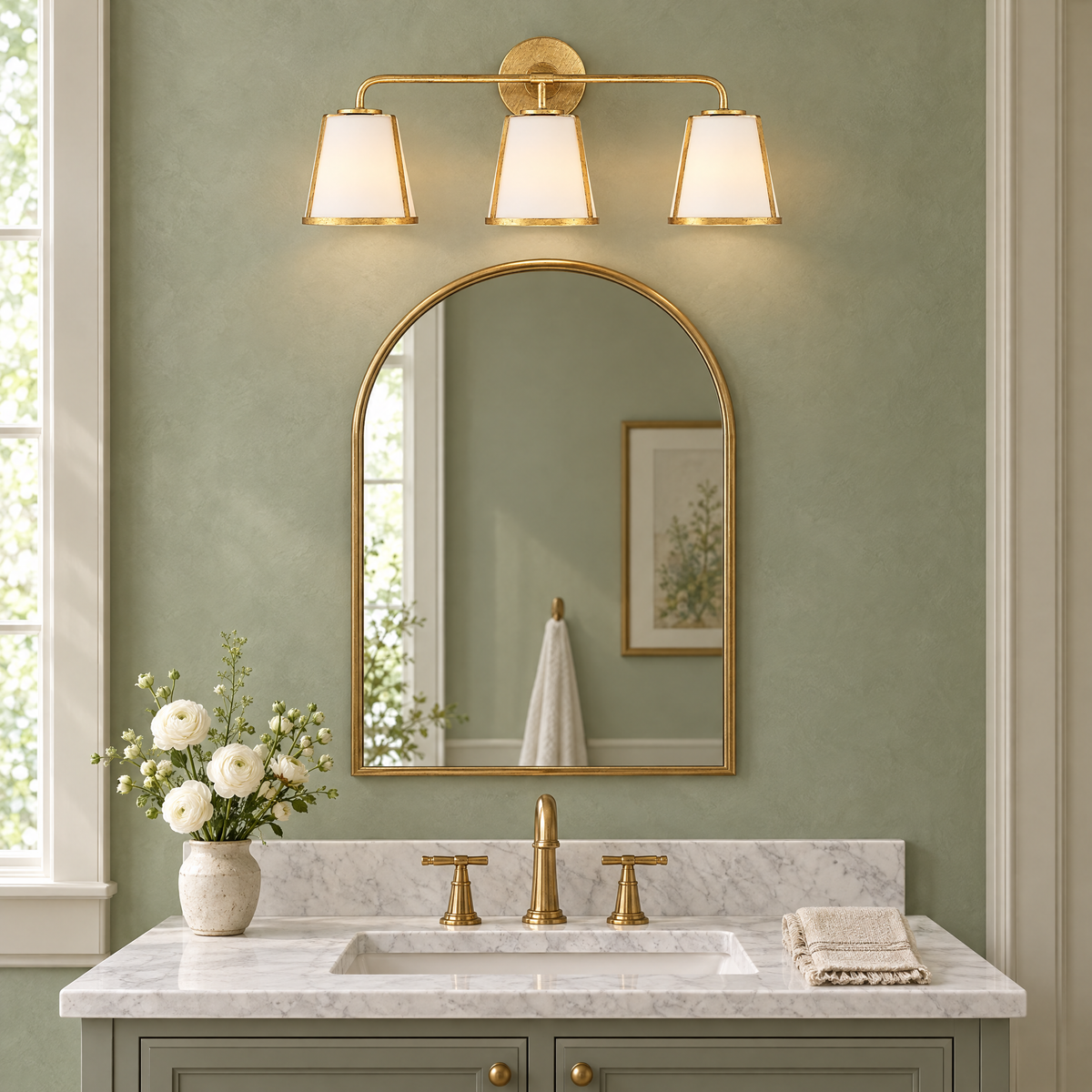
A vanity light should be about 75 percent of the mirror's width and never wider than the vanity itself. Mount a fixture above the mirror so it sits roughly 75 to 80 inches from the floor. For sconces flanking the mirror, which give the most flattering light, center them 60 to 66 inches from the floor and 36 to 40 inches apart.
No light in the house works harder at close range than the one at the bathroom vanity. It has to show true skin tone for makeup, light the jawline evenly for shaving, and still look beautiful when the room is quiet. Get the size, height, and placement right and the whole bath feels better designed. Get it wrong and you live with shadows under your eyes every morning. Here are the measurements designers use, in one place.
What size vanity light do you need?
Size the fixture to the mirror first, then check it against the vanity. The most common rule of thumb is that a bar light over the mirror should span about three-quarters of the mirror's width and should never extend past the edges of the vanity top. Sconces, by contrast, are sized to the mirror's height: choose a sconce tall enough that its light source lands near face level when mounted.
| Vanity width | Typical mirror width | Bar light over mirror | Or sidelights |
|---|---|---|---|
| 24" | 18–22" | about 14–18" (2-light) | 1 pair, small sconces |
| 30" | 24" | about 18–20" (2- to 3-light) | 1 pair |
| 36" | 28–30" | about 21–24" (3-light) | 1 pair |
| 48" | 36–40" | about 27–30" (3- to 4-light) | 1 pair |
| 60" double | two 24" mirrors | one 18–20" fixture per mirror | 3 sconces (outer pair plus one shared center) |
| 72" double | two 28–30" mirrors | one 21–24" fixture per mirror | 2 pairs, or 3 sconces |
On a double vanity with two mirrors, give each sink its own light. A single long bar stretched across both mirrors lights the gap between them and leaves each face partly in shadow.
How high should a vanity light be mounted?
Height depends on where the fixture goes.
- Above the mirror: mount the fixture so it sits roughly 75 to 80 inches from the finished floor, usually 3 to 4 inches above the top of the mirror. Shades should point up or be diffused so bulbs do not glare into the mirror.
- Flanking the mirror: center each sconce 60 to 66 inches from the floor, close to eye level for most adults. If the household is tall, lean toward the upper end.
- Distance apart: sidelights work best 36 to 40 inches apart so light reaches both sides of the face. If the mirror is wider than that, consider mounting sconces directly on the mirror glass (with a mirror designed for it) or adding an overhead fixture.
Plan electrical boxes before tile goes up. Box locations are the one part of vanity lighting that is hard and expensive to change later. For heights in every other room, see our guide to how high to hang wall sconces.
Shop the look
Tap the dots to shop this room
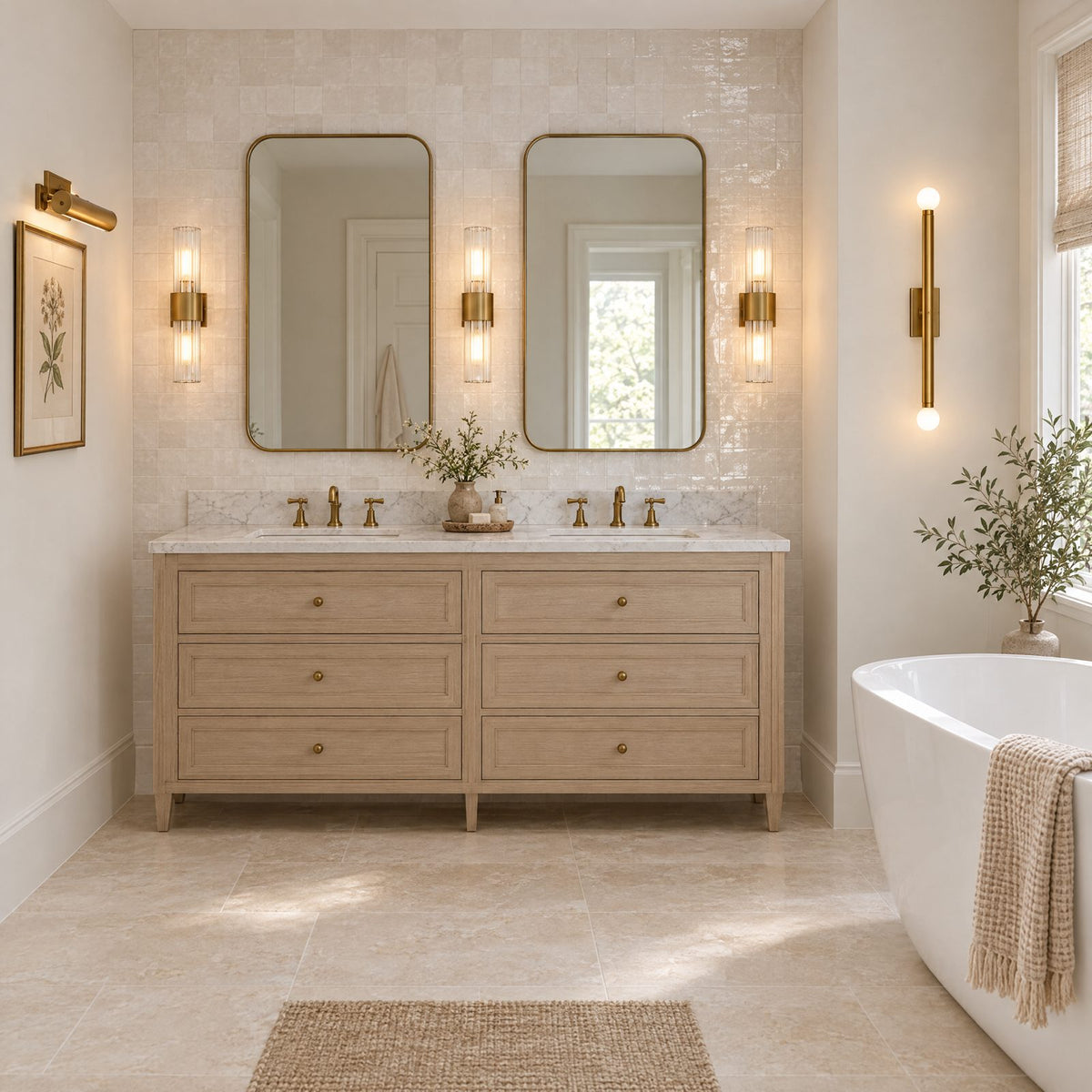
Shop the look
Sconces or a light bar: which is better over a vanity?
Sidelights are the gold standard for grooming. Light coming from both sides at face height fills in shadows under the brow, nose, and chin that an overhead source creates. That is why makeup artists and hotel designers favor them.
A bar light above the mirror still has a place. It is the practical choice when the mirror is too wide for side sconces to reach the center, when a medicine cabinet or tile layout leaves no room at the sides, or in a small powder room where one fixture keeps the wall uncluttered. For the best of both, many designers combine a pair of sconces with a flush-mount or recessed light in the ceiling above the vanity area.
What color temperature and brightness are best for a vanity?
Warm-to-neutral light between 2700K and 3000K is the most flattering and matches the rest of the house. If the vanity is where makeup is applied daily, 3000K to 3500K gives slightly crisper, more neutral light without feeling clinical. Whatever you choose, keep every bulb in the bathroom the same Kelvin so the mirror, tub, and ceiling light do not clash.
Color rendering matters even more than Kelvin at a mirror. Look for a CRI of 90 or higher so skin tones, foundation, and hair color look accurate. Put vanity lights on a dimmer: full brightness for getting ready, a low glow for evening. Our guide to warm white vs. cool white lighting goes deeper on choosing Kelvin room by room.
Do bathroom vanity lights need a damp or wet rating?
Most vanity locations call for a fixture rated for damp locations, since bathrooms see steam and humidity. Fixtures near or inside a tub or shower zone may need a wet rating, and local electrical codes set specific rules for how close a fixture can be to the bathtub or shower. Check the rating on each product listing and confirm placement with your electrician before installing.
Vanity lighting mistakes to avoid
- Relying only on recessed ceiling lights. Downlights directly overhead cast harsh shadows on the face.
- Exposed bulbs pointing at the mirror. They create glare and double reflections.
- A fixture wider than the vanity. It looks oversized and wastes light on the wall.
- Mixed finishes on one wall. Match the lights to the faucet or at least to one metal in the room.
- Forgetting the rest of the room. A spa-like bath also needs a soft overall layer; see our spa-inspired bathroom lighting ideas for how to build it.
Featured in this bathroom
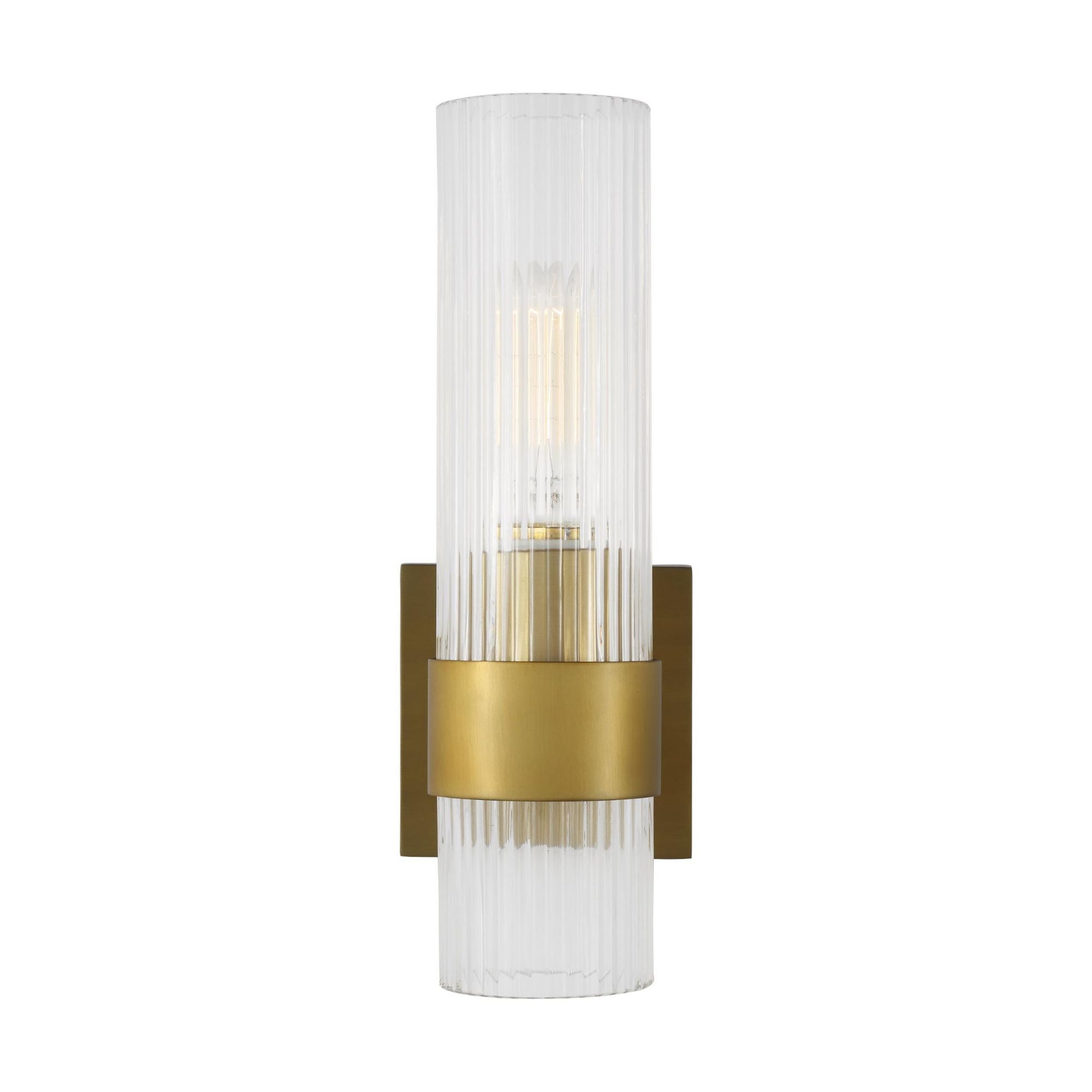
Chapman & Myers Geneva Sconce in Burnished Brass — used here as sidelights, three across a double vanity: one on each outer edge and one shared between the two mirrors. The pattern gives each sink light from both sides.
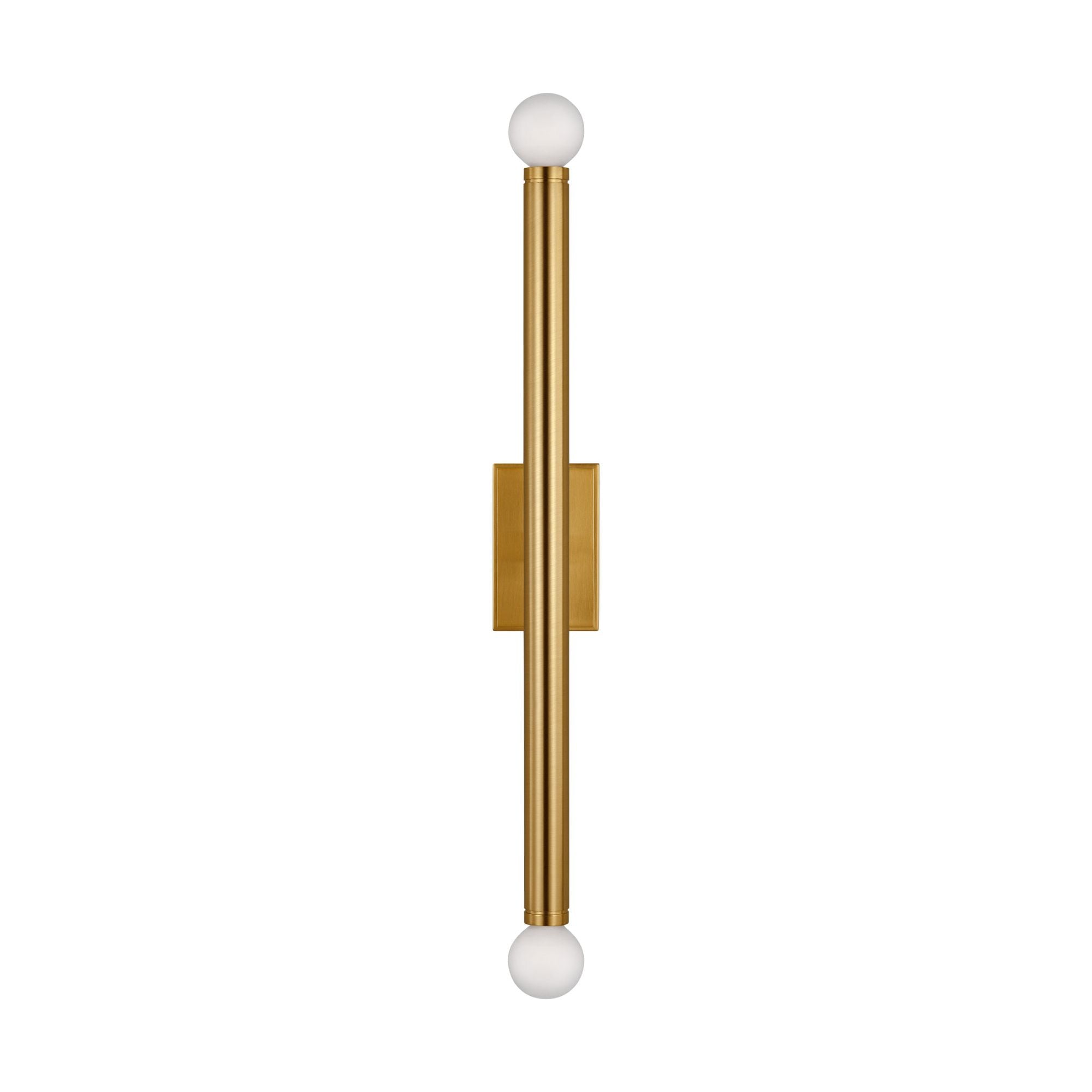
Thomas O'Brien Beckham Modern Large Single Sconce in Burnished Brass — a clean, architectural sconce for the wall beside a freestanding tub or a window, adding a soft wall layer so the room does not rely on overhead light after dark.
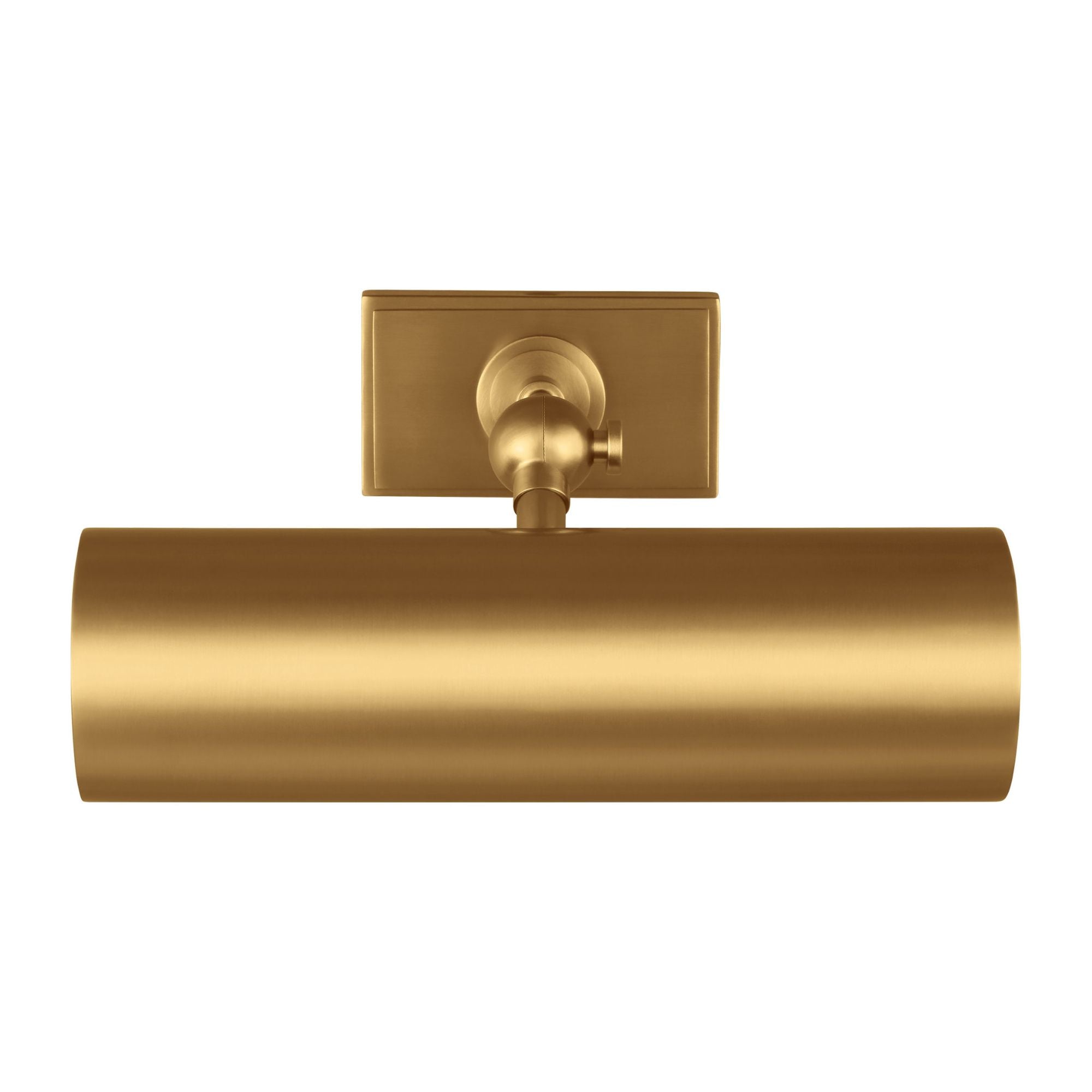
Chapman & Myers Kenyon 10" Picture Light in Burnished Brass — a small picture light over a framed print turns a bath wall into a quiet focal point, and it doubles as gentle nightlight-level illumination on a dimmer.
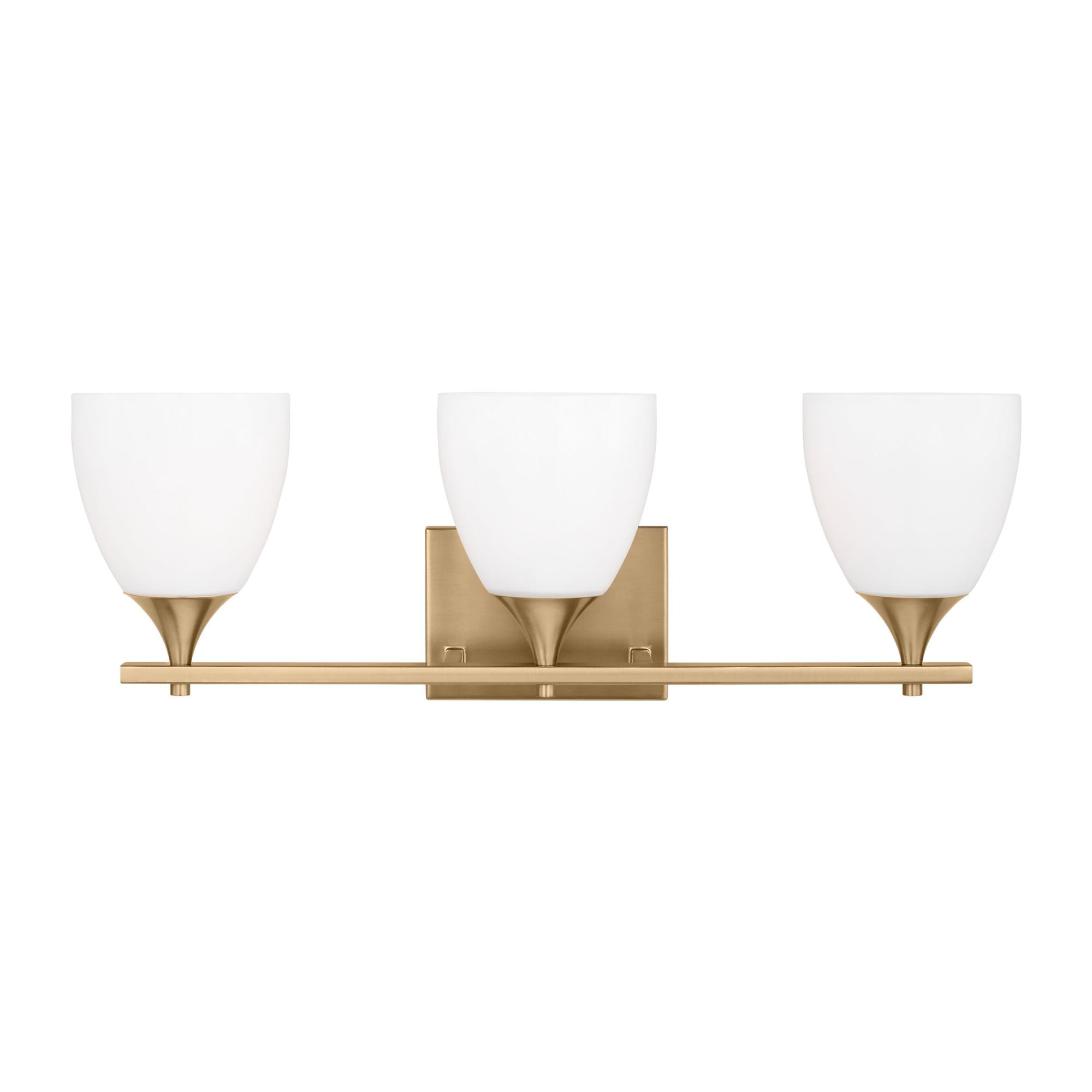
Drew & Jonathan Toffino 3-Light Bath in Satin Brass — the over-mirror alternative. Use it where a medicine cabinet or tile leaves no room for sidelights, sized to about three-quarters of the mirror width.
Lauren Ralph Lauren Robert Sconce in Time Worn Brass — a warmer, more traditional brass for a powder room or a guest bath, where a pair flanking a small mirror is all the light the room needs.
Explore more sconces and bath fixtures in our wall lights collection, or see what is ready to ship in our in-stock best sellers.
Measure before you shop
Write down four numbers: vanity width, mirror width, mirror top height, and ceiling height. With those, the chart above tells you what size fixture to buy and where the electrical boxes belong. If you are designing a full bath renovation, Foundry Lighting's Design Trade Program works with designers and contractors, and our New York and Los Angeles showrooms let you compare finishes side by side.
Shop this post

Frequently asked questions
How wide should a vanity light be?
A vanity light mounted above the mirror should be about 75 percent of the mirror's width and should never extend beyond the edges of the vanity. For a 30-inch mirror, that means a fixture around 22 to 24 inches wide. On a double vanity with two mirrors, use a separate fixture sized to each mirror.
How high should a light be above a bathroom mirror?
Mount a vanity light above the mirror so it sits about 75 to 80 inches from the finished floor, which is typically 3 to 4 inches above the top of the mirror. Choose a fixture with diffused or upward-facing shades so bulbs do not glare into the mirror.
How far apart should vanity sconces be?
Sconces flanking a bathroom mirror work best about 36 to 40 inches apart, center to center, so light reaches both sides of the face evenly. Center each sconce around 60 to 66 inches from the floor. If the mirror is wider, add a third shared sconce or an overhead fixture.
Is it better to have vanity lights on the side or above the mirror?
Side lighting is generally better for grooming because it lights the face evenly and fills in shadows under the eyes and chin. An above-mirror fixture is the practical choice when there is no room for sconces at the sides, such as with a wide mirror, medicine cabinet, or tight powder room.
What color temperature is best for bathroom vanity lighting?
Between 2700K and 3000K is most flattering and matches the rest of the house. For daily makeup application, 3000K to 3500K gives slightly more neutral light. Just as important is a CRI of 90 or higher so skin tones look accurate. Keep every bulb in the bathroom the same Kelvin.
Designing a whole room?
Our lighting specialists help size and pair fixtures every day, and interior designers and architects can join the Design Trade Program. Browse more ideas in Inspiration.