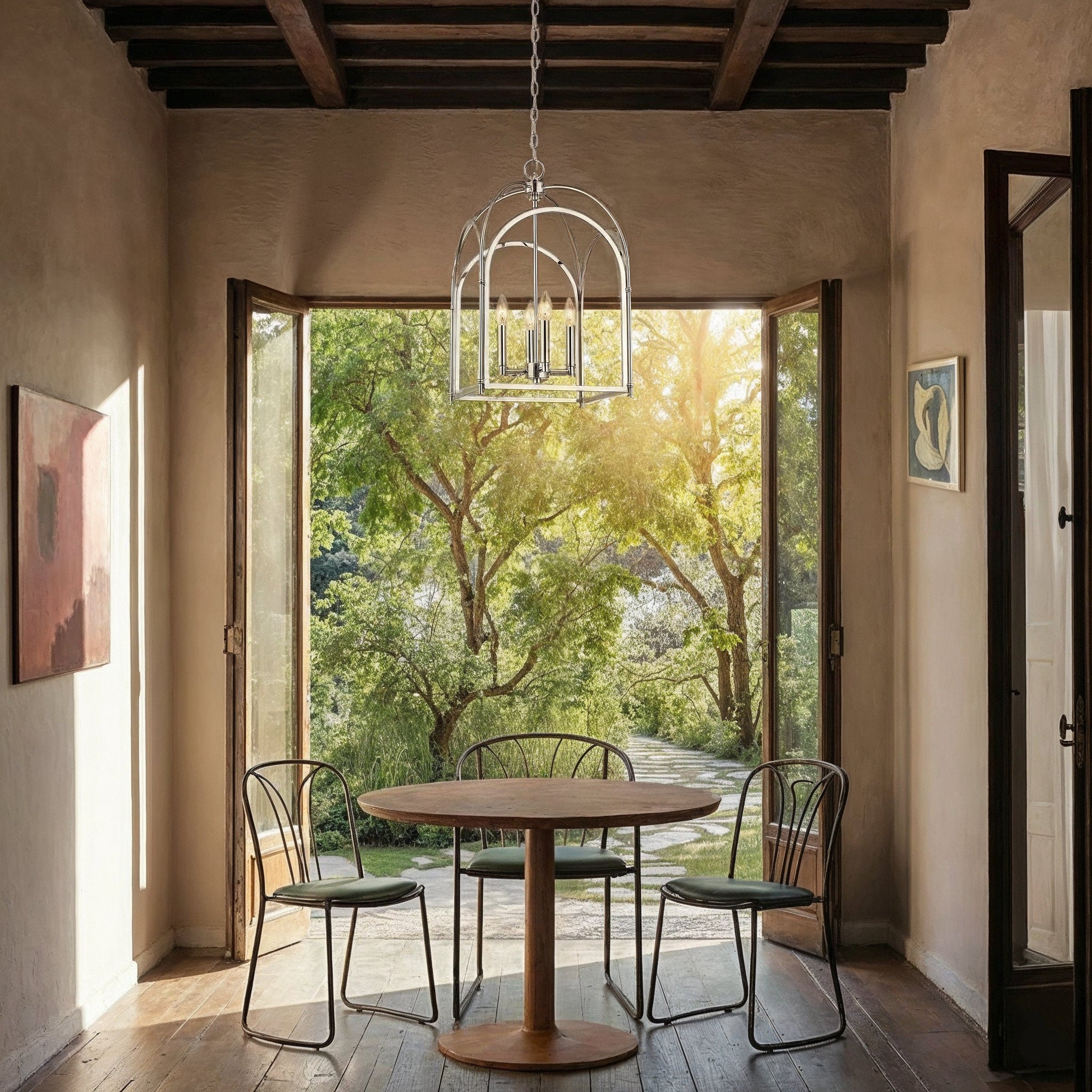


Article: Home Office Lighting Ideas for Focus and Video Calls

Home Office Lighting Ideas for Focus and Video Calls
The best home office lighting combines three layers: soft ambient light from the ceiling, a focused task lamp on the desk, and a diffused light source in front of your face for video calls. Aim for warm-neutral bulbs around 3000K–3500K with a CRI of 90 or higher, and never sit with your back to a bright window.
Most home offices were never designed to be offices. They are spare bedrooms, corners of the living room, or a closet with the doors taken off, and they usually come with a single ceiling fixture that was meant to light the room, not the work. The fix is not more brightness. It is better placement. Below is how designers light a workspace so it is comfortable for eight hours of screen time, flattering on camera, and still beautiful when the laptop is closed.
What is the best lighting for a home office?
A workspace needs light from more than one direction. A single overhead fixture throws shadows onto the desk (your own head and hands block it) and casts unflattering shadows under your eyes on camera. Layering solves both problems:
- Ambient light from a flush mount, semi-flush, or pendant fills the room so your eyes are not constantly adjusting between a bright screen and a dark room.
- Task light from a desk lamp, swing-arm sconce, or pharmacy floor lamp puts concentrated light on paper, keyboards, and sketchbooks.
- Accent light from picture lights or library sconces adds depth behind you, which reads as warmth and polish on video.
If you only change one thing, add a task lamp. If you change two, add something that lights the wall behind your chair. For a deeper walk-through of the method, see our guide on how to layer lighting like a designer.
How bright should home office lighting be?
Commonly cited targets for reading and computer work fall around 300–500 lux on the desk surface (roughly 30–50 foot-candles), with the surrounding room a bit dimmer but not dark. You do not need a light meter to get close: if you can read a printed page comfortably without leaning in, and your screen does not feel like the brightest thing in the room, you are in the right range.
Two rules keep brightness comfortable:
- Reduce contrast. A glowing monitor in a dark room causes eye strain. Keep ambient light on during screen work, even during the day on overcast afternoons.
- Put dimmers on everything you can. The light you want for a 9 a.m. spreadsheet is not the light you want for a 7 p.m. email check.
Shop the look
Tap the dots to shop this room

Shop the look


Home office lighting cheat sheet
| Element | Rule of thumb | Why it matters |
|---|---|---|
| Color temperature (task) | 3000K–4000K | Crisper light for reading and detail work |
| Color temperature (ambient) | 2700K–3000K | Keeps the room feeling like home, not a cubicle |
| Color rendering | CRI 90+ | Accurate skin tones on camera and true paint and fabric colors |
| Desk lamp shade height | Bottom of shade near seated eye level | Light hits the work surface, not your eyes |
| Desk lamp side | Opposite your writing hand | Your hand will not shadow the page |
| Wall sconce over desk | Roughly 15"–20" above the desk surface to the bottom of the shade | Frees up desk space while keeping light close to the task |
| Video key light | In front of you, slightly above eye level | Even, flattering light without harsh under-eye shadows |
| Walkway clearance under fixtures | At least 7' | Prevents head bumps in small rooms |
How do I light my face for video calls?
Cameras exaggerate every lighting mistake. The most common one is a window behind you, which turns you into a silhouette as the camera exposes for the bright glass. Turn your desk so the window is in front of you or to the side, and use shades to soften direct sun.
Then think like a photographer:
- Key light: Your main light should come from the front, slightly above eye level, and ideally be diffused. A lamp with a fabric or linen shade placed just beside or behind your monitor works beautifully.
- Fill light: A second, softer source on the other side keeps one half of your face from falling into shadow. A floor lamp with a swing arm is easy to adjust between calls.
- Background light: A picture light over art or a pair of sconces on the wall behind you separates you from the background and makes the room look intentional.
Avoid relying on recessed downlights directly above your chair. They create dark eye sockets and a shine on the forehead. And keep bulbs consistent in color temperature on camera; mixing 2700K and 5000K sources makes skin look patchy.
What kind of desk lamp is best?
For long work sessions, look for a lamp with an opaque or lined shade that directs light down onto the desk, or an adjustable head you can angle. Height matters more than people think: if you can see the bare bulb from your chair, the lamp is too tall or the shade is too shallow. A classic display lamp with a metal shade gives you directional, glare-free light; a lamp with a linen shade gives softer, more flattering light that doubles as a video key light.
If your desk is small, skip the table lamp entirely and use a wall-mounted sconce or a pharmacy-style floor lamp that swings over the work surface. You gain back desk space and still get light exactly where you need it.
Which color temperature is best for working from home?
For task light, 3000K to 3500K is the sweet spot for most people: bright and clean enough to read comfortably, warm enough that the room does not feel clinical. Detail-oriented work such as drafting or color matching can go up to 4000K. Keep ambient and accent lights at 2700K–3000K so the space transitions easily into evening.
Small home office lighting ideas
- Go vertical. Wall sconces and picture lights light the room without taking a square inch of desk.
- Choose a semi-flush ceiling fixture in rooms with 8' ceilings so you keep 7' of clearance while still getting a decorative moment overhead. Browse ceiling lights for flush and semi-flush options.
- Light the bookshelf. A library sconce over shelving adds depth and makes a small room feel larger on camera.
- Use a floor lamp as a room divider. In a living-room office nook, a floor lamp marks the work zone and can swing toward the sofa after hours.
If you are planning sconces, check our guide on how high to hang wall sconces before you call the electrician.
Get the look
This home office pairs warm brass with linen and schoolhouse glass for a room that works hard all day and still feels like a study at night.
The desk lamp. The Alexa Hampton Estelle Display Lamp in Natural Brass has an adjustable metal shade that directs light onto the desk without glare. At W15.5" x H22.25", it is scaled for a proper writing desk.
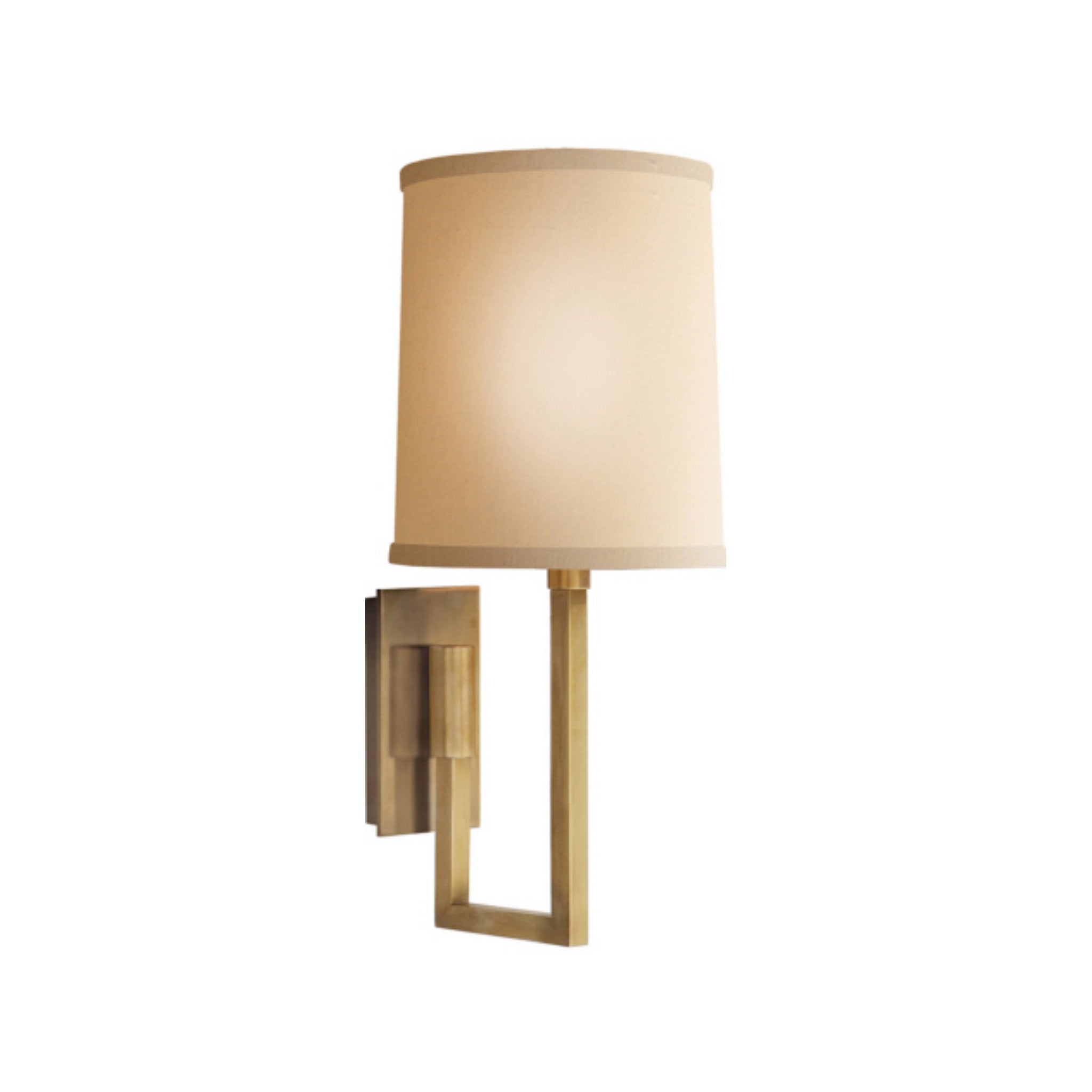
The wall light. The Barbara Barry Aspect Library Sconce in Soft Brass with an ivory linen shade washes the bookshelf behind the chair in soft light, which is exactly what reads well on camera.
The ceiling fixture. The Chapman & Myers Edmond Flush Mount in Hand-Rubbed Antique Brass uses white schoolhouse glass to diffuse ambient light evenly, so the screen is never the brightest thing in the room.
The reading light. The Chapman & Myers Dorchester Swing Arm Pharmacy Floor Lamp adjusts from H37" to 63" with a 22" swing arm, so it can serve as fill light for calls and reading light for the armchair.
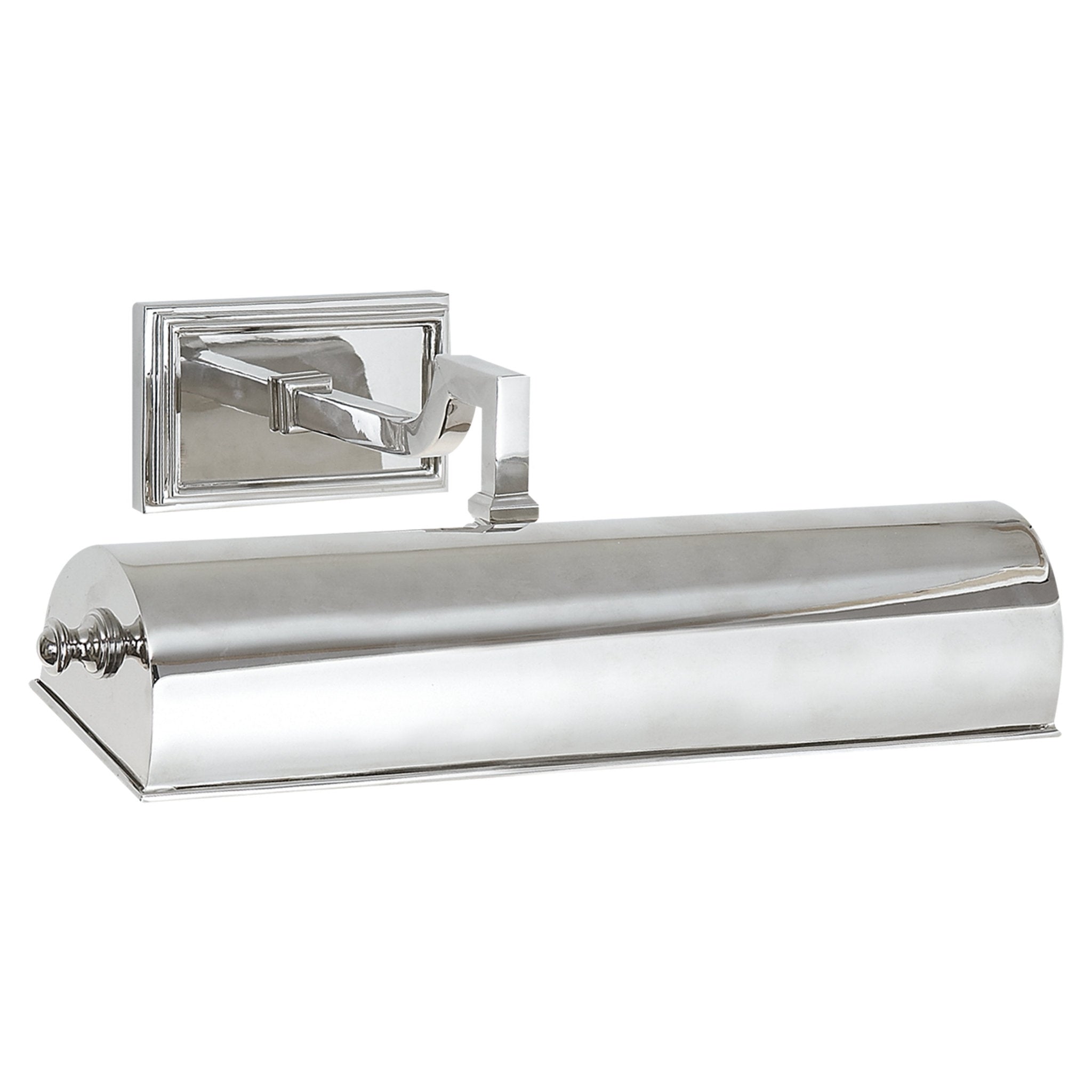
The accent. The Alexa Hampton Dean 12" Picture Light in Polished Nickel highlights a favorite painting behind the desk and adds a layer of background light for video.
Want more options? Explore table lamps and wall lights, or visit our New York and Los Angeles showrooms. Designers can ask about our Design Trade Program.
Shop this post

Frequently asked questions
Where should a desk lamp be placed?
Place a desk lamp on the side opposite your writing hand, so a right-handed person puts it on the left. The bottom of the shade should sit near seated eye level so light falls on the desk rather than into your eyes. If you can see the bare bulb from your chair, the lamp is too tall or the shade too shallow.
Is warm or cool light better for a home office?
For most people, a warm-neutral 3000K–3500K is best for task light: clear enough for reading and screen work but not clinical. Detail work can go up to 4000K. Keep ambient and accent lights at 2700K–3000K so the room still feels residential and transitions easily into evening use.
How do I stop glare on my computer screen?
Position the monitor perpendicular to windows rather than facing or backing onto them, use shaded or diffused fixtures instead of bare bulbs, and avoid a bright downlight directly behind or above the screen. Keeping ambient light on also reduces the contrast between the screen and the room, which eases eye strain.
What is the best lighting for Zoom and video calls?
Put your main light in front of you, slightly above eye level, and diffuse it with a fabric or linen shade. Add a softer fill light on the opposite side and some light on the wall behind you. Avoid sitting with a window behind you and avoid overhead downlights alone, which create shadows under the eyes.
Do I need overhead lighting in a home office?
Yes, in most rooms. Ambient light from a flush mount, semi-flush, or pendant reduces the contrast between your bright screen and the room, which helps prevent eye strain. On its own it is not enough, though; pair it with a task lamp at the desk and ideally an accent light behind you.
Designing a whole room?
Our lighting specialists help size and pair fixtures every day, and interior designers and architects can join the Design Trade Program. Browse more ideas in Inspiration.