

How to Improve Curb Appeal With Outdoor Lighting
The fastest way to improve curb appeal with outdoor lighting is to right-size the lanterns at your front door, add matching fixtures at the garage, and hang a lantern in the porch ceiling so the entry glows from above and both sides. Keep every fixture at 2700K–3000K, in one finish family, and scaled to the door rather than the bulb.
From the street, a house at night is read almost entirely through its lighting. Undersized builder-grade fixtures, mismatched finishes, and harsh cool bulbs make even beautiful architecture look unfinished. A coordinated set of well-scaled lanterns does the opposite: it frames the door, balances the facade, and makes the house feel welcoming before anyone steps onto the walk. Here is how to plan it.
What size should front door lanterns be?
The most common mistake is buying lanterns that are too small. From 30 or 40 feet away, a fixture that looks large in the box shrinks dramatically. Use these proportions of the door height (including trim) as a guide:
- Pair of lanterns flanking the door: each about one-quarter to one-third of the door height.
- Single lantern on one side: about one-third of the door height, since it carries the entry alone.
- Garage lanterns: about one-quarter to one-third of the garage door height.
| Door height | Pair of lanterns (each) | Single lantern |
|---|---|---|
| 80" (standard) | 20–27" | about 27" |
| 96" (8 ft) | 24–32" | about 32" |
| 108" (9 ft) or with transom | 27–36" | 36"+ |
When in doubt, go bigger. An outdoor lantern that feels slightly generous up close almost always looks correct from the curb.
How high should outdoor wall lights be mounted?
Mount entry lanterns so the center of the fixture sits roughly at eye level or a little above, around 66 inches above the threshold, or so the top of the lantern aligns near the top third of the door. The goal is to light faces at the door without glaring into them. Above a garage door, mount lanterns slightly above the midpoint of the door height, and keep them evenly spaced from the door trim on both sides.
| Location | Typical mounting guideline |
|---|---|
| Front door (flanking) | Fixture center about 66" above threshold |
| Garage (flanking or between doors) | Just above the midpoint of the garage door height |
| Porch ceiling lantern | At least 7' of clearance to the bottom of the fixture |
| Side or back door | Fixture center about 66" above threshold; one sconce on the latch side |
Shop the look
Tap the dots to shop this room

Shop the look

Should front door and garage lights match?
They should coordinate, and in most cases they should come from the same family and finish. Matching the front door and garage fixtures is what makes a facade feel designed rather than assembled. If you want some variation, keep the finish identical and change the size or form: larger bracketed lanterns at the front door, a simpler flush or smaller wall lantern at the garage. That way the entry stays the clear focal point.
Finish choice should follow the house. Bronze and aged iron suit brick, stone, and shingle. Natural copper and antique brass warm up white clapboard and board-and-batten, and they will develop a patina over time. Black reads crisp on modern farmhouse and contemporary facades.
What color temperature is best for outdoor lighting?
Choose 2700K or 3000K for entries and porches. Warm light flatters brick, stone, and wood siding and feels residential. Cooler 4000K and 5000K bulbs look institutional, flatten color, and tend to attract more attention than you want on a quiet street. Use the same Kelvin on every exterior fixture so the house reads as one composition.
- 2700K: the warmest, most traditional glow; ideal for lanterns with clear glass where the bulb is visible.
- 3000K: slightly crisper; good for modern facades or when fixtures double as security lighting.
- Brightness: entry lanterns rarely need more than the equivalent of a 40–60 watt incandescent each; clear-glass lanterns look best with a decorative, lower-output bulb.
How do you light a porch and walkway for curb appeal?
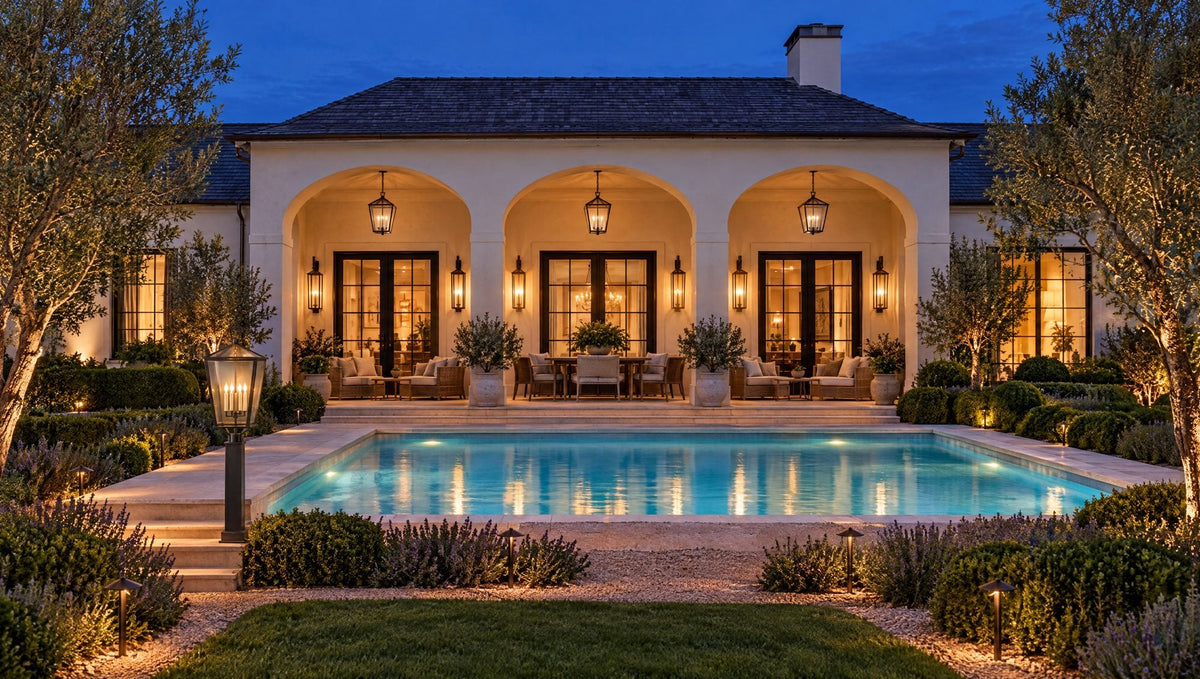
A covered porch benefits from a hanging lantern or semi-flush fixture centered in the ceiling, especially when the front door is recessed. It fills the space between the flanking lanterns and gives the porch depth from the street. Keep at least 7 feet from the floor to the bottom of the lantern.
For walkways, soft, low-level light is better than bright floodlighting. Stagger path lights along the edges rather than lining them up like a runway, and let pools of light overlap slightly. Uplighting a specimen tree or a stone column adds depth, but aim it carefully and shield it so neighbors are not looking into a bare lamp.
Should outdoor lights be on a timer or dusk-to-dawn sensor?
Yes. Curb appeal lighting only works if it is on when people see the house. A photocell or smart switch that turns entry lights on at dusk keeps the facade consistent every night, and a schedule that dims or switches off the porch and garage fixtures late at night saves energy while leaving a low welcome light at the door. If you use smart bulbs, confirm they are rated for enclosed and outdoor fixtures, and keep them all set to the same color temperature.
What are the most common curb appeal lighting mistakes?
- Undersized lanterns that disappear from the street.
- Mixed finishes across front door, garage, and porch.
- Cool-white bulbs that make the house look commercial.
- Glare from exposed high-output bulbs at eye level.
- Ignoring the wet or damp rating. Fixtures exposed to rain need a wet rating; covered porches typically need at least a damp rating. Confirm the rating on each listing before you order.
Planning a larger refresh? Browse our full outdoor lighting collection, and see how the same principles of layered lighting apply outside. If you are also rethinking the entry inside the door, our guide to foyer chandelier size, height, and style picks up where this one leaves off.
Get the look
For this facade, we used the Chapman & Myers Fremont family in French Rust for the front entry and porch, and paired it with an aged-iron wall lantern at the garage so the dark finishes read as one set from the street.
Chapman & Myers Fremont Medium Bracketed Wall Lantern in French Rust — W13" x H27" x E15.5". At 27 inches tall, this bracketed lantern is well scaled as a pair for a standard 80-inch door or taller entries, and the arm projects it out from the wall so the light falls on the steps.
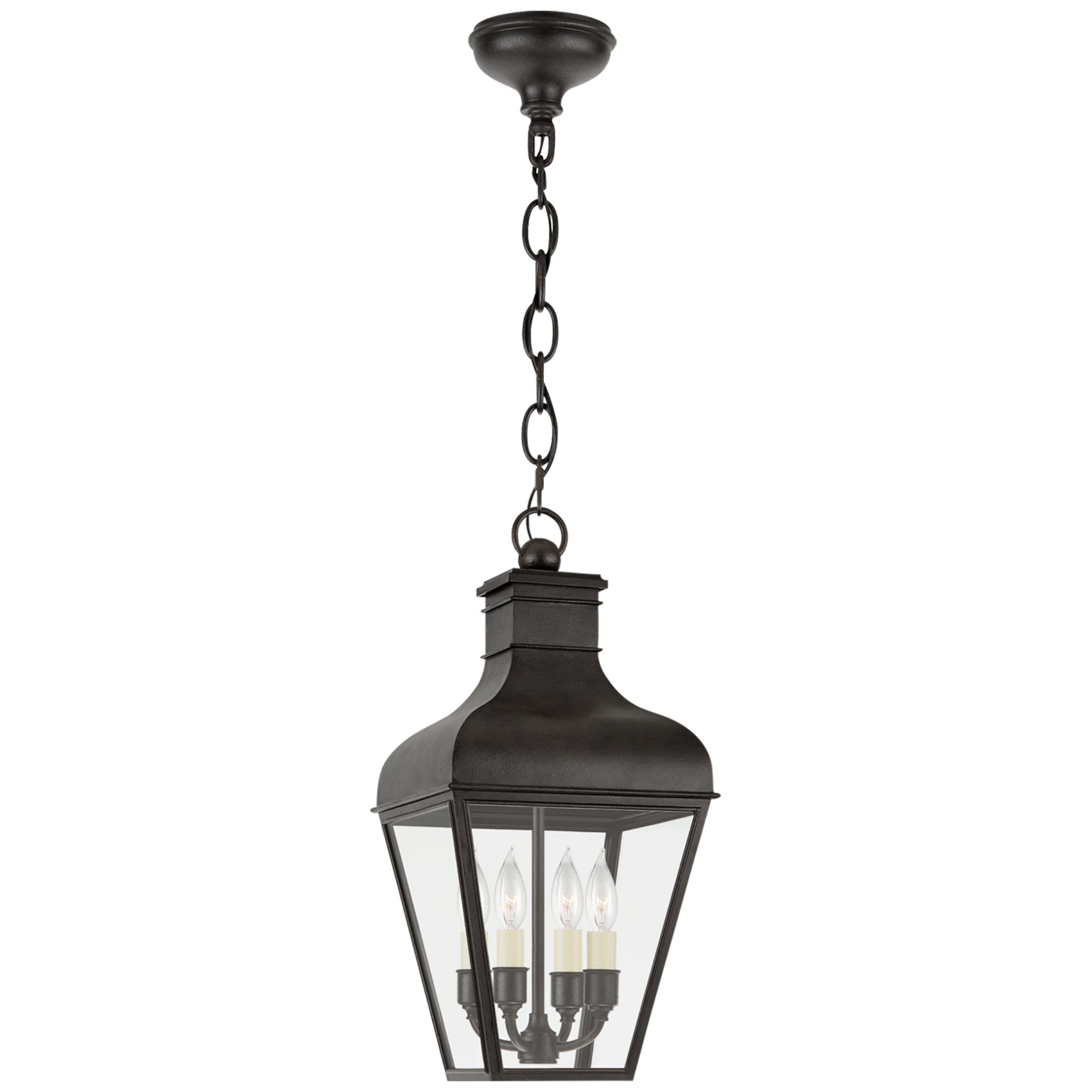
Chapman & Myers Fremont Small Hanging Lantern in French Rust — W9.75" x H20". Centered in the porch ceiling, it matches the wall lanterns and fills the space between them with warm light.
Ian K. Fowler Halle Medium Wall Lantern in Aged Iron with Clear Glass — W8.75" x H18" x E8". A cleaner, simpler lantern for flanking the garage doors. The aged iron finish coordinates with French Rust while letting the front entry stay the star.
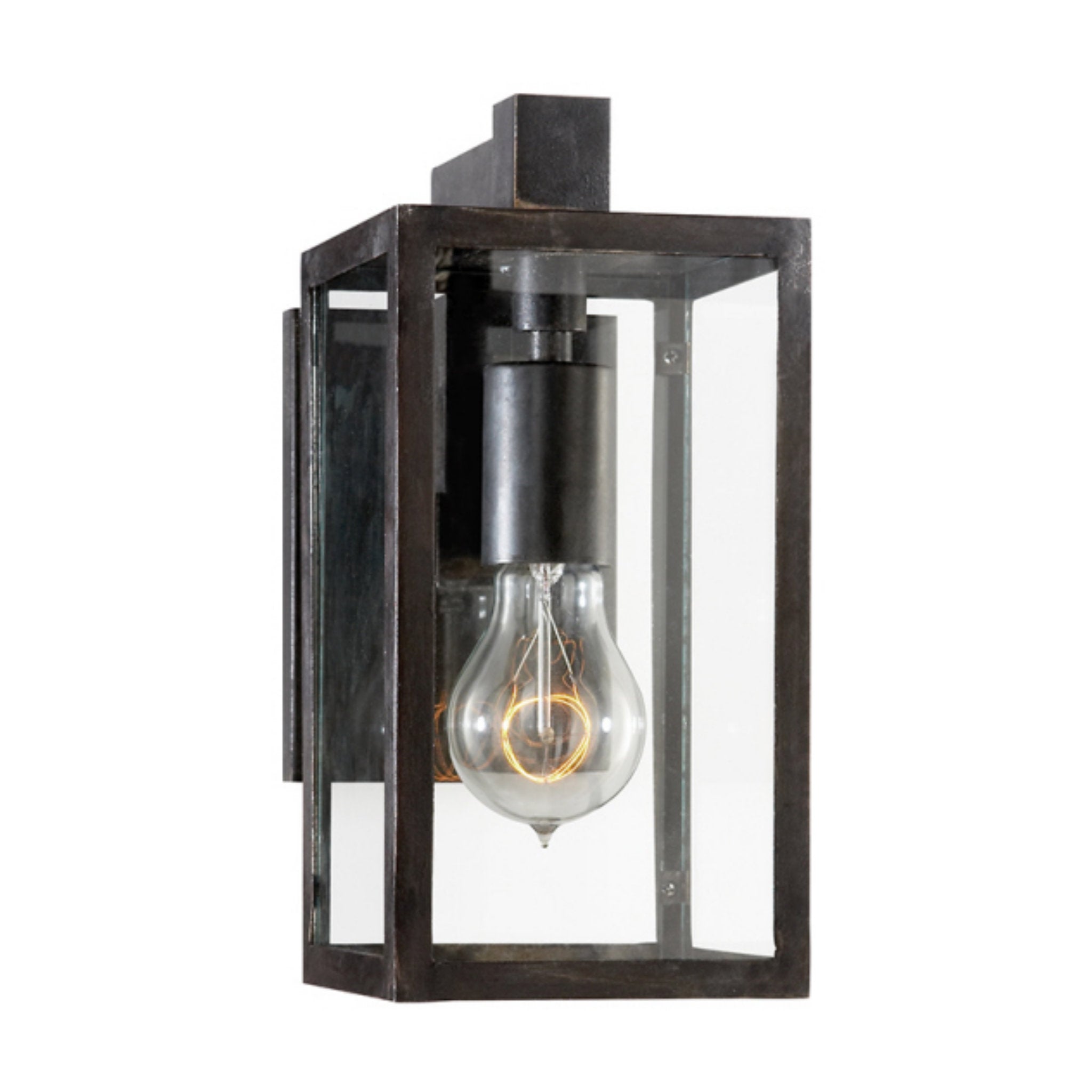
Chapman & Myers Fresno Framed Short Sconce in Aged Iron with Clear Glass — W5" x H10.5" x E8". A compact option for a side door, mudroom entry, or gate where a full lantern would crowd the wall.
Plan it once, enjoy it every night
Curb appeal lighting is one of the few upgrades you see every single evening. Measure your doors, scale up, keep one finish family and one Kelvin temperature, and add a porch lantern if you have a covered entry. For more ready-to-ship ideas, browse our in-stock best sellers. If you are working with an architect or designer, Foundry Lighting's Design Trade Program can help with whole-house exterior packages, and our New York and Los Angeles showrooms are a good place to compare finishes in person.
Shop this post

Frequently asked questions
How big should outdoor lights be next to a front door?
For a pair of lanterns flanking the door, each should be about one-quarter to one-third of the door's height. For a standard 80-inch door that means roughly 20 to 27 inches tall. A single lantern should be closer to one-third of the door height. Outdoor fixtures look smaller from the street, so size up when unsure.
How high do you hang outdoor lights by the front door?
A common guideline is to place the center of each lantern about 66 inches above the threshold, which puts light near eye level without glare. On taller doors, align the top of the lantern with the upper third of the door. Keep both sides at exactly the same height.
Should garage lights match front door lights?
They should coordinate. Using the same finish, and ideally the same family, across front door, garage, and porch makes the facade feel intentional. Many designers use larger lanterns at the front door and a smaller or simpler version at the garage so the entry stays the focal point.
What color light is best for the outside of a house?
Warm white between 2700K and 3000K is best for most homes. It flatters brick, stone, and wood siding and feels residential. Cooler 4000K to 5000K light looks commercial and flattens color. Use the same color temperature on every exterior fixture for a consistent look.
Do outdoor lights need to be wet rated?
Fixtures directly exposed to rain or sprinklers should carry a wet location rating. Fixtures under a covered porch or deep overhang typically need at least a damp rating. Check the rating on each product before ordering, and follow local electrical codes for exterior installation.
Designing a whole room?
Our lighting specialists help size and pair fixtures every day, and interior designers and architects can join the Design Trade Program. Browse more ideas in Inspiration.