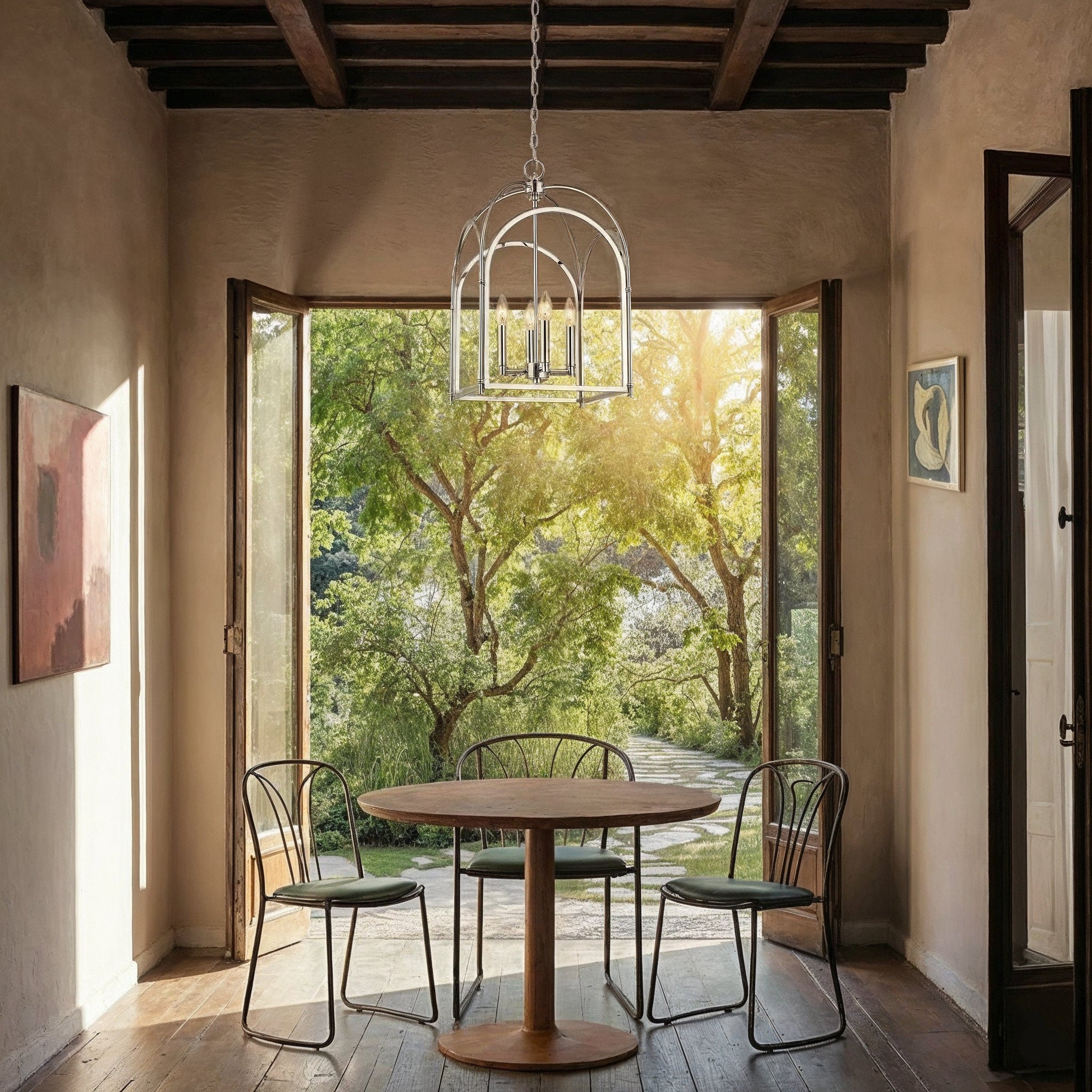


Article: Pendant Lights in the Living Room: Ideas and Placement

Pendant Lights in the Living Room: Ideas and Placement
Pendant lights work in a living room when they are sized to the furniture beneath them, hung high enough to clear heads and sightlines, and dimmed as one layer among lamps and sconces rather than used as the only light. The most reliable placements are over a coffee table, a reading chair, a game or library table, or in pairs flanking a sofa where the ceiling is too low or too plain for a chandelier.
Chandeliers get most of the attention in living rooms, but a well-chosen pendant is often the better tool. It can anchor a seating group without the formality of crystal arms, bring light down to where you actually sit, and add a note of color or texture at eye level. Below is how we approach living room pendant lighting for clients: where it earns its place, how big and how high, which shades to choose, and how to balance it with the rest of the room.
Where do pendant lights work best in a living room?
Start with the furniture plan, not the ceiling box. A pendant looks intentional when it relates to something below it. These are the placements we return to most often:
- Centered over the coffee table. The classic move. A single large drum, hanging shade or dome defines the conversation area and reads as the room's focal point.
- Over a reading chair or window seat. A smaller pendant with a downward-facing shade replaces a floor lamp and frees up floor space in tight rooms.
- Above a game table, library table or desk. Many living rooms have a secondary zone; a pendant gives it purpose and good task light.
- In a pair or trio along a long room. In a long living room or a great room, repeating two matching pendants over two seating groups keeps the space from feeling like one dark center and two bright ends.
- In a corner beside a sofa. A swag or offset pendant can hang over a side table where no outlet exists, a useful trick in older homes.
If your ceiling junction box is in the middle of the room but your seating group is not, you can relocate the box, use a swag kit, or choose a canopy that allows an offset. A pendant hanging over empty floor rarely looks right.
How big should a living room pendant be?
The easiest starting point is the same rule of thumb used for chandeliers: add the room's length and width in feet, and use that number in inches as a starting diameter. A 14 by 18 foot living room suggests a fixture around 32 inches wide as the main ceiling light. For a pendant anchoring a seating group, it is usually more useful to size it to the coffee table:
| Situation | Guideline | Example |
|---|---|---|
| Main pendant, room-scaled | Room length + width (ft) = diameter (in) | 12 x 16 ft room: about 28" wide |
| Pendant over coffee table | About 1/2 to 2/3 the width of the table | 48" coffee table: 24" to 32" pendant |
| Pendant over reading chair | 12" to 18" wide | A 15" hanging light over a lounge chair |
| Pair over a long sofa or two zones | Each 14" to 20" wide, spaced 30" to 36" apart or centered on each zone | Two 18" pendants in a 24 ft great room |
| Over a game or library table | About 1/2 the table's width; leave 6" or more inside each edge | 36" round table: 16" to 18" pendant |
When in doubt, go slightly larger. Living rooms have more visual weight (upholstery, rugs, art) than kitchens, and an undersized pendant tends to look like it came with the house.
Shop the look
Tap the dots to shop this room

Shop the look

How high should you hang a pendant in a living room?
Height depends on whether anyone walks beneath it.
- Over a walkway or open floor: keep the bottom of the fixture at least 7 feet (84 inches) above the floor.
- Over a coffee table: because no one walks directly under it, the bottom can sit lower, typically 7 feet in an 8 or 9 foot room. Avoid hanging it so low that it blocks the view across the seating group or of a television.
- Over a game or library table: 30 to 36 inches above the tabletop, the same as a dining table.
- Over a reading chair: roughly 5 to 6 feet from the floor to the bottom of the shade so light falls on the page, not in your eyes. Test with someone seated before the electrician trims the chain.
- Taller ceilings: for every foot above 8 feet, raise the fixture about 3 inches, and choose a taller pendant or longer drop so it does not float near the ceiling.
Which pendant styles suit a living room?
The right style depends on the job. A few reliable categories:
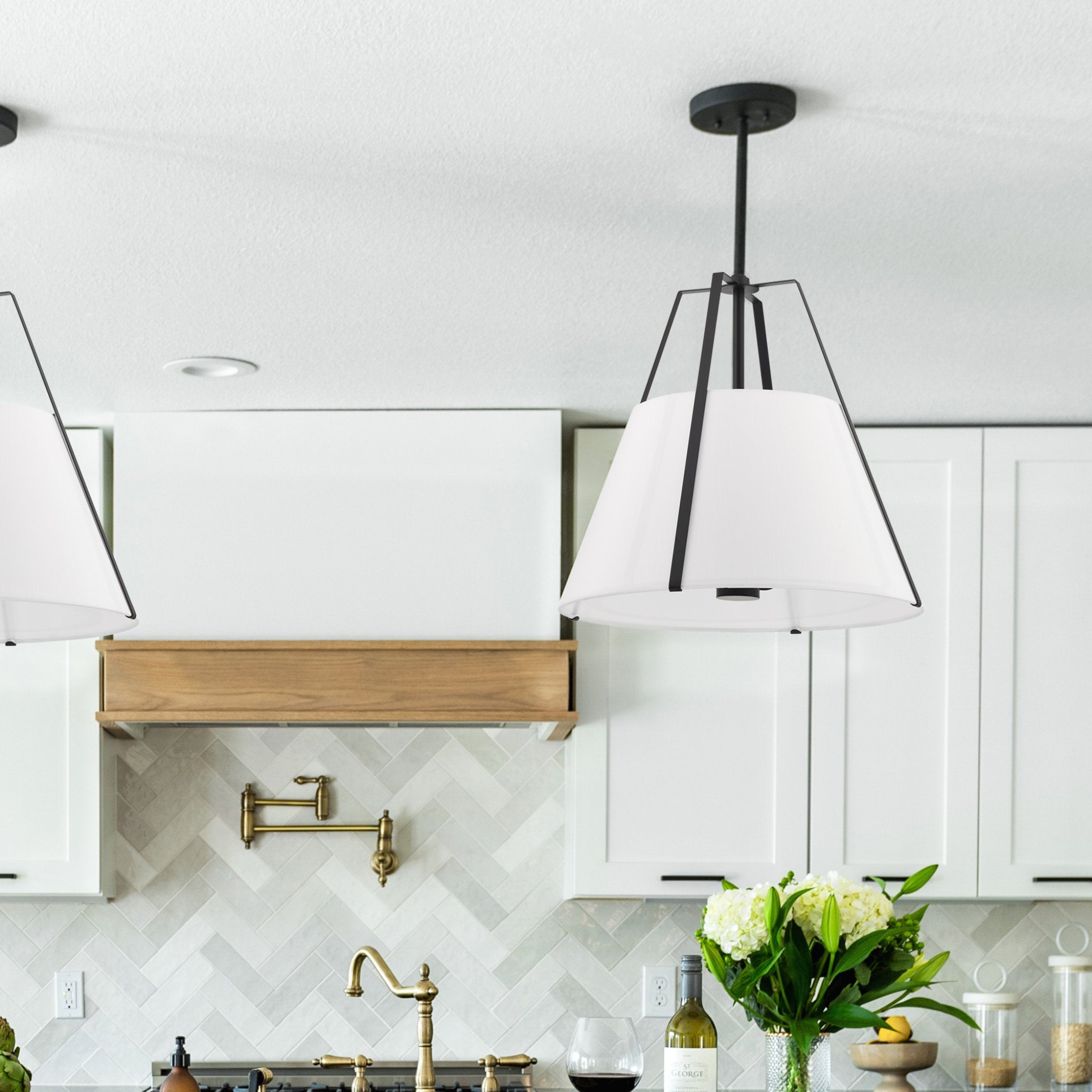
- Linen hanging shades. Fabric drums diffuse light evenly and feel soft and residential, a natural choice over a sofa and coffee table. Look for a diffuser at the bottom so you do not see bare bulbs from a seated position.
- Metal domes and hanging lamps. These direct light down and read as tailored, library-like and slightly mid-century. They work well over reading chairs and game tables.
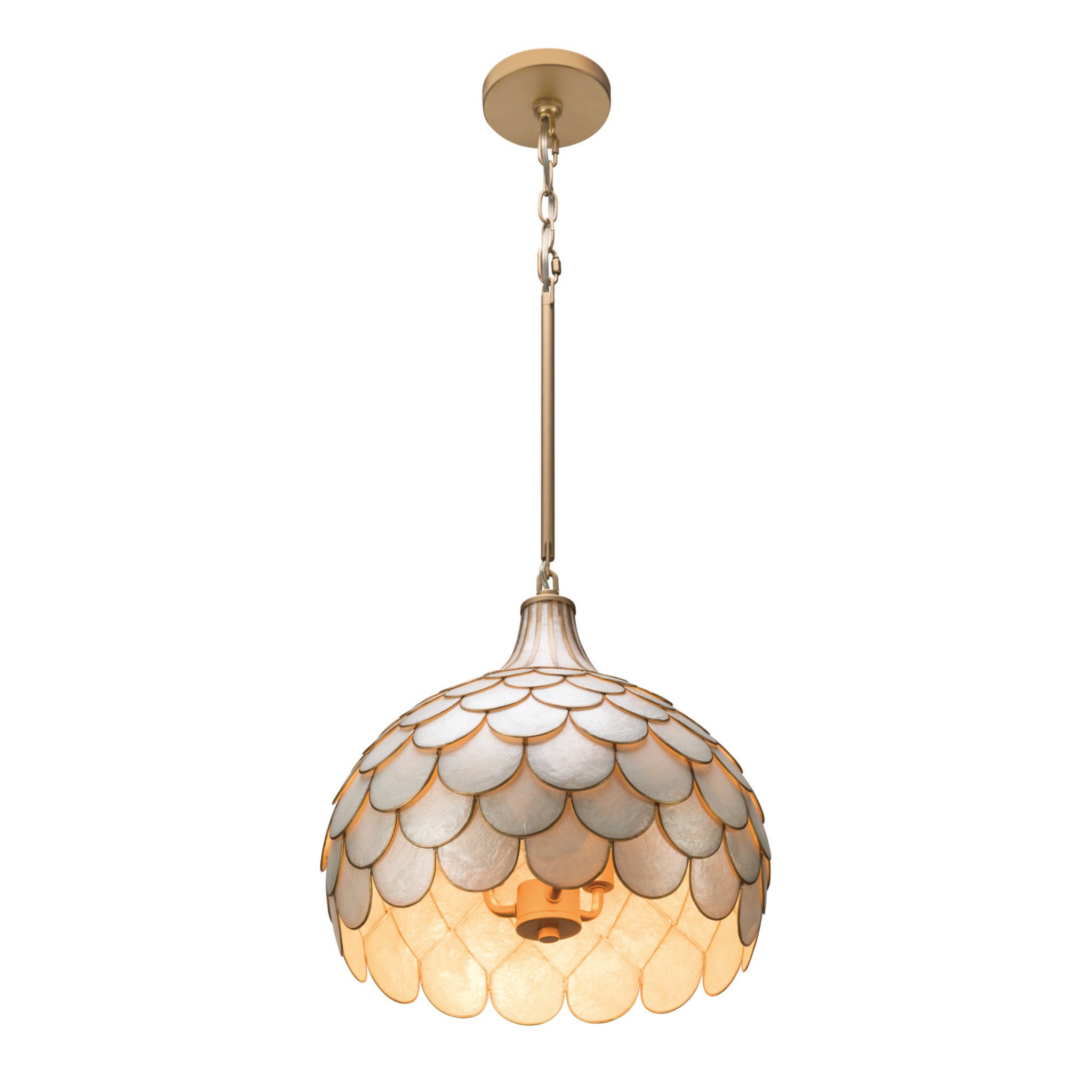
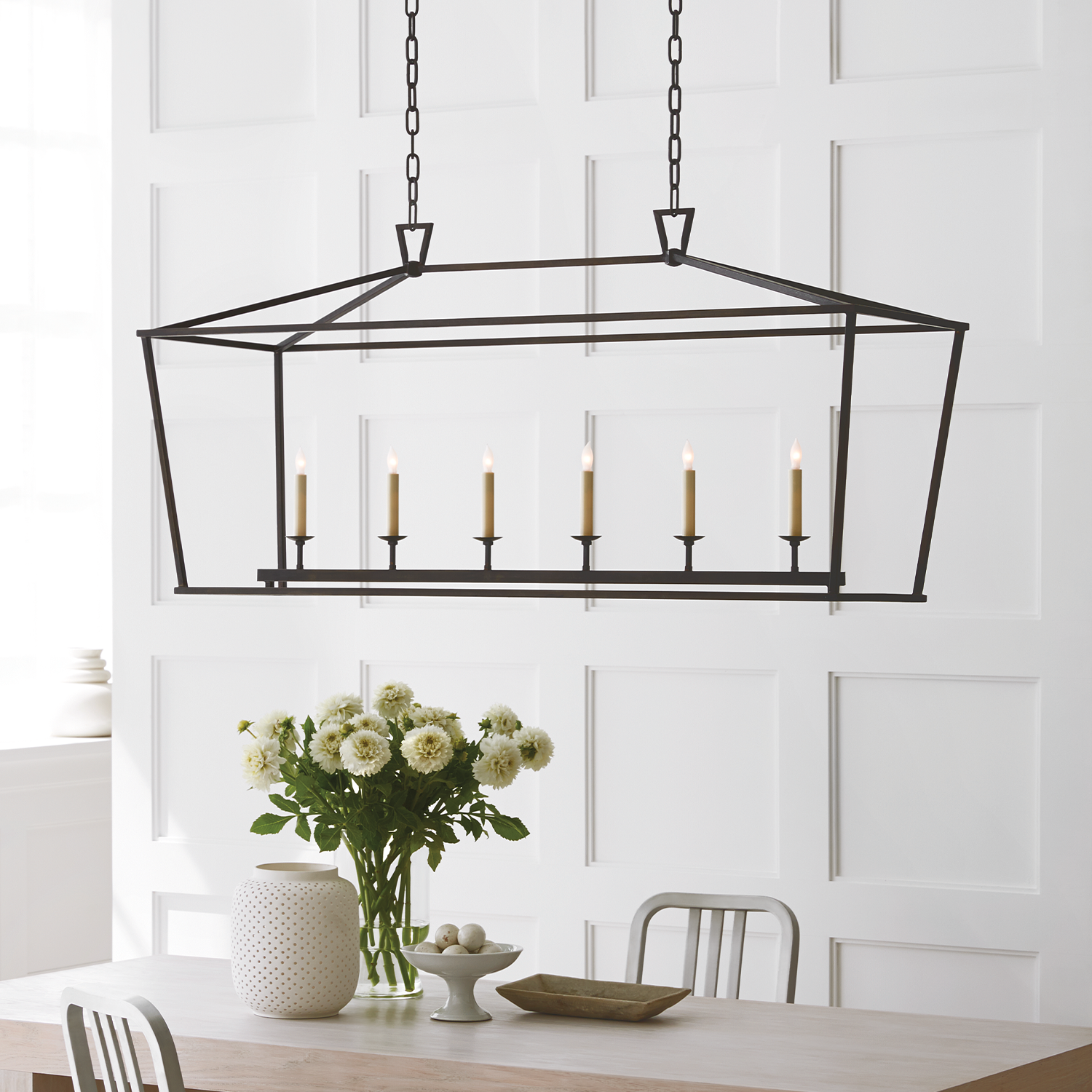
- Glass globes and lanterns. Clear or seeded glass gives sparkle and works in traditional rooms; opal glass gives a softer glow. Keep bulbs dimmable and warm, because exposed filaments can glare.
- Natural-fiber and woven pendants. Rattan, abaca and wicker add texture to modern organic and coastal rooms and cast a patterned light on the ceiling.
Match the finish to something else in the room at least once: a brass pendant looks more deliberate when a brass lamp base, picture frame or sconce repeats it across the space. For more on building a cohesive scheme, see our guide to living room lighting ideas for a designer look.
What bulbs and color temperature should you use?
Living rooms are for relaxing, so keep the light warm. We recommend 2700K for most living rooms and never higher than 3000K. Choose bulbs or integrated LEDs with a CRI of 90 or higher so wood, upholstery and skin tones look natural. Put every pendant on a dimmer; a pendant at full output is often too bright for evening conversation, and dimming is what lets a single fixture serve both cleaning day and movie night. If you are unsure about Kelvin, our explainer on warm white vs cool white lighting walks through each room.
How do pendants fit into a layered living room lighting plan?
A pendant is one layer, not the whole plan. A comfortable living room typically has:
- Ambient light from the pendant or a chandelier, dimmed low most evenings.
- Task light from table and floor lamps beside seating, positioned so the bottom of the shade sits roughly at eye level when seated.
- Accent light from sconces, picture lights or bookcase lighting that wash the walls and make the room feel larger.
Aim for light at different heights around the room, at least one source in each corner or zone, and separate switching so you can set scenes. Our guide on how to layer lighting like a designer goes deeper on switching and placement.
Common mistakes to avoid
- Hanging a small pendant in the dead center of a large room with nothing beneath it.
- Choosing an open-bottom shade that shows a bare bulb to everyone on the sofa.
- Skipping the dimmer, which leaves the pendant either glaring or off.
- Hanging it so low that it blocks the television or the view to the fireplace.
- Mixing too many unrelated finishes; two metals are plenty in most rooms.
Get the look: pendant-lit living room
These in-stock pieces work together in a warm, transitional living room with brass accents and linen textures.
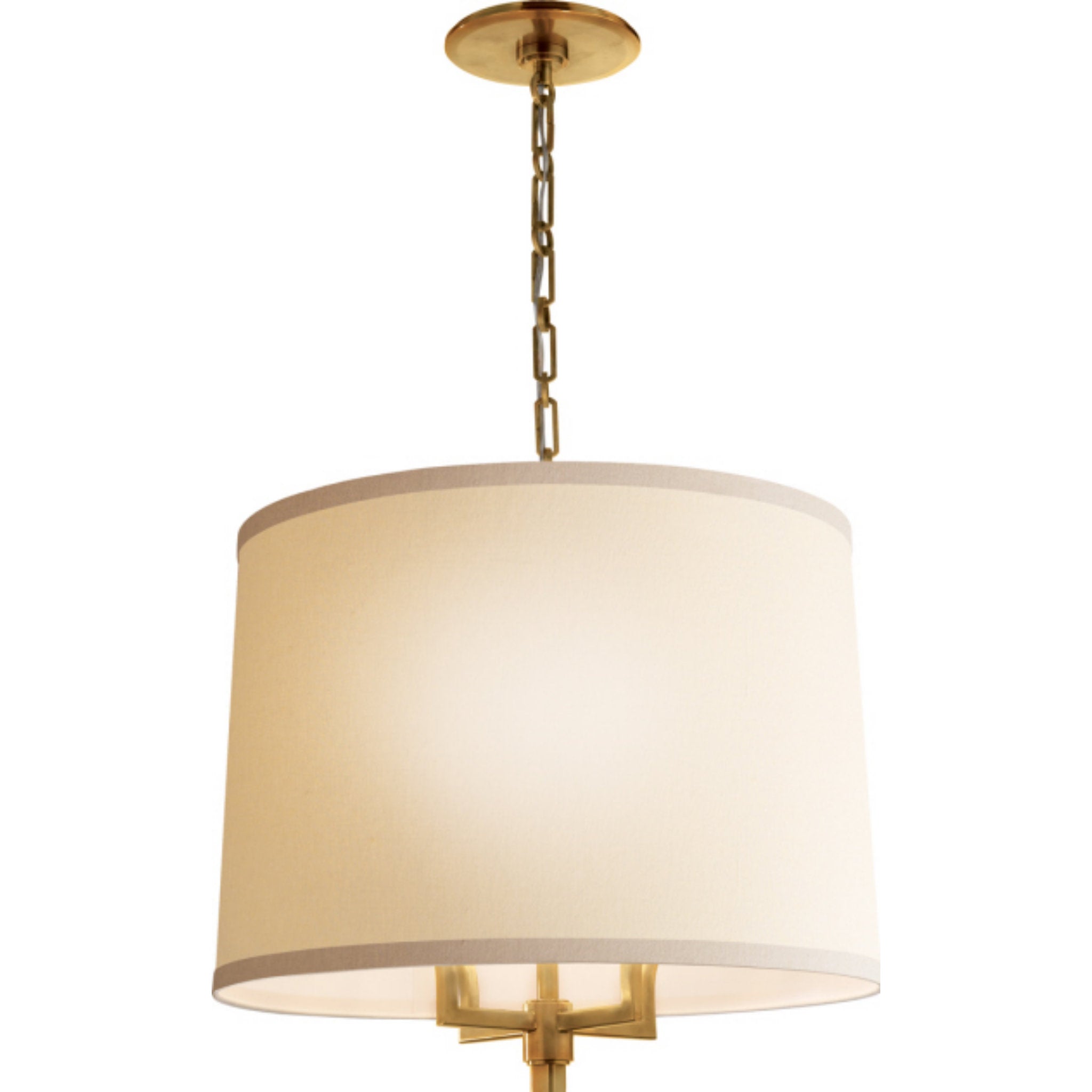
Barbara Barry Westport Large Hanging Shade in Soft Brass is our pick over the coffee table. At W23", it suits a 40 to 48 inch coffee table, and the linen shade spreads a soft, even glow across the whole seating group.
Thomas O'Brien Goodman Small Hanging Light in Hand-Rubbed Antique Brass brings a tailored, library feel to a reading corner or a game table. At W15", it is right-sized over a lounge chair, and the antique white shade directs light down onto the page.
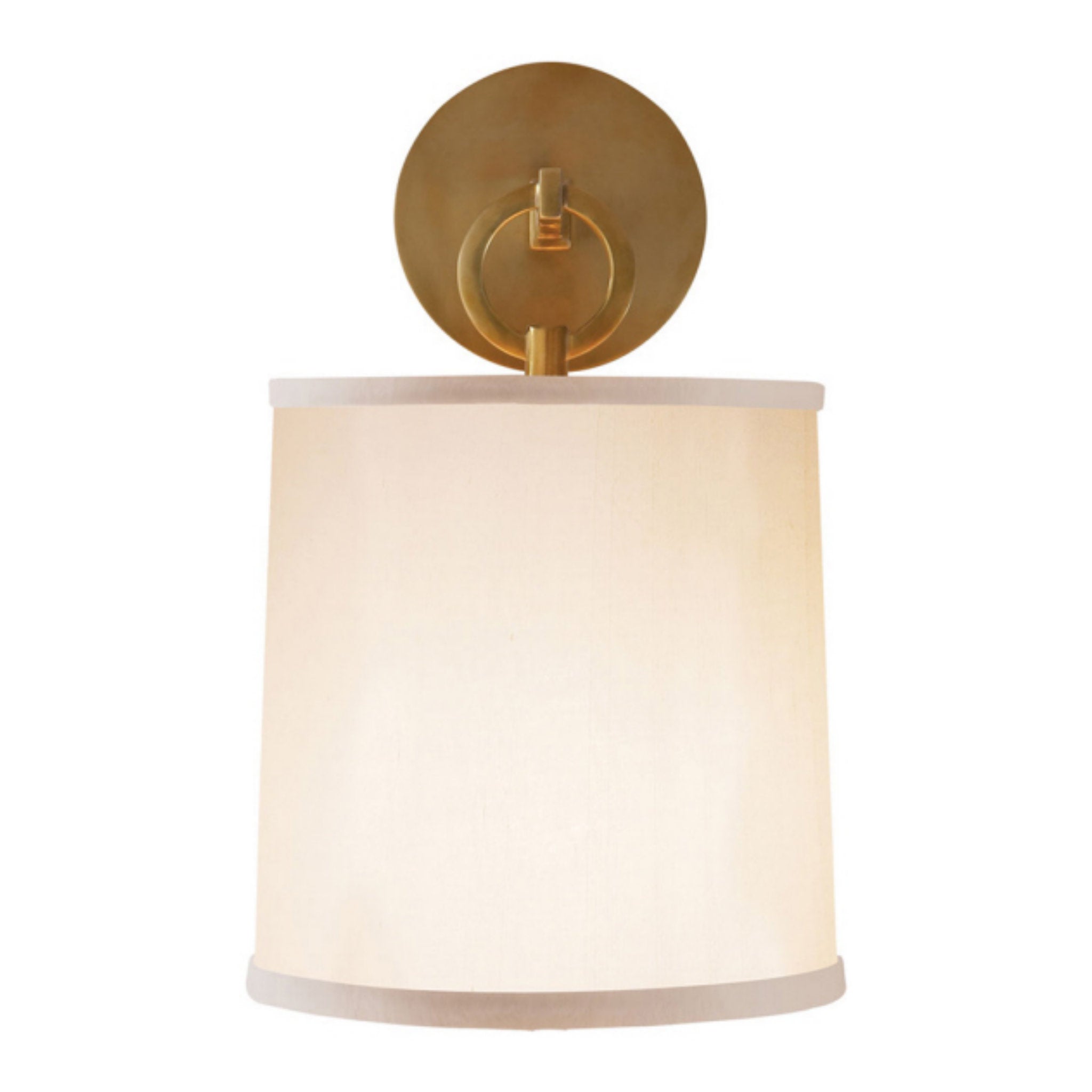
Barbara Barry French Cuff Sconce in Soft Brass flanks the fireplace or a large piece of art, adding the accent layer at wall height and repeating the Westport's soft brass.
AERIN Warren Table Lamp in Gild sits on a console or side table. At H32.5", it has the height to balance a large sofa and adds a gilded glow at seated eye level.
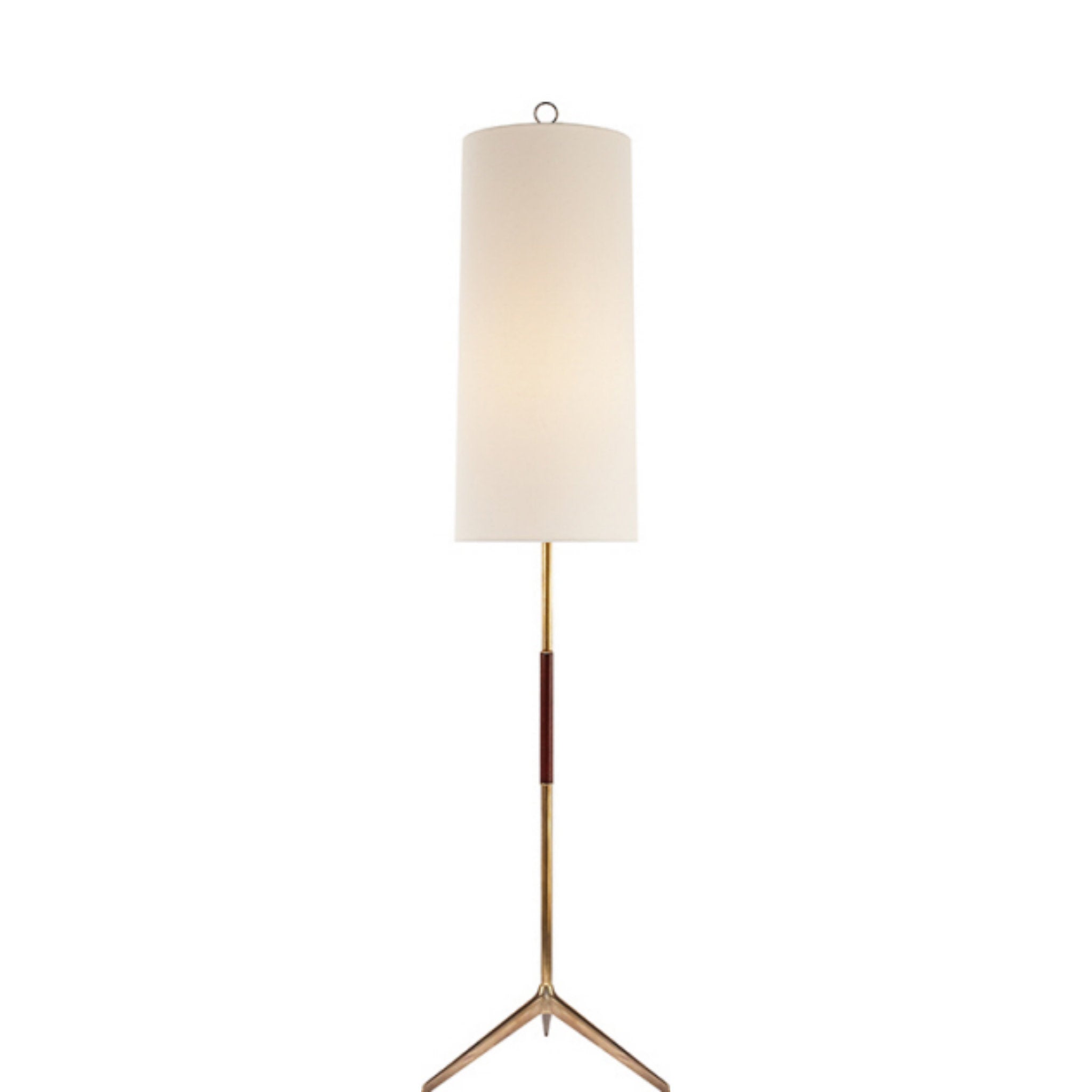
AERIN Frankfort Floor Lamp in Hand-Rubbed Antique Brass fills the corner beside the sofa with reading light and ties the brass story together.
Browse more ceiling lights and table and floor lamps, or explore the Thomas O'Brien collection. Designers can ask about our Design Trade Program, and you can see fixtures in person at our New York and Los Angeles showrooms.
Shop this post

Frequently asked questions
Can you put a pendant light in a living room?
Yes. Pendants work well in living rooms when they relate to furniture below, such as a coffee table, reading chair or game table. They are a good alternative to a chandelier in casual or modern rooms, and a pair of pendants can light a long room more evenly than one central fixture. Always put them on a dimmer and layer them with lamps.
How low should a pendant hang over a coffee table?
In a room with 8 to 9 foot ceilings, the bottom of a pendant over a coffee table usually sits about 7 feet from the floor. Because no one walks directly beneath it, it can hang a little lower than a walkway fixture, but keep it high enough that it does not block the view across the seating area or to the television.
What size pendant should I use over a coffee table?
A good guideline is one-half to two-thirds the width of the coffee table. A 48 inch coffee table pairs well with a pendant 24 to 32 inches wide. For the room's main fixture, add the room's length and width in feet and use that number in inches as a starting diameter.
Should living room pendant lights be warm or cool white?
Warm. Use 2700K for most living rooms and stay at or below 3000K. Warm light flatters skin tones, wood and fabric and feels relaxing in the evening. Choose bulbs with a CRI of 90 or higher and put pendants on dimmers so you can lower the output for conversation or movies.
Can I use two pendant lights in a living room?
Yes. Two matching pendants work well in long living rooms, great rooms, or rooms with two seating groups. Center one over each zone, or space a pair evenly along the length of a large sofa or coffee table. Keep each pendant 14 to 20 inches wide so the pair does not overwhelm the ceiling.
Designing a whole room?
Our lighting specialists help size and pair fixtures every day, and interior designers and architects can join the Design Trade Program. Browse more ideas in Inspiration.