

Kitchen Lighting Trends for 2027 Designers Love
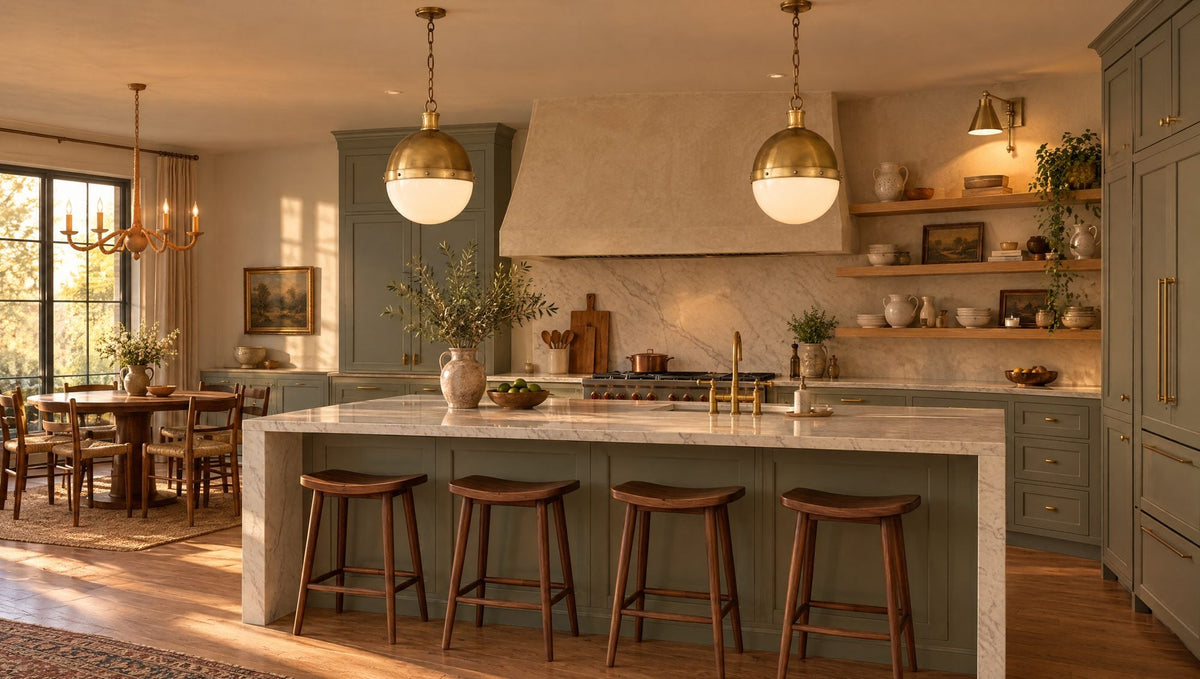
The kitchen lighting trends designers are carrying into 2027 are warmer, more tactile and more residential: aged and unlacquered-look brass, larger glass pendants in pairs instead of rows of small ones, wall sconces over open shelving, and a real chandelier over the breakfast table. Behind the decorative pieces, the fundamentals stay the same: layered, dimmable, warm-white light with high color accuracy.
Kitchens have spent a long time looking like showrooms: bright, cool and a little sterile. The shift we are seeing in designers' projects, and in what they ask to see in our New York and Los Angeles showrooms, is toward kitchens that feel like the rest of the house. That means fixtures that look collected rather than specified, finishes that age gracefully and light that flatters people as much as countertops. Here are the trends worth knowing, and the rules that keep them working.
What are the kitchen lighting trends for 2027?
- Living finishes. Hand-rubbed antique brass, aged brass and bronze that develop character over time, instead of high-shine chrome.
- Fewer, bigger pendants. Two generously sized pendants over an island rather than three or four small ones, for a calmer ceiling.
- Glass that glows. Opal, white and schoolhouse glass that diffuses light, replacing bare clear-glass bulbs that glare.
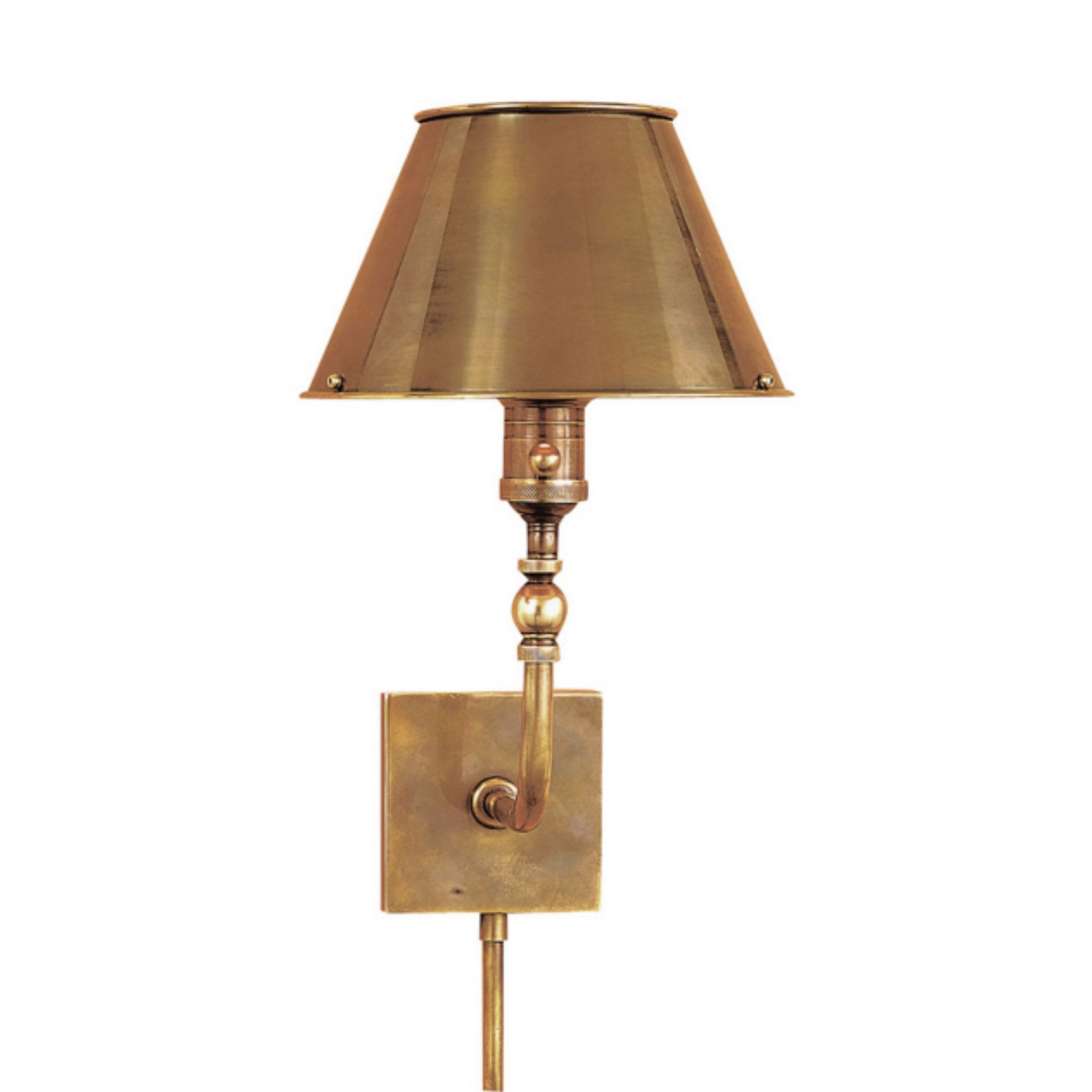
- Sconces in the kitchen. Swing-arm and swivel-head wall lamps over open shelving, a range wall or a coffee station.
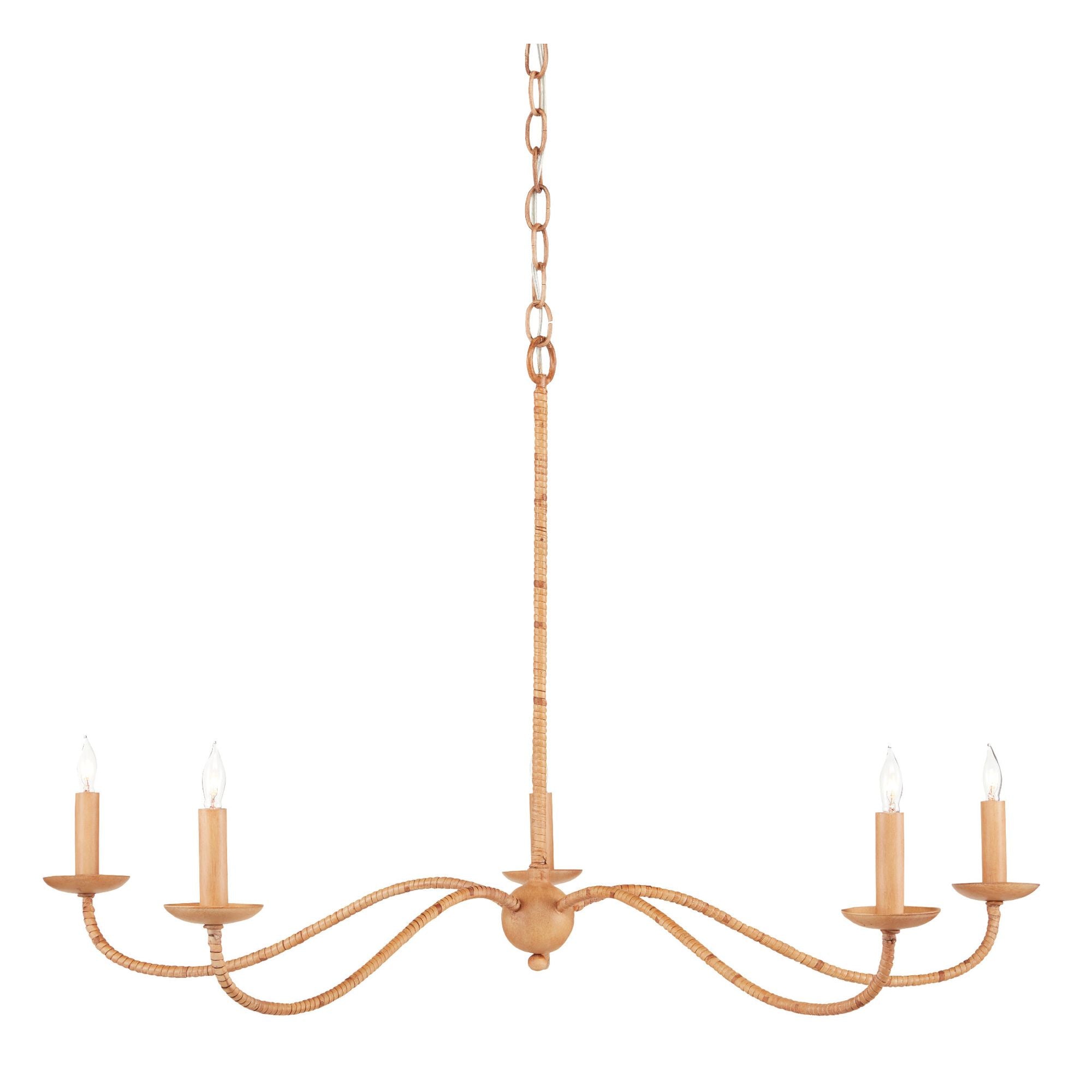
- A chandelier over the breakfast table. Natural materials such as rattan and wood add softness to a room full of hard surfaces.
- Warmer, dimmable LEDs. 2700K–3000K everywhere except task zones, with dimmers on every decorative circuit.
- Mixed metals with intent. One dominant metal for lighting, one supporting metal for hardware, repeated at least twice each.
Are brass kitchen lights still in style?
Yes, but the brass has changed. Bright, lacquered gold is giving way to hand-rubbed and antique finishes that look softer and more lived-in, and pair naturally with marble, soapstone, plaster and wood. Brass also reads warm under 2700K–3000K light, which helps a kitchen feel connected to adjoining living spaces. If brass feels too warm for your palette, antique nickel and bronze deliver the same "collected" feeling in a cooler key.
Shop the look
Tap the dots to shop this room

Shop the look
How many pendants over a kitchen island?
The current preference is two larger pendants for most islands, three only on long islands. Space them evenly, keep at least 6" between each fixture's edge and the island's end, and hang the bottom of each pendant 30"–36" above the countertop. Our detailed guide on how high to hang pendant lights over a kitchen island covers taller ceilings and sightlines.
| Island length | Pendant count | Suggested pendant width | Height above counter |
|---|---|---|---|
| Under 6' | 1 large or 2 small | 12"–18" | 30"–36" |
| 6'–8' | 2 | 12"–16" | 30"–36" |
| 8'–10' | 2 large or 3 medium | 12"–18" | 30"–36" |
| Over 10' | 3, or a linear fixture | 10"–16" each | 30"–36" |
What color temperature is best for kitchen lighting?
The trend toward warmer kitchens is real, but a kitchen is still a work room. Designers split the difference by zone:
| Kitchen zone | Color temperature | Notes |
|---|---|---|
| Island pendants | 2700K–3000K | On a dimmer; decorative and task |
| Recessed / general | 3000K | Even coverage, dimmable |
| Under-cabinet task | 3000K–3500K | CRI 90+ for food prep |
| Breakfast table chandelier | 2700K | Always on a dimmer |
| Shelf and range sconces | 2700K | Accent layer for evening |
Keep every bulb in the room at CRI 90 or higher so produce, meat and stone look true. For more on choosing Kelvin, see warm white vs. cool white lighting.
Should you put sconces in a kitchen?
Sconces are one of the most useful kitchen trends because they solve real problems. A swivel-head sconce over open shelving lights the shelves and the counter below; a pair flanking a window over the sink adds light where a pendant would crowd the view; a swing-arm at a coffee bar gives a pool of warm light for early mornings. Mount decorative sconces about 60"–66" to center, or 18"–24" above the counter when they sit over a work surface, and keep them clear of the range hood's heat and steam.
How to mix metals in kitchen lighting
- Choose one lead metal for most lighting (for example, hand-rubbed antique brass).
- Pick one supporting metal (bronze or antique nickel) and use it at least twice, such as in a flush mount and cabinet hardware.
- Keep finishes similar in sheen; matte and antique finishes mix more easily than polished ones.
- Let glass and natural materials bridge the two, so no metal looks like an outlier.
Which kitchen lighting trends will date quickly?
Not every look has staying power. A few choices tend to feel tired within a few years:
- Bare exposed-filament bulbs in clear cages. They glare at eye level and the industrial look has peaked; diffused glass is the more comfortable, longer-lasting choice.
- Oversized farmhouse lanterns that overwhelm an island. Scale pendants to the counter, not to the ceiling height alone.
- Cool 4000K–5000K light throughout. It flattens natural materials and makes the kitchen feel disconnected from warmer living and dining areas.
- Integrated color-changing LED strips as a decorative feature. Keep under-cabinet LEDs simple, warm white and hidden.
The trends that last share a few traits: good proportions, honest materials, finishes that improve with age and light that is comfortable to stand under. If a fixture checks those boxes, it will look right well past 2027.
A simple kitchen lighting plan
- General: small-aperture recessed lights on a dimmer, spaced to avoid shadows at the counter edge.
- Task: under-cabinet LEDs at 3000K–3500K along every counter you prep on.
- Decorative task: pendants over the island and sink, 30"–36" above the counter.
- Accent: sconces on shelving or a range wall, and in-cabinet lights in glass-front uppers.
- Dining: a chandelier over the breakfast table, bottom 30"–36" above the tabletop.
Put each layer on its own control so you can run the kitchen bright for cooking and dim for conversation after dinner.
Get the look
This kitchen pairs a brass lead metal with bronze accents and diffused white glass. Shop more in our ceiling lights collection, see designer favorites in Thomas O'Brien for Visual Comfort, or browse new arrivals in stock.
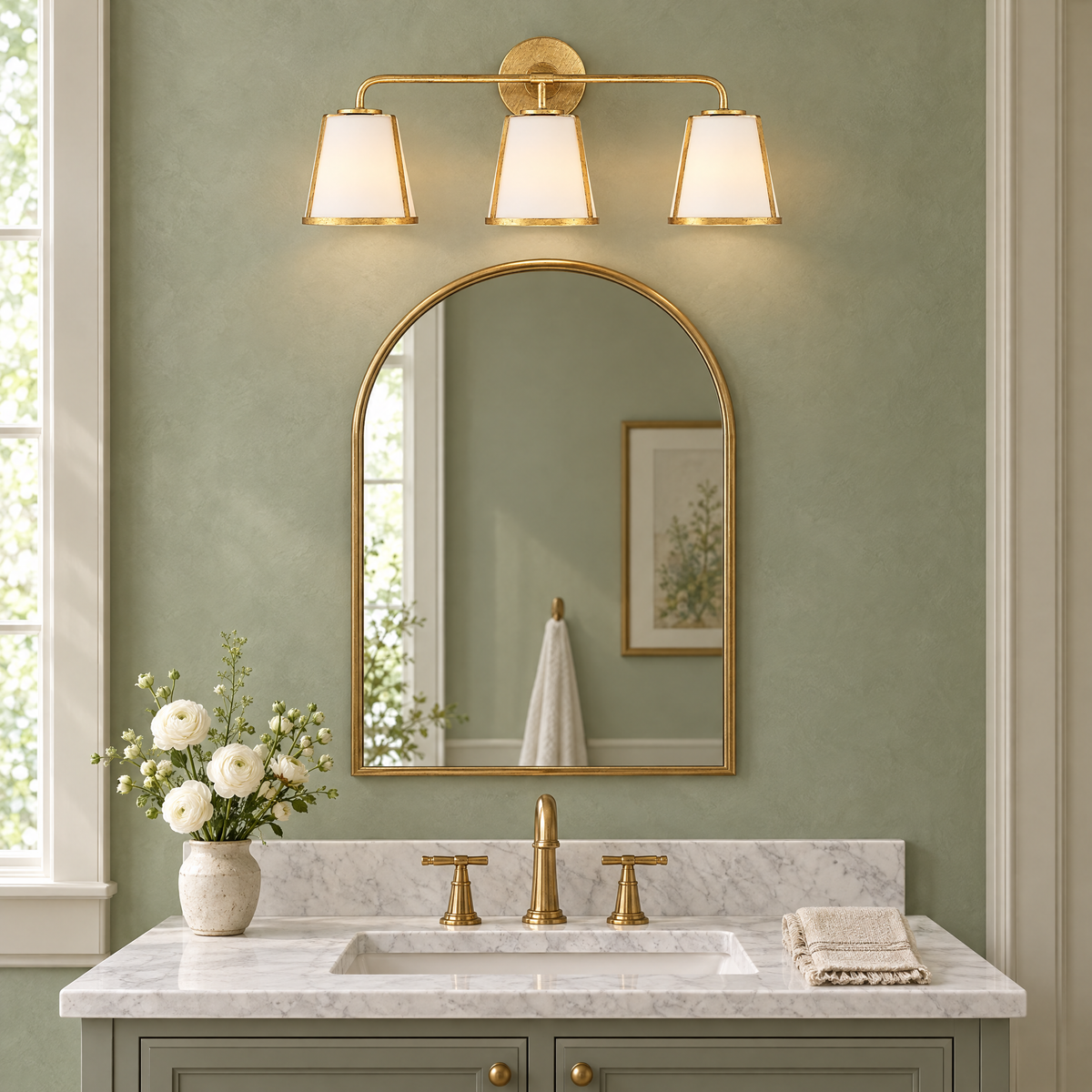
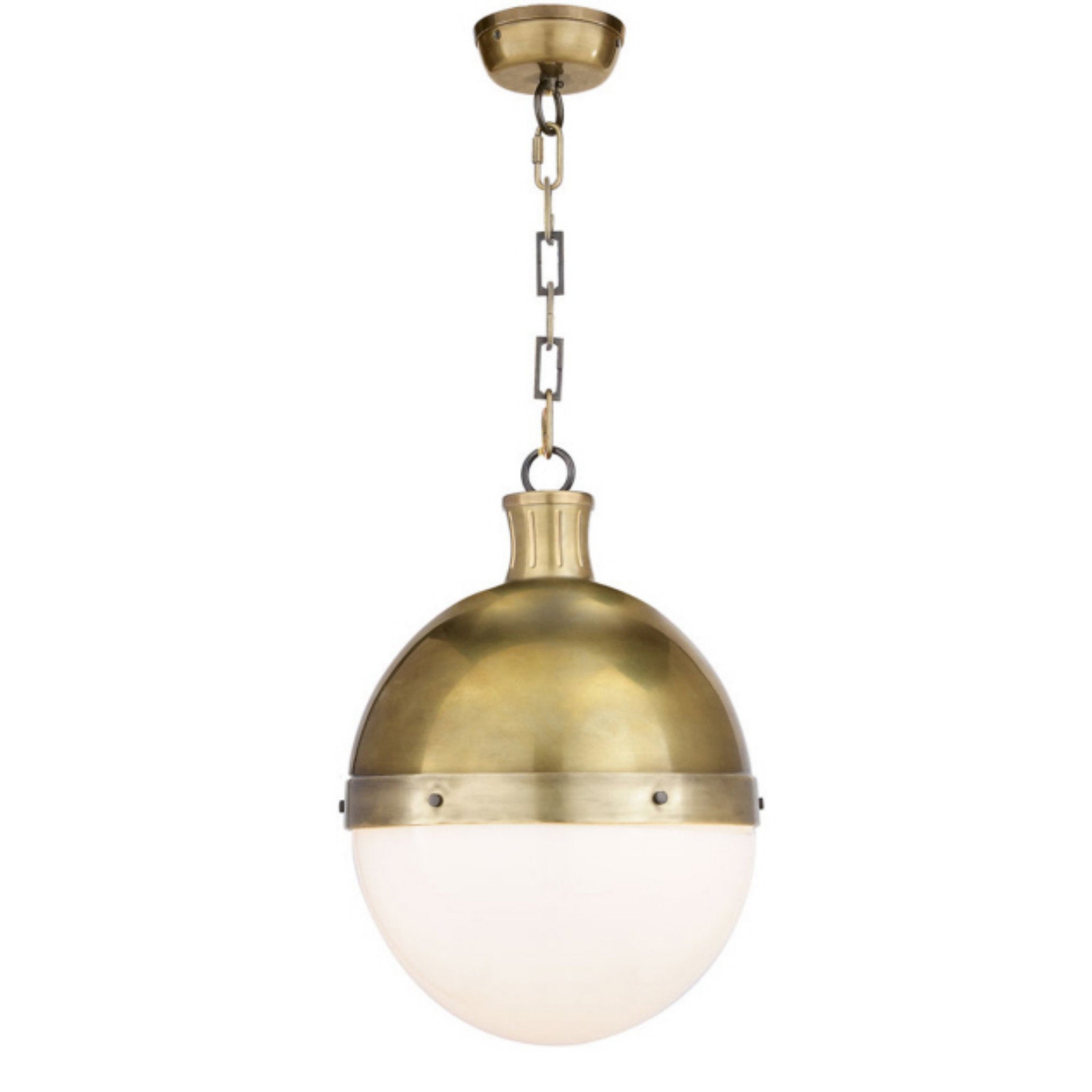
Thomas O'Brien Hicks Large Pendant in Hand-Rubbed Antique Brass with White Glass — At W13.25" x H18.25", two Hicks pendants are right-sized for a 6' to 8' island. The white glass diffuses light across the counter without glare, and the hand-rubbed brass captures the warmer, aged-finish trend.
Visual Comfort Swivel Head Wall Lamp in Hand-Rubbed Antique Brass — Compact at W8" x H14" with a 9.5" extension, the swivel head can be aimed at open shelving or down onto a prep surface. Use a pair on either side of a window or range wall.
Currey & Company Saxon Rattan Small Chandelier — Natural rattan over the breakfast table softens a kitchen full of stone and tile, and brings the "furnished kitchen" feeling that defines this trend.
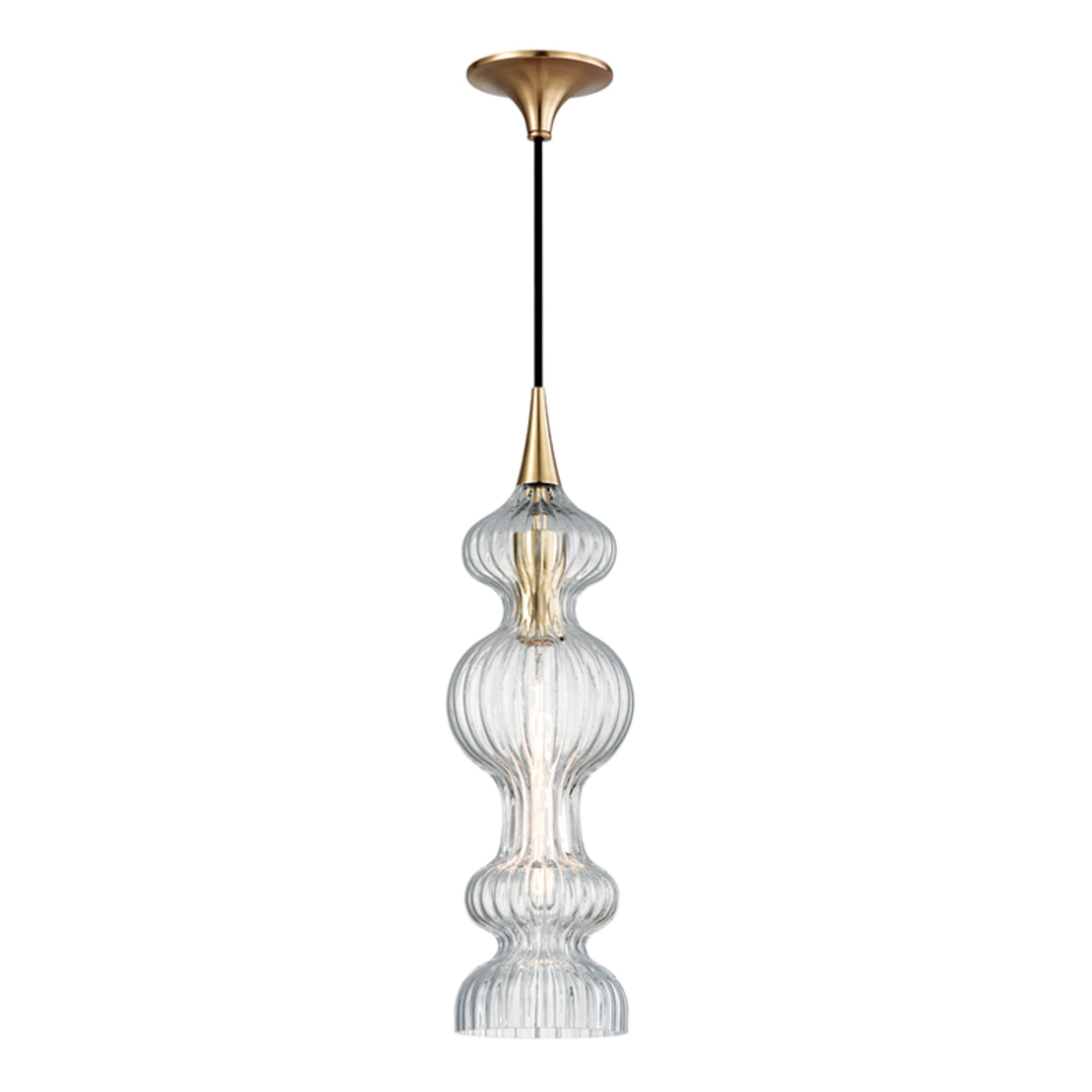
Hudson Valley Lighting Pomfret 1-Light Pendant in Aged Brass — A slim 6W x 20.5H pendant that fits over a sink or a narrow bar counter where a larger fixture would crowd the space.
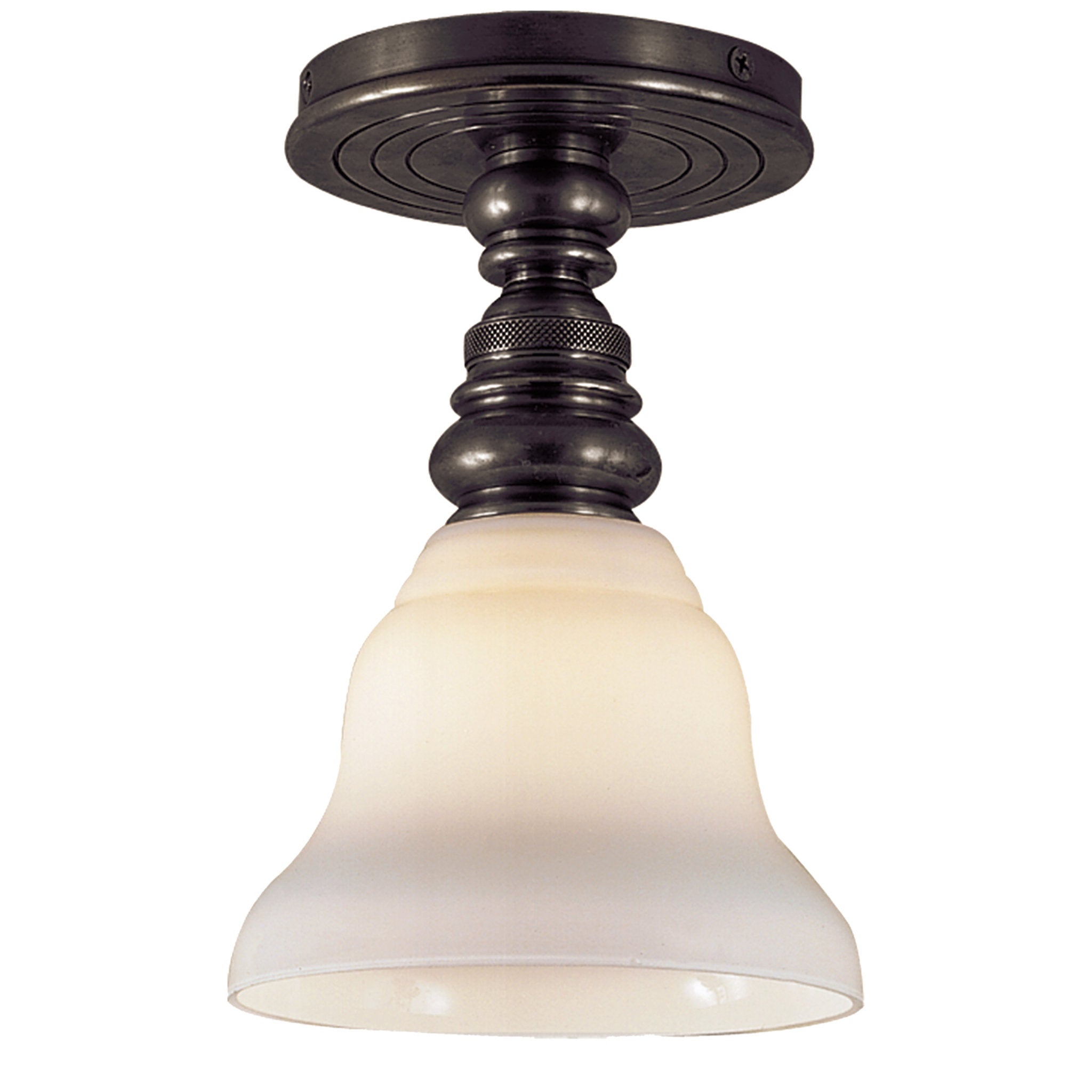
Chapman & Myers Boston Single Flush Mount in Bronze with SLEG Shade — A small, schoolhouse-style flush mount (W5.75" x H8.25") for a pantry or butler's pass that introduces the bronze supporting metal.
Bringing it together
The most enduring kitchens treat lighting as furnishing: a few generously scaled, well-made fixtures in finishes that age well, layered over quiet, functional recessed and under-cabinet light. For a room-by-room plan, see our guide to layering light like a designer. Designers and architects can also work with us through Foundry Lighting's Design Trade Program.
Shop this post
Frequently asked questions
What is the most popular kitchen lighting right now?
Glass pendants over the island in warm metal finishes, especially hand-rubbed or aged brass, are a long-running designer favorite for kitchens. Designers are choosing two larger pendants rather than a row of small ones, adding wall sconces over open shelving, and using warm, dimmable 2700K to 3000K LEDs to make the kitchen feel connected to living spaces.
Are recessed lights out of style in kitchens?
Recessed lights are not out of style, but they are no longer the star. Designers use fewer, smaller-aperture recessed fixtures as a quiet general layer, then let pendants, sconces and a breakfast-table chandelier carry the look. Put recessed lights on their own dimmer and keep them at 3000K so they blend with warmer decorative fixtures.
How far apart should pendant lights be over an island?
Space island pendants evenly so the light covers the whole counter, typically about 24 to 30 inches apart center to center for medium pendants, and keep at least 6 inches between each fixture's edge and the end of the island. Larger pendants need more space between them so the ceiling does not look crowded.
Can you mix metals in kitchen lighting?
Yes. Choose one lead metal for most of the lighting and one supporting metal, and repeat each at least twice in the room, for example brass pendants and sconces with bronze flush mounts and hardware. Similar sheens, such as antique or hand-rubbed finishes, blend more easily than mixing high-polish metals.
What color temperature should kitchen lights be?
Use 2700K to 3000K for pendants, chandeliers and general lighting so the kitchen feels warm, and 3000K to 3500K for under-cabinet task lighting where you prep food. Choose bulbs with a CRI of 90 or higher so food, stone and paint colors look accurate, and put decorative fixtures on dimmers.
Designing a whole room?
Our lighting specialists help size and pair fixtures every day, and interior designers and architects can join the Design Trade Program. Browse more ideas in Inspiration.